Photoessay: guess the format

IMG_5887b copy

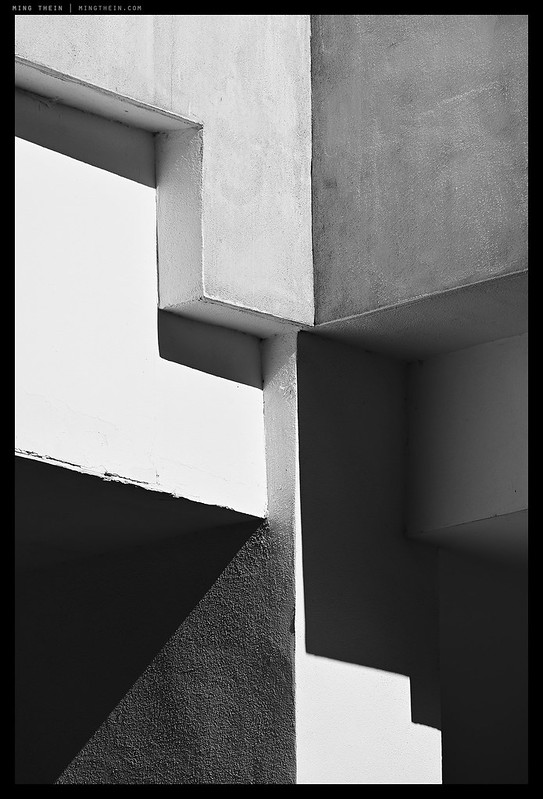
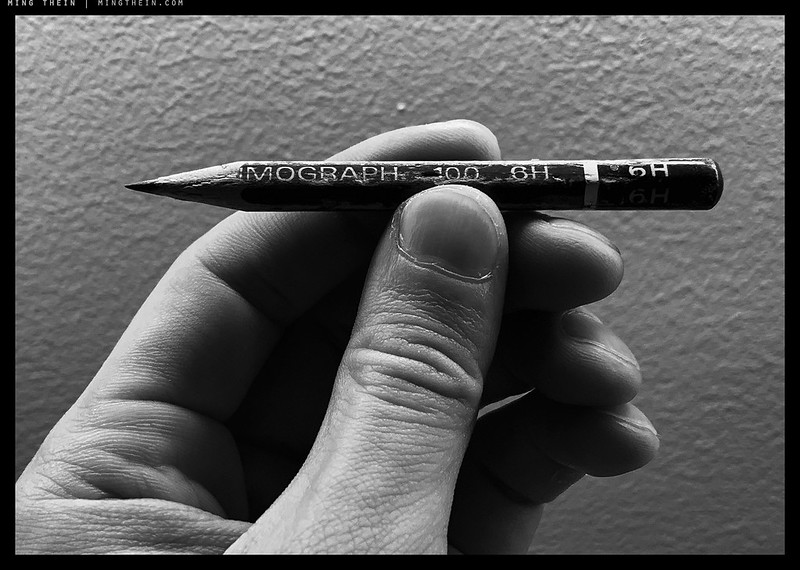
Or think of this as the first part of an intellectual exercise that will continue with an extended discussion in the next post. There are really only a few clues that decisively give away what format an image was shot on – and even then, many are lost merely in the process of preparing and displaying an image. This is because effectively every image captured has more information than we can view on most (common) output media. Yes, there are edge cases where the strengths of various formats/ systems (they’re not really separable) are necessary and make themselves seen, but those get fewer and fewer as technology improves as a whole. Curiously, what we photograph (i.e. the physical world) doesn’t change that much, if only because what interests us as humans doesn’t change that much…good luck with the guessing game! MT
[Read more…]

Bigger isn’t always better, or why you can’t see the difference most of the time

_PF02180 copy
Quasi-gratuitous header image: large format golfball, anybody?

I start this article with a deliberately provocative title, at the risk of being taken for one of those forum sensationalists that proclaims OMG NEW BEST CAMERAR EVARRRR SINCE THE SECOND COMING OF SLICED JESUS!! . But as always, there are caveats: I’m examining the situation under practical implementation, practical shooting constraints, and real world limitations: i.e. non-ideal circumstances, which I believe to be fair since this is how most photography takes place. And since we’re interested in hardware towards the practical application and implementation of photography, this is a fair approach to take. The crux of the argument is this: we have now reached a point in technology where the tradeoffs associated with upscaling your format do not translate into significant gains in shooting envelope or even practical output most of the time. Actually, I’d go even further and say that your hardware choices really hinge on a few factors, which we’ll discuss shortly.

[Read more…]

On-assignment photoessay: From the workbench

_PF06447 copy

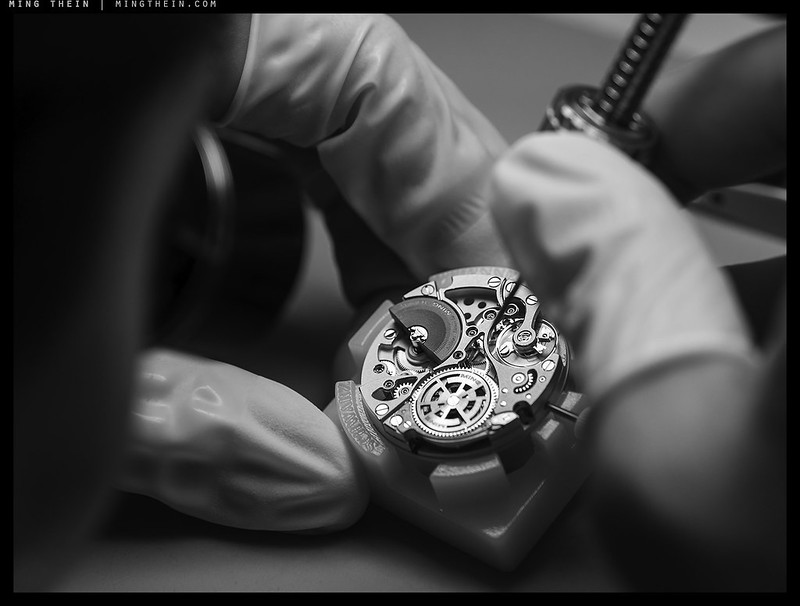
I shot for one of my toughest clients recently: ourselves. Whilst there’s no pressure, we all have the desire to do better with every set – and there’s the friendly internal competition given that there are no fewer than five photographers amongst the founders’ group. I am of course talking about the watch business; this set was photographed at the facilities of our production partners Schwarz-Etienne in La Chaux de Fonds, Switzerland, whilst a series of 19.01s and 19.02s underwent assembly, regulation and final quality control. I’ve shot this kind of thing before for many other brands, of course – but it feels very different when it’s your own name on the dial and movement… MT

Images were shot with an Olympus PEN F and Panasonic-Leica 12-60. Post processing with the Monochrome Masterclass workflow. Image of yours truly at the bench shot by my co-founder Dr. Magnus Bosse.

[Read more…]

Shoot everything / diminishing returns

Is it possible to practice too much? To the point that it’s almost impossible to capture something exceptional because you’ve already seen 99.9% of the possible expressions of a given subject, and then captured and curated the best from there? Is there really a point at which additional repetition does not build muscle memory, speed of response, familiarity or spur creativity? Of late, I’m increasingly thinking the answer is actually yes: you can overshoot. But as usual, there are caveats, so hear me out before you break out the stakes, pitchforks and gasoline.

[Read more…]

Photoessay: Cityscape Tokyo

A0000677 copy

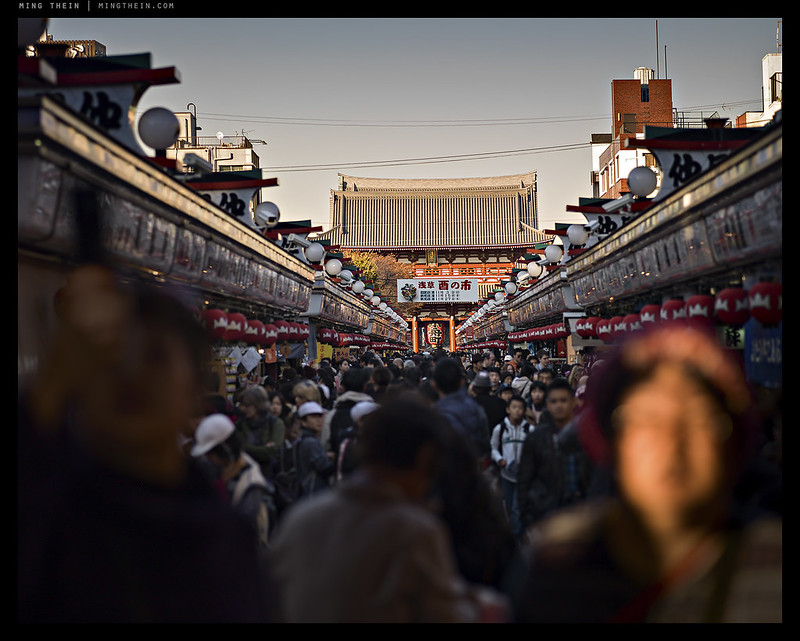
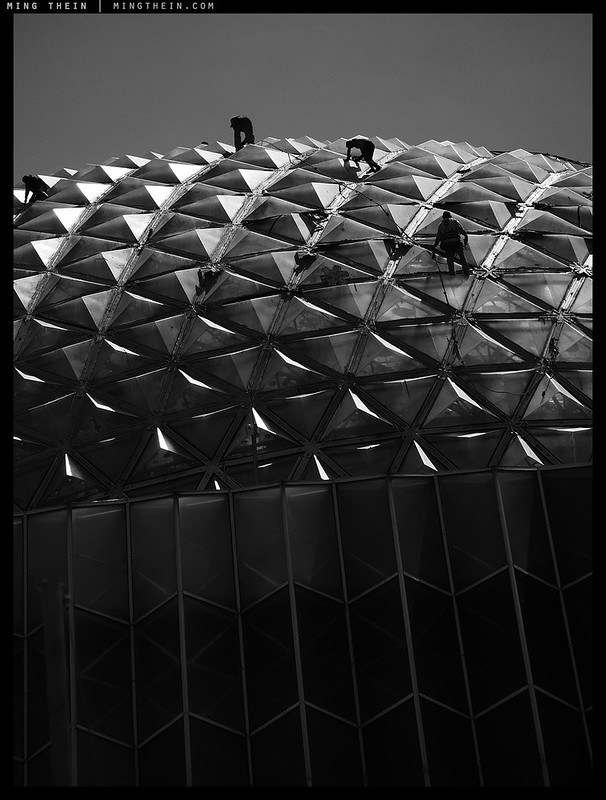
The more you visit a city, the more your impressions change; that initial freshness and impact wears off into a sort of routine of the favourite places you like to visit while you’re there. Layered on top of this are the changes to the place itself, since no city is static – least of all somewhere like Tokyo. The latest instalment in the Cityscape series of retrospective curations has taken the longest to put together simply because I’ve got so many images from this place, from (at least) annual visits spanning the last 12 years. I realise that most of the early impressions no longer resonate with me as much as images shot in say the last four or five years, at most. This is the Tokyo I have in my mind now – one of density, activity, anonymity, details – but it won’t be the Tokyo I remember next year as I’m actually here at the moment with my family, and for the first time, our four year old – new memories are being made, new impressions formed, and it’s still too new to know what will stick. MT

Shot over a long, long period of time with a wide variety of equipment. Mostly processed with PS Workflow III.

[Read more…]

Off-camera lighting 101: the ‘five things’

_Z705723 copy

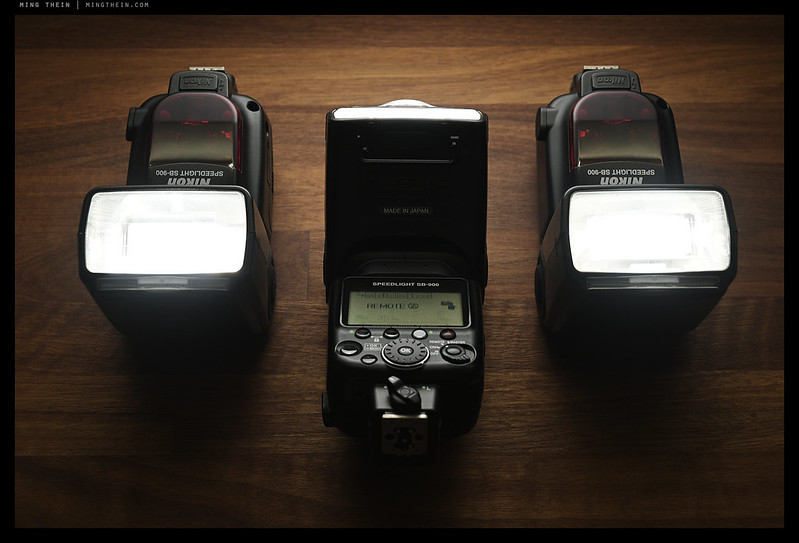
I frequently get asked about lighting: specifically, how does one best approach the daunting challenge of knowing where to put what lights, how to set them up, use modifiers etc. I’ve written about some of this in the past but realise that I never tackled conceptually where to start. Fear not: in true Ming style, it’s now a list of Five Things 😉 Though the whole process of conceptualisation and setup becomes increasingly intuitive over time and practice, I still find that this list helps quite a lot when you’re either a) working with very complex setups where multiple lights can start creating interference with each other, or b) trying to simplify. Remember, a shadow does several things: it provides spatial context for three dimensional placement of subjects in a two dimensional presentation; it creates texture; and it provides separation and definition from the background. The more complex the lighting setup, the less well defined the shadows are going to be. Ultimately, the purpose of any controlled lighting setup is to place the shadows where you want them to go, and control the relative brightness of the subject elements, allowing you to precisely manipulate the structure of your image so that it is ‘read’ by your audience in a certain way.

[Read more…]

On-assignment photoessay: Preparations

_Z704849bw copy

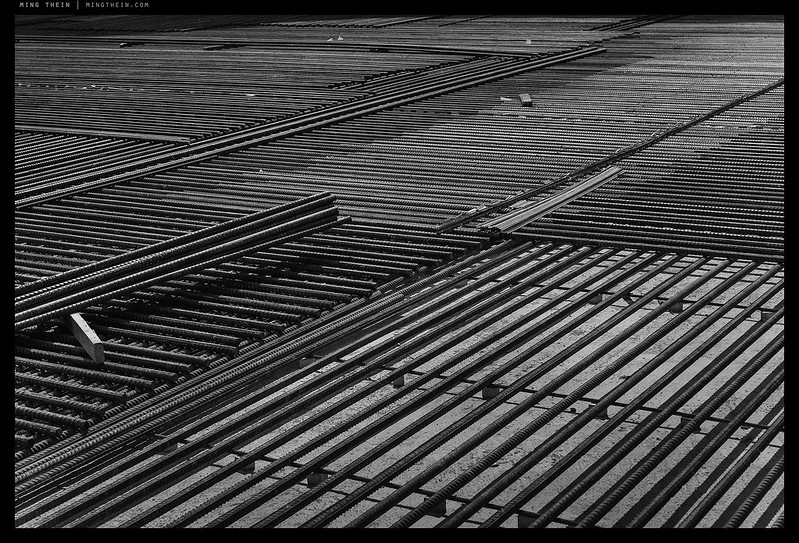
When on assignment, there are images you shoot to the brief, and the bonus ones you shoot for yourself: sometimes they aren’t really corporate safe or commercial-clean, but they have a something – texture, light, grit – that appeals to something personal. I always try to respond to these scenes in an instinctive way: just shoot, sort them out later, and package separately for your client in the hopes they might use them, or at least see and appreciate even if they don’t (because they don’t fit the look and palette you’ve already established). Still – I think all photographers need to feel moved in this kind of way; if you don’t, then the desire to experiment and create might not be as strong as it should be… MT

Images shot with a Nikon Z7/24-70 and D850/70-200/4, and post processed with The Monochrome Masterclass workflow.

[Read more…]

Photoessay: nocturnal impressions of Hong Kong

_Z704486 copy

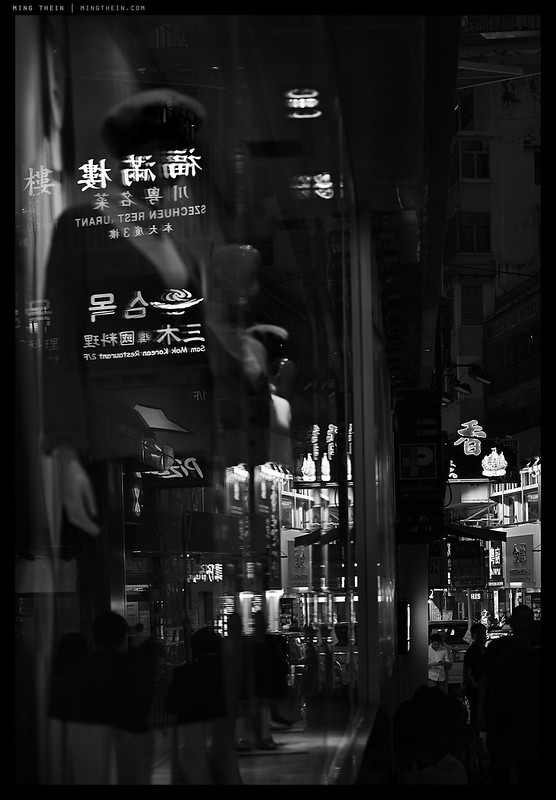
You know a place has something on you if you want to go out and shoot to relax after spending the whole day…shooting on assignment. In this case a very different sort of work, and the kind of thing one can shoot in flow/ stream of consciousness; you react instinctively and don’t think too much about the scene. I look at the structure and the main highlights – note, not subjects, since the image is more of a vignette of a feeling than a specific description of a subject – balance the composition, and then shoot accordingly. There’s one kicker: I shot everything at ISO 64, handheld, relying on the stabiliser of the Z7 and the large amount of ambient light. I must have been inspired by Robin’s experiment some time back, but in this case I was deliberately seeking out motion, layers and wimmelbild to convey the impression of busyness and activity, but with the sort of surreal detachment that a monochrome presentation suggests. The emotional impact of color is not present, and one feels a bit colder and more objective or separated from the scene; an observer rather than a participant – which matches my feelings in places like this. I shot something like 500 frames that evening. This is my selection. MT

Images shot with a Nikon Z7 and 24-70, and post processed with The Monochrome Masterclass workflow. There are also one or two camera JPEGs in there, and I now have a very similar SOOC picture control pack available here.

[Read more…]

By popular demand: Nikon Z7 and D850 JPEG picture controls and ACR presets – 29/12/2021 UPDATE: Z7 PROFILES ALSO COMPATIBLE WITH Z9

_Z707978 copy

I’m giving in to the large number of people asking me for Z7 and D850 Adobe Camera Raw presets/profiles that are compatible with Workflow III. Now available is a supplementary pack that includes these presets, as well as a bonus: what are arguably the best SOOC JPEG profiles available at the moment for the Z7 and D850. I’ve been looking at ways to make my own workflow more efficient for the majority of cases where I don’t need perfect files, so I can spend more time shooting (or doing other things) rather than being stuck behind a computer. Inspired by the results from the PEN F, I spent some time using Nikon’s byzantine picture control management software to make a set of curves that plays nice under the majority of situations. The monochrome picture controls were calibrated specifically for velvety rich shadows and smooth highlight rolloff; I think of it as ‘Acros Plus’ with a light orange filter; for some odd reason getting monochrome right was much more difficult than color – I put it down to the sensitivity of Nikon’s curve implementation.

Important update, 29 Dec 2021: the Z7 profiles are also compatible with the new Z9.

Included in this pack are:

  1. Nikon Z7 ACR flat color preset, for use with Workflow III and PS
  2. Nikon Z7 ACR flat monochrome preset, for use with Workflow III and PS
  3. Nikon D850 ACR flat color preset, for use with Workflow III and PS
  4. Nikon Z7 monochrome picture control (SOOC JPEG)
  5. Nikon Z7 high contrast color picture control (SOOC JPEG)
  6. Nikon Z7 low contrast color picture control (SOOC JPEG)
  7. Nikon D850 monochrome picture control (SOOC JPEG)
  8. Nikon D850 high contrast color picture control (SOOC JPEG)
  9. Nikon D850 low contrast color picture control (SOOC JPEG)

The preset/picture control pack is available to purchase here for $50.

All sample images in this post were shot with the Z7 and one of the three picture controls; PS was only used for batch resizing. More samples and notes after the jump. Expect an email from me after purchasing, within half a day at worst in case I’m not at the computer.

[Read more…]

Long term thoughts on the Nikon Z7 and system

_PF05987 copy

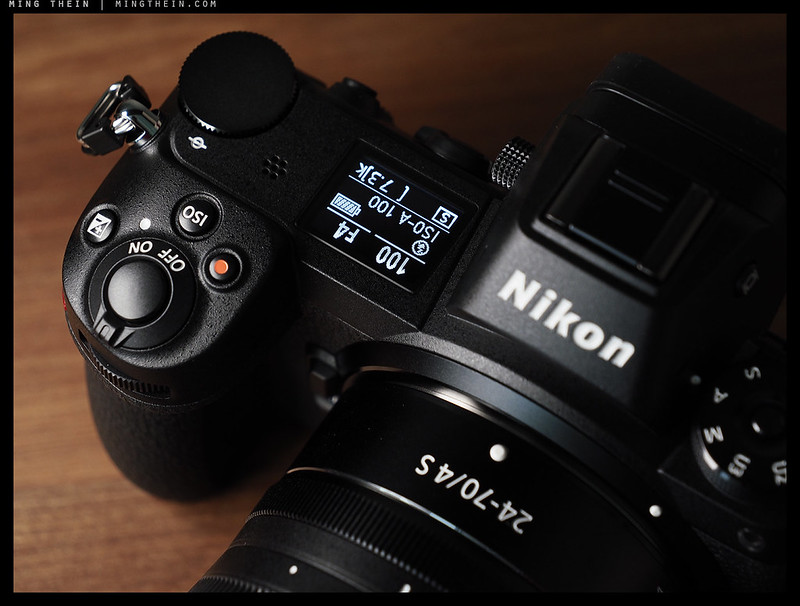
I’ve now had a few months, a few assignments and what I’d consider a decent amount of time with the Z7: long enough to be familiar with its various peccadilloes and figure out exactly where it fits in my arsenal. Think of it as an extended field test, and perhaps more important than the initial review that people seem to expect me to produce within hours of a camera’s announcement. Truth is, you don’t really know a camera until you’ve had a chance to use it as you normally would, for the kinds of subjects you normally shoot, for an extended period of time – it’s just not physically possible to cover that many scenarios in a short test. Trouble is, not many of us have the time to do that (and especially not sites that have dozens of cameras to cover every month). It also requires consistency in the way one works to provide a baseline of expectations. As usual, I preface my thoughts with the caveat that not everything will apply to everybody, and validity of course increases the more similar your photographic style is to mine. I may not cover some things that matter to you, and I may obsess over other things that are trivial. With that, and assuming we have a mature audience, let’s move on.

[Read more…]