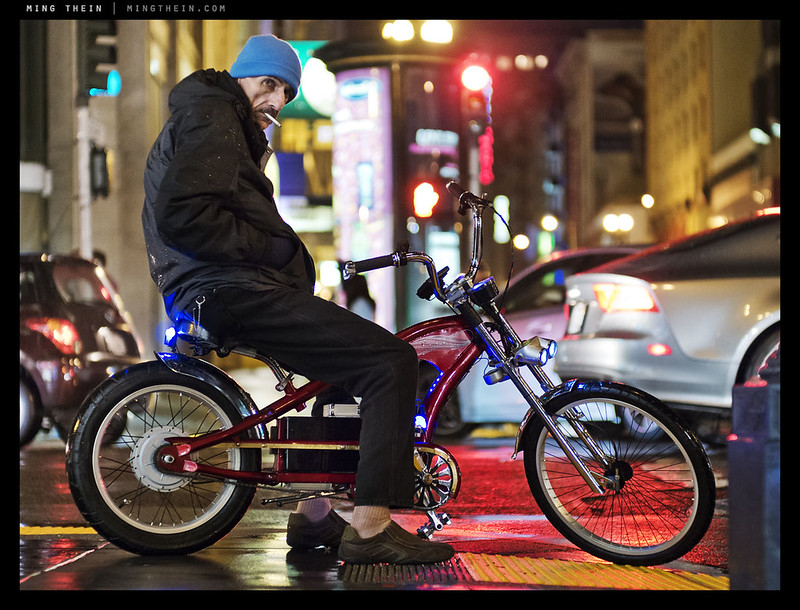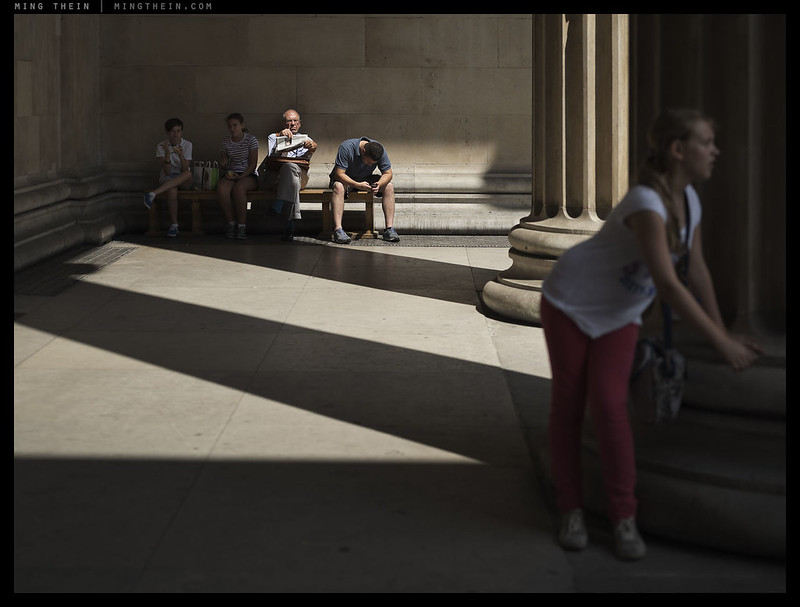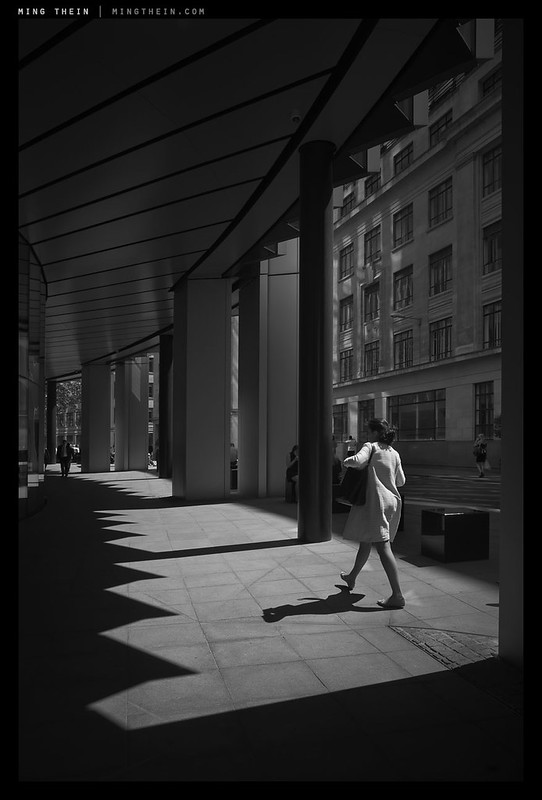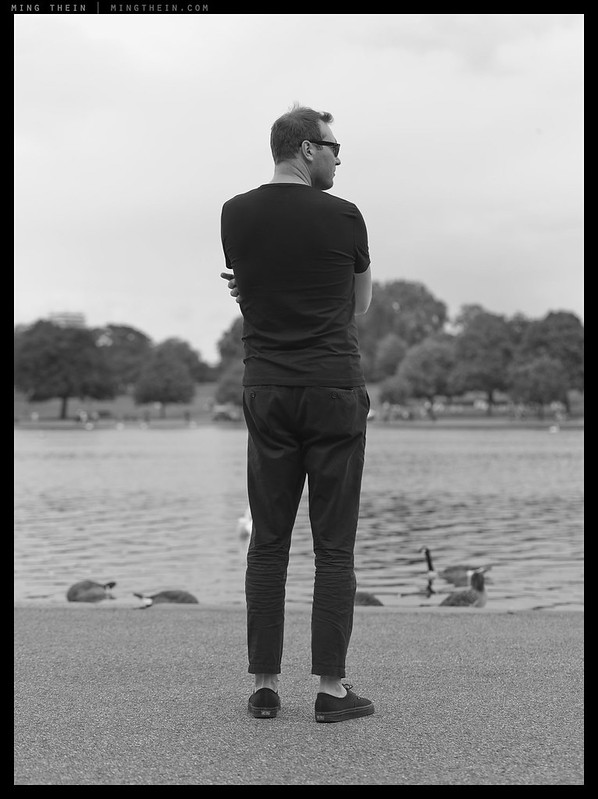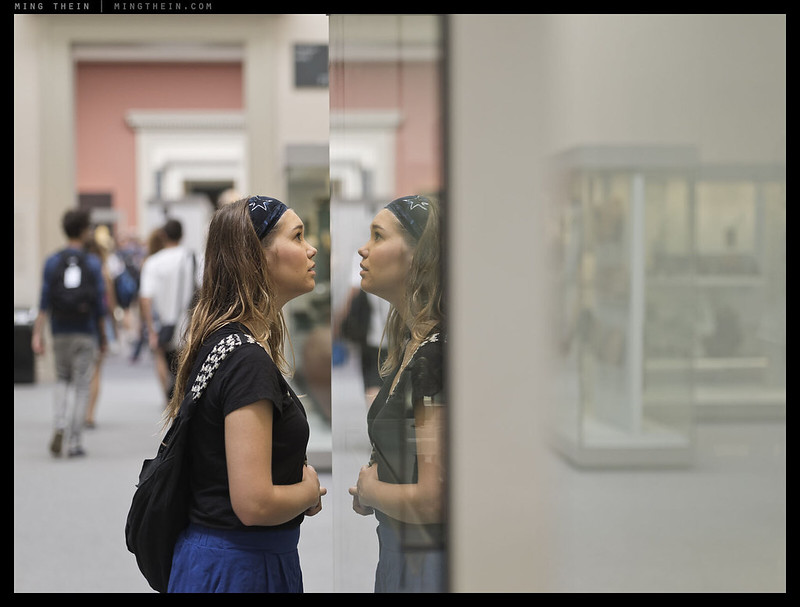
My initial idea for this post was to examine where street photography is going today; on further reflection, I think it’s perhaps more a question of addressing some overdone stereotypes perpetrated by camera collectors and social media warriors – not photographers – to see if we can get a bit more understanding into a) why those stereotypes exist, and b) if we want to produce visually different and better work, what needs to change. Read on, but only if you don’t believe everything should be shot from close range and monochrome contrast is solely binary.
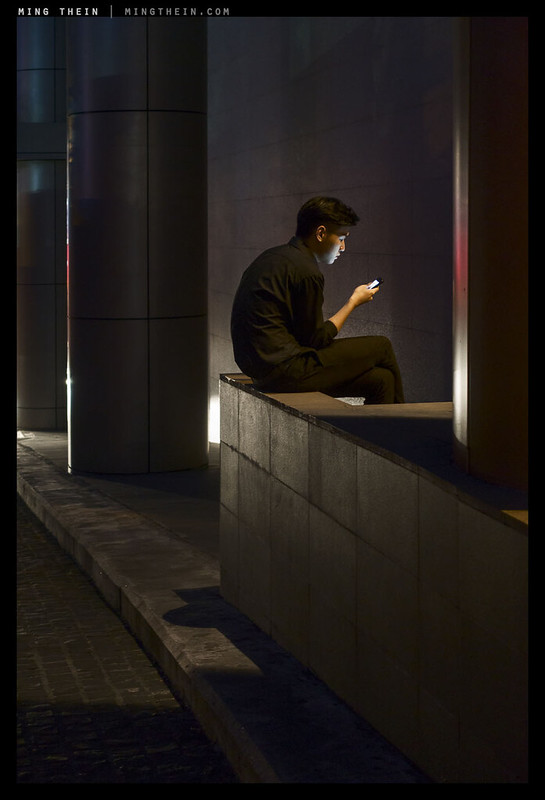
Photoessay: From the streets of KL, #72
It’s been a little while since I’ve posted any of the more conventional street photography with identifiable individuals. I suppose that’s a consequence of a change of creative direction towards images that are perhaps less literal and more everyman; photographs that can ask a question and make you have cause to contemplate them for a long time without really having an answer. Images that stick tend to be ones that are graphically shocking (could be positive or negative) or those that require some further digestion. Nevertheless, I still do make these images but instead curate them even more heavily than usual; today’s set perhaps more so because they’re made in what is a very familiar environment to me. What’s interesting is that many of these still come from a very small radius of places I’ve covered literally hundreds of times – I suppose that continual change is one of the joys of photography. This set spans some time, and as a result, quite some equipment too – from a first-generation RX100 to the CFV digital back to the D810. Postprocessing was mostly with PS Workflow II. Enjoy! MT
Photoessay: Life in Tokyo
Tokyo ranks extremely highly on my top places in the world for street photography – the sheer visual difference notwithstanding, it is also an extremely tolerant society to photography, and photography of random people in public. Everybody is doing it to the point that nobody notices anymore; however, unlike in other parts of the world where camera phones dominate, there are plenty of people using more serious equipment, too. Blending in has never been much of a problem. That difference I mentioned earlier is eroding somewhat, though. Once again, globalisation has meant that a lot of the more unique ‘character’ areas of the city are becoming clones of international streets (or vice versa) or even other parts of Tokyo; the area around almost any major railway station is the same, for instance – an agglomeration of fast food eateries, convenience stores, and one or two major chains plus a business hotel. It’s a formula that probably works for practicality, but not so much to keep the world an interesting place for its inhabitants.
Photoessay: Observations of Londoners in summer
For what feels like no more than a couple of days a year, the entire mood of London changes as the sun comes out and puts (most of) the population in a good mood – it’s as though the vitamin D has a tangible effect on the constitution. In fact, I’m pretty sure it does; there’s no question I feel better after a bit of sun, and not just because I’ve got interesting light to shoot with. There are still a decent number of overcast days, but at least they’re offset by intense sunshine and great shadows.
Photoessay: London street mono, part II
Today’s post is the conclusion of part one. The abstraction of man in monochrome continues; my own peculiar brand of anthropological observation/ documentary/ street photography. Call it what you will. Perhaps as a consequence of the medium (format), I feel these images are somewhat more structured, ordered and ‘rigid’ than the previous set; that said, I’ve never felt London to be a particularly liberal place – especially the City or any of its other institutions – so perhaps this is actually somewhat appropriate.
Photoessay: London street mono, part I
The first part of my street photography from London shows life at my favourite 28mm documentary perspective – one I find natural, long enough to be intimate without being too intrusive, but wide enough to take the context of one’s peripheral vision without overly drawing attention to the geometric distortion that happens with even wider lenses. Despite having flirtations with the longer perspective I also carry – in the past 85mm, and now down to 55 or even 40/43mm for medium format – I’ve seldom gone wider than 28mm, just because it’s so instinctive. Or perhaps it’s a product of having spent a year shooting little else, back in 2009.
Photoessay: London mono solos
Many years ago, I lived in London. I’m always told that it’s most people’s aspiration to go there, but to be honest, it’s a place to visit, not one to live – much the same way I see Tokyo. What’s always struck me about it is despite having somewhere around 12 million inhabitants and what often feels like the most densely packed streets and transport systems on earth, you almost always feel alone. In the five years I spent there, I can count the number of random conversations with strangers I’ve had on less than the fingers of one hand – which is to say, far less than any other city I’ve lived in. People just seem to be not so approachable and lost in their own worlds; much like Tokyo, it seems that the less space you have, the more fiercely protective of that space each individual becomes.
Photoessay: From the streets of Kuala Lumpur, part 57

Reminiscences of the last supper
I honestly have no idea how many times I’ve posted images from KL. It might be 56 or 30 or 128. I don’t think it matters, anyway. I find quality of vision, and the ability to see, follows a bit of a camel hump: you need some time in a place in order to not be surprised and enraptured by every little thing that breaks your version of normality; a little objectivity and distance helps with quality. A bit more time, and you’re comfortable enough to explore, and have found things off the beaten path to the casual visitor; too much time and you’re jaded. The bigger the city, the longer this takes; but for a relatively small metropolis like the one I live in, that’s not very long at all.
Repost: Basic street photography techniques

Offerings for sale. Sony RX100
Following on from the previous photoessay and numerous emails, I thought it’d be useful to repost this article I wrote previously on street photography techniques. Although it’s possible to describe most of them in some detail, full understanding requires both demonstration and practice – this is where the Street Photography video comes in, or alternatively joining one of my workshops. Together with the basic principles of balance, perspective, composition and what makes a good image – these techniques may be used singly or in combination to generate strong street images. In fact, they also apply to documentary and reportage work, too; the only difference between good street photography and photojournalism is that the latter has a consistent theme and subject.