Le flaneur

X1D4_B9995070 copy

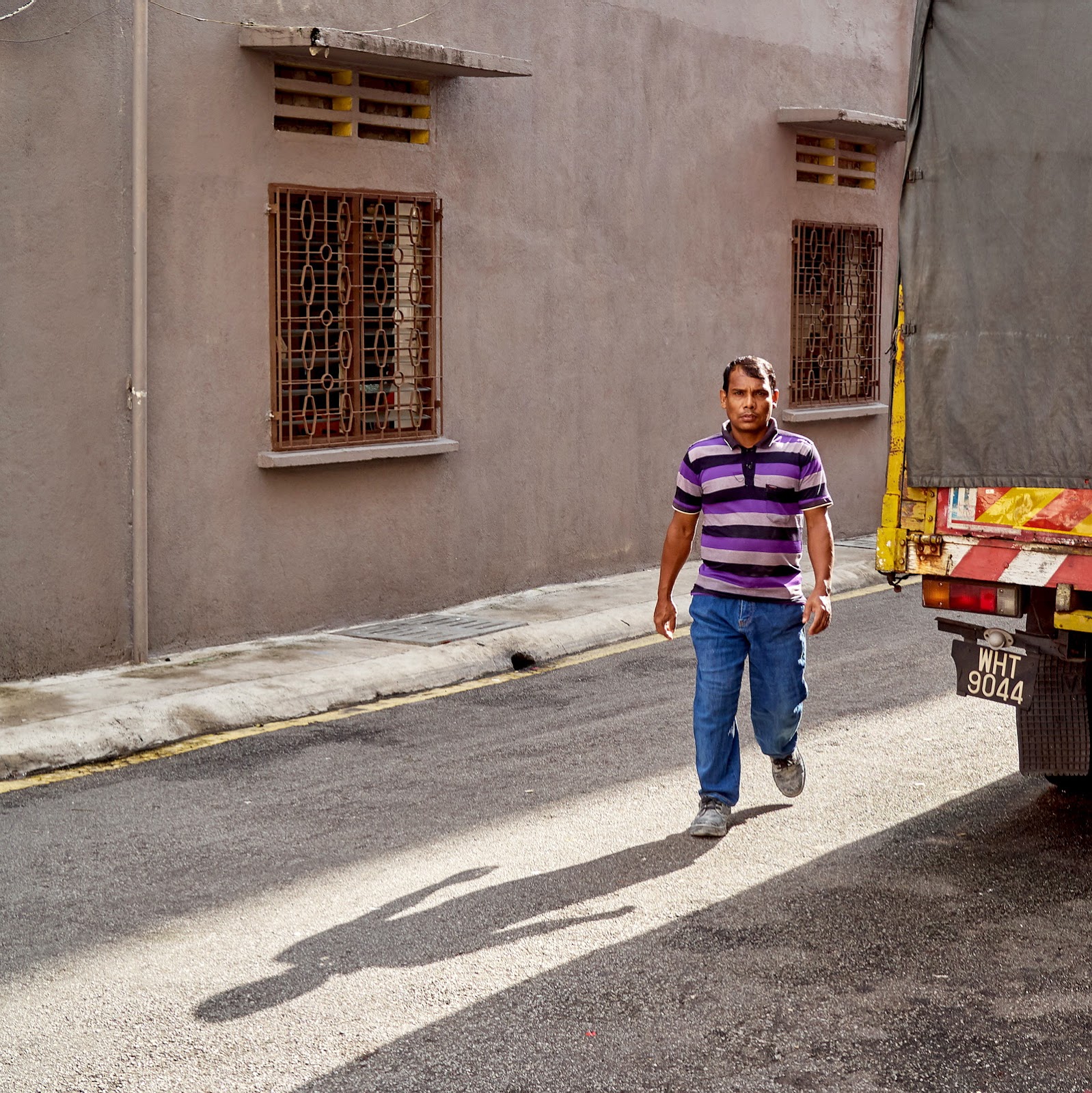
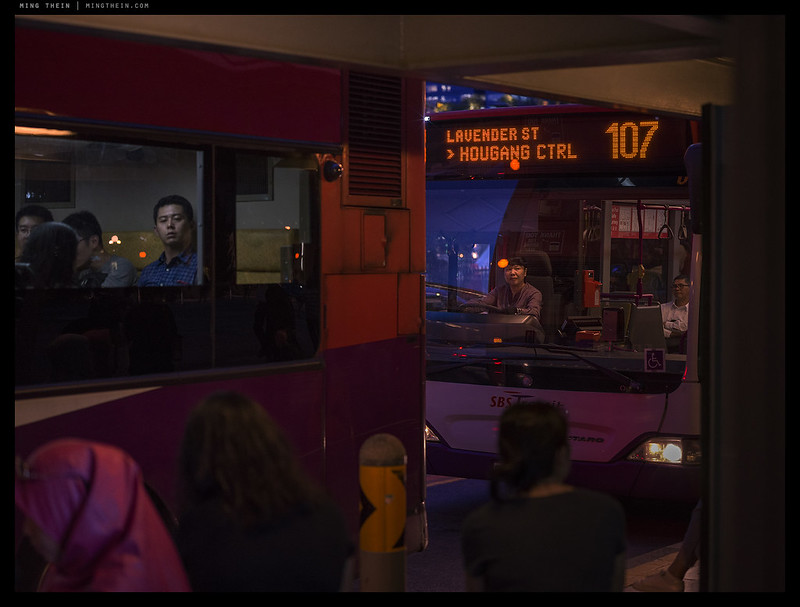
From Wikipedia: “Flâneur (pronounced [flɑnœʁ]), from the French noun flâneur, means “stroller”, “lounger”, “saunterer”, or “loafer”. Flânerie is the act of strolling, with all of its accompanying associations. A near-synonym is boulevardier.” A holdover from the class divides of 19th and early 20th century in Europe when the gentry could spend their time engaged in leisurely walking, observing and enjoying the cities, the concept might sound a bit indolent today but is actually still quite apt: these were the original street photographers, most of whom went without cameras. Fast forward half a century and we had the tourists; who perhaps could be thought of as serial visitors herded in predefined courses from important sight to sight. In parallel, photography went from an academic and scientific curiosity to being a mass-medium for personal recording, and then public exhibition. And then a means to show off: this brings us to the present day.
[Read more…]

Stepping back for context: wider street portraits

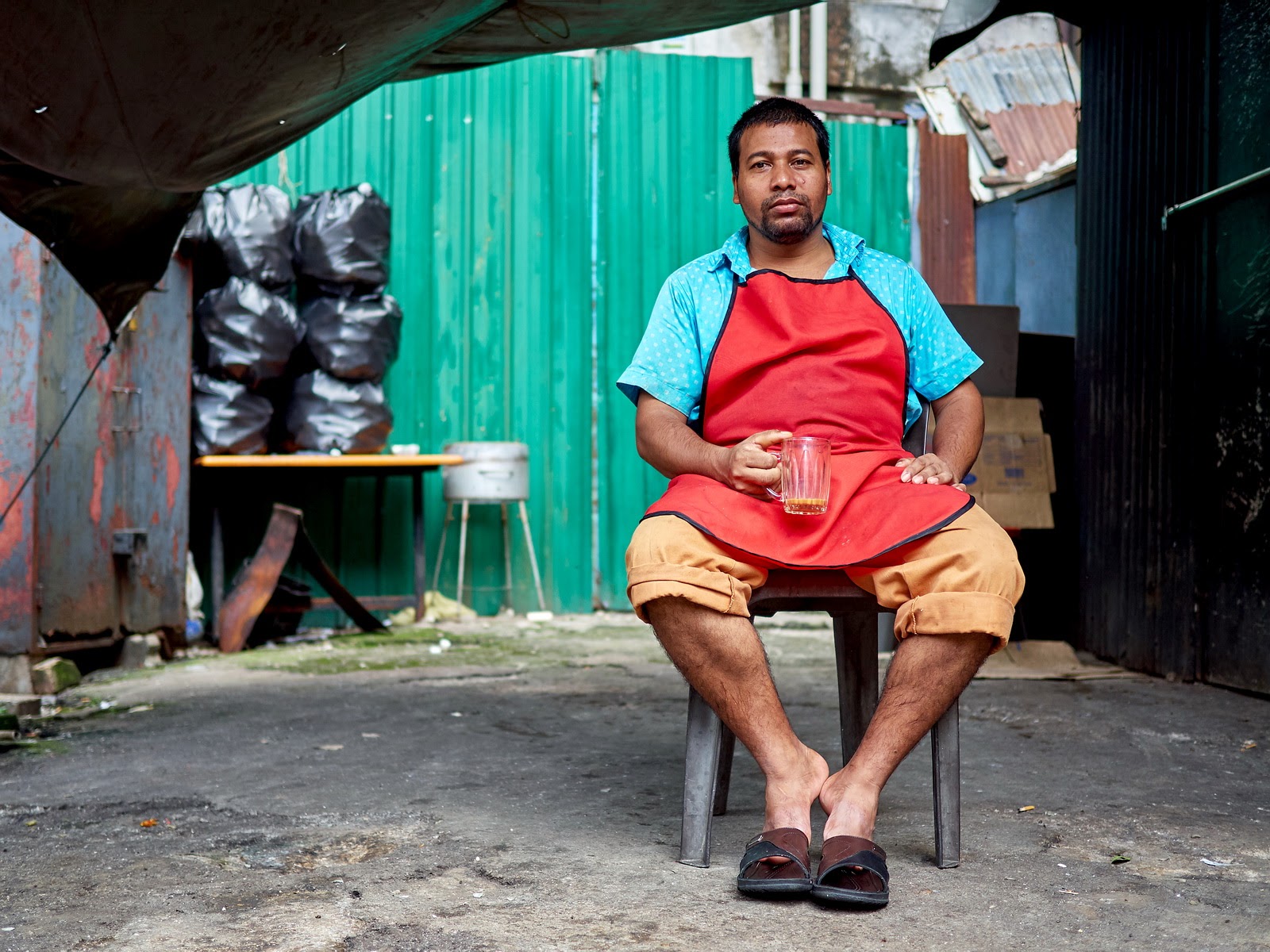
My photography buddies often ask me if I get tired of shooting the same streets in Kuala Lumpur, and my answer has always been the same: no, because I do things differently each time. While the background and setting remain the same, we can choose to vary our choice of subjects and the way we approach them. I have been shooting portraits of strangers for a while now, and I see my style changing progressively. Some of the changes are subconscious as you cannot do the same thing all the time and expect different results.

For a while now, my most used lens on the street was the Olympus M.Zuiko 45mm F1.8 lens as it gave me medium telephoto coverage, a tight perspective for close up headshots and provided sufficient control over depth of field. It was a huge challenge to approach strangers and get so close for my shots, and I was happy that I pushed through this process and overcame self-doubt when talking to strangers on the street.

In contrast to that, I have been moving myself further away from the usual head and shoulder shots and decided to pursue a wider environmental style of portrait. Instead of 45mm F1.8, my most used lens now is the 25mm F1.8 on the streets.

[Read more…]

Thoughts on portraiture

H61C-B0005666bw copy

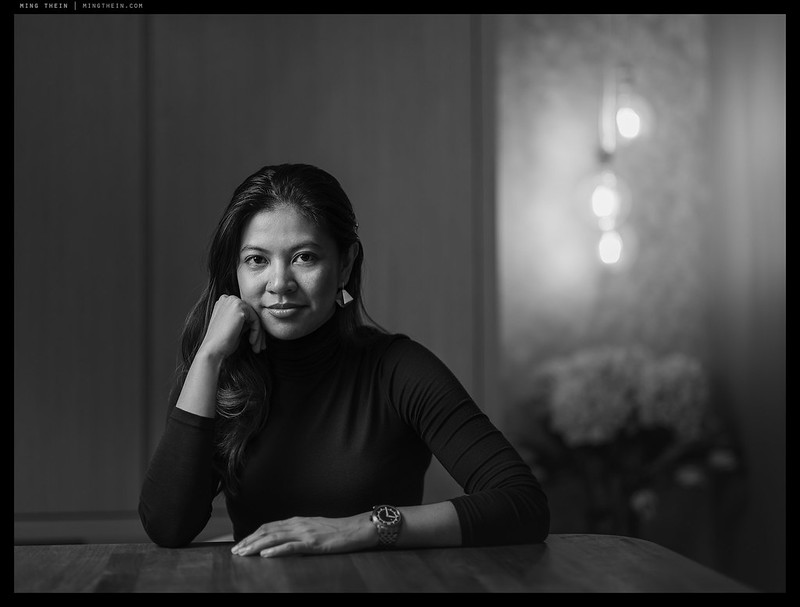
I have never been a portrait shooter – and as much as I find satisfaction (the reasons why we will discuss in due course) in a well-executed portrait, I don’t think it will ever be the mainstay of my photographic repertoire. The reason is both simple and complex: a portrait is not a photograph of the physical person – it’s a visual representation of your relationship with that person. A sort of mirror, if you will; even though all subjects reflect light and thus the environment to some degree, there are more and less reflective ones. Highly polished objects can land up being entirely representations of their surroundings only, with the merest interference of interpretation; one of the tenets I live by in watch/jewellery photography has always been ‘light for the reflection’. That’s not really relevant to portraiture, or is it?

[Read more…]

Repost: Achieving visual consistency

_8510238 copy

Cue one from the archives, with updated images: tomorrow’s post will make more sense when viewed in context after this…

One of the questions I’m asked also (unsurprisingly) happens to be one of the biggest challenges for a lot of people: how to achieve visual consistency across multiple systems/ cameras/ media, and across multiple subjects. Though the latter is really getting into the question of what constitutes style and how can one consistently apply it, there are still things you can do to ensure that you are in control of the final presentation: not your camera. I certainly cannot tell a client ‘sorry, it looks different because I used two different cameras.’

[Read more…]

MT’s Scrapbook: Sunday afternoons

_PF90367 copy

The first entry in the Scrapbook is a quasi-narrative one from a lazy Sunday – the perfect kind of thing for which to test the entire pretext of the exercise. There was enough photographic content to keep me challenged and in practice, but not so much as to turn into the primary purpose of the day – oddly, not something I’ve had to worry about too much in the past, pre-family. Finding that balance again is challenging. Definitely not perfect, but more importantly – with enough verisimilitude that it’s pretty much as we remember it, which oddly, reminds me a bit of shooting film on family holidays when I was much, much younger (and pre-serious-photography). MT

The Scrapbook series is shot on an Olympus PEN F, with unedited JPEGs straight from camera bar resizing (and of course some choice settings).

[Read more…]

On-assignment photoessay: the face of construction

_8513695bw copy

Over the course of the last few years, I’ve had the chance to shoot quite a number of contextual portraits of the people behind construction – some I’ve presented previously, and thus are not shown here. Almost all of the images in this set are new, and the result of a much larger curation project I’ve been meaning to do for some time. Even as extensive as a single shoot for this client tends to be – thousands of images over a week or so – the subject matter and light conditions are so diverse that you seldom have a chance to shoot a thematically and visually consistent sequence; thus the only way to make a project like this work is over a longer period of time. It also ties in nicely with some monochrome portrait experiments I’ve been doing over the last couple of months. Interestingly, the main challenge with this body of work overall was not opportunity, but the fact that construction workers in Hong Kong seem to all be exceedingly shy… MT

Images shot with various hardware over the last three years, but all post processed with The Monochrome Masterclass workflow.

[Read more…]

Crystal ball gazing – have we reached a plateau?

_8501581 copy
The split, redux: all will be explained in the article…

In the late 90s/early 2000s, film photography arguably reached its zenith in many ways: you could get all sorts of hardware in all sorts of form factors; emulsion technology peaked in both proliferation and quality, and it was easy to get anything developed and printed, and developed well. There were high end pro compacts, super fast DSLRs, consumer megazooms, large format folders, sub-frame cameras…films varying in speed, look, positive/negative, and even crossover-types like C41 process black and white. I’d even argue that since then, film emulsions have not really improved (undoubtedly due to the vanishingly poor business proposition created by the emergence of digital) – and we’ve lost most of the major manufacturers and choices. (To say nothing of the labs.) The core technology reached a balanced plateau: lenses were matching emulsions in resolving power; AF systems were matching the rest of the system in precision required to consistently deliver the aforementioned resolution. On film, there’s not much difference between one of the better 50mms of the time (say a C/Y 1.7/50 MM, A Leica 50/2 Summicron, or a ZF.2 2/50 Makro-Planar) and arguably the best of today – the Zeiss 1.4/55 Otus APO-Distagon. I tried this experiment on an F6 some time back, with Fuji Acros: I couldn’t really see much of a difference in resolving power. Drawing style, yes, but not resolving power. Your ability to focus made far more of a difference. And running the same film through my 1979 F2 Titan or the 2005 F6 made no difference at all, of course. Ultimately, during the film era: image quality was proportional to format size. How is this relevant to now?

[Read more…]

Photoessay: the ever-present scrapbook, mid-2018 edition

IMG_9546b copy

I’ve written several times in the past about the legitimacy of phones as photographic tools My main assumptions have always been the same: that a) one does not compose any differently; a 28mm-e FOV is a 28mm-e FOV and does not change with recording format; b) you are aware of and shoot within the limits of the hardware, i.e. dynamic range, light, ability to handle motion, stability etc; c) you’ve almost always got it with you, so the opportunities are simply greater – especially the larger your primary hardware becomes. The number of excuses have gotten fewer too, as phone camera hardware has improved – but not as much as the processing software behind it. I’m currently on an iPhone 8 Plus, which has dual cameras (primary, 28mm-e, stabilised; secondary, 56mm-e, unstabilized, and a stop slower). I find that I use the tele camera a lot less than I’d have expected – probably given that its working envelope is very small due to the lack of stabilisation and what appears to be diffraction limits (not surprising given the extremely tiny pixels – in the 1um range or so). I’m also finding that whilst images look great at normal output sizes – say up to a moderate monitor – they really fall apart at full resolution, with perhaps even less pixel-level integrity than the earlier generation of phone sensors. I suspect this is because there’s a lot more processing going on to optimise things for straight out of camera use; blame the social media generation. They also won’t print well. These images either look okay as they are, or are going to present nigh on zero latitude for post processing – a fact confirmed by the surprising gulf between raw files and JPEG. Shooting RAW is a pain, requiring you to do it in LR Mobile (and very slow) – so I’ve only ever tried this on an experimental basis. I can’t help but feel though in some ways the limitations are somewhat part of the stylisation; mostly to do with handling of deep shadows and contrast. The camera’s limits do nudge you unsubtly towards shooting in a certain way; all devices do this to some extent, I suppose. Presented today is what I think of as a “scrapbook of experiments from the last six months I didn’t think you could get away with doing more seriously”; somehow the compositions are a bit more minimalist or stark or whimsical than what I’d do with a larger camera, though that’s not to say the results aren’t interesting…MT

[Read more…]

Photoessay: Indirectly Mondrian

_8B21656 copy

Today’s set is a curation of images accumulated over the last couple of years – somewhere in my subconscious, I think there must be a cubist/surrealist influence that probably has something of the Mondrian about it. Every so often, there’s a rectangular compositional arrangement that makes itself known, compels me to photograph it, and then file it away – almost always the composition will pop up as a visual non-sequitur when I’m busy shooting something else. It isn’t always colourful, rectangular, drippy and delineated – but there’s usually at least two of these properties that show. Visual work may be derivative, but it doesn’t have to be outright duplicative; there also seems to be quite a lot of recursion and crossover with other obsessions of mine – mostly wimmelbild. Perhaps it’s a merging of an underlying desire to seek visual structure, but preserve an underlying intricacy and detail that holds your attention as you try to figure out exactly what you’re looking at In any case – I’ve processed these, filed them away for later and whilst clearing my archive – here they are. Perhaps it’ll be worth revisiting in another year or two as a long term project – sometimes these underlying themes only emerge with time and some degree of detachment at the actual time of execution… MT

Shot with a variety of cameras over the last few years, and post processed with Photoshop Workflow III.

[Read more…]

Robin’s less obvious street photography tips…

Despite the recent explosion of street photography related content and images, there are very few new and original ideas being explored. Phrases like “the decisive moment”, “if your photograph is not good enough, you are not close enough”, and “F8 and be there” have become clichés in articles on street photography tips and tricks. There is no dearth of self-proclaimed gurus or street photography masters, all offering wise advice, suggestions and must-do checklists to magically guarantee you an upgrade to the next level of artistic progression. I, on the other hand, take a more practical and no nonsense approach to street shooting. In this article, I share my thoughts on street photography – thoughts which may not be considered mainstream.

[Read more…]