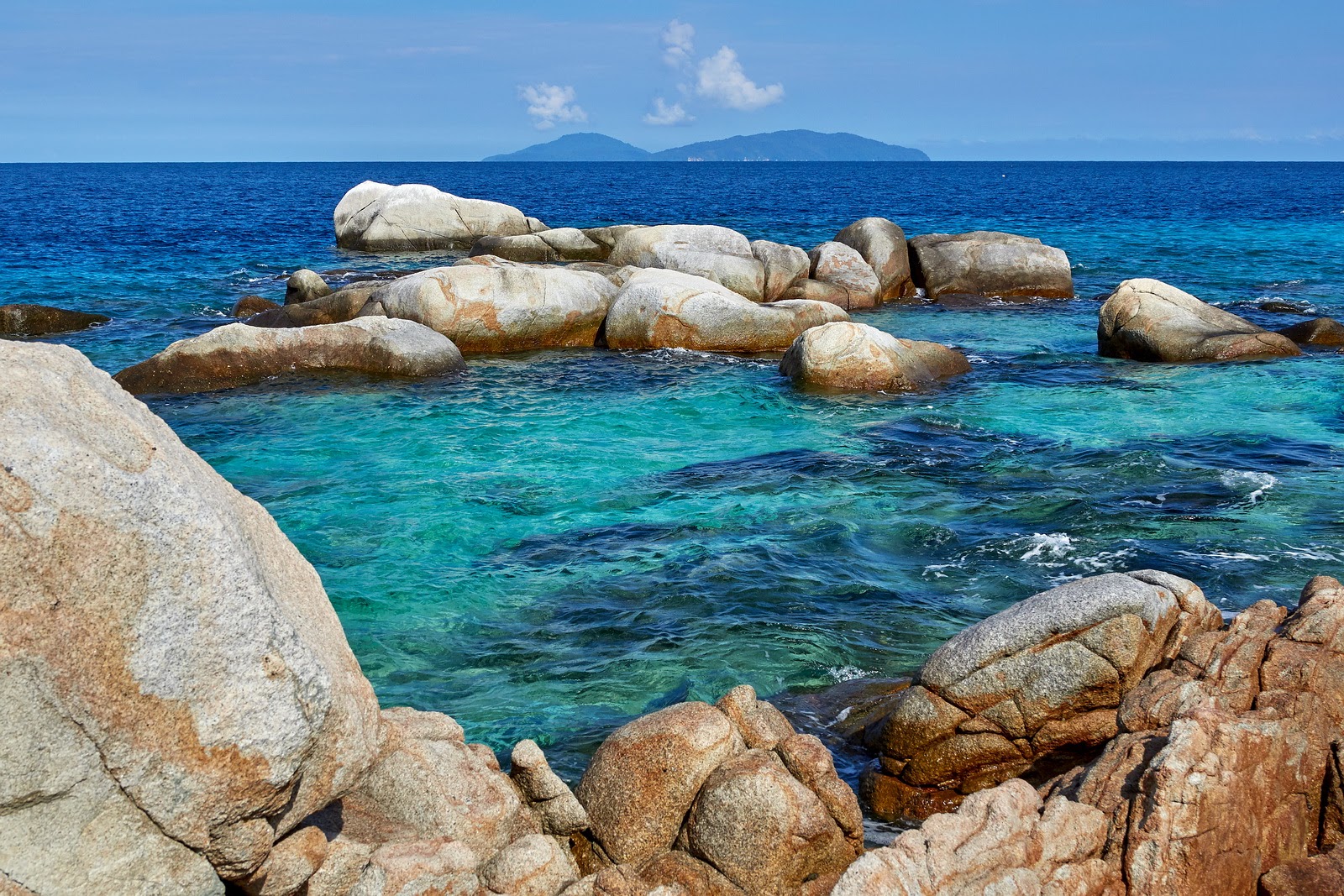
At a recent Olympus event for bloggers and social media influencers, I was requested to conduct a night photography workshop at Pulau Lang Tengah – an island off the eastern coast of Malaysia. Since it was the start of the monsoon season, we anticipated rain and cloudy weather which is counter-productive to night sky and landscape shooting. I had most of the day before sunset to myself – a good opportunity to explore the island. I’m a land creature, allergic to the presence of water. So scuba diving or snorkeling was a non-starter, but given the great location and my purpose for being there, landscape photography was the natural answer!
Photoessay: Autumn again
Autumn in Japan these days seems to come later and later – the end of November or early December, in some areas further south. It probably ranks second only to the cherry blossoms as the season for landscapists to chase; I can’t say I did that but I did time the visit to coincide with some color in at least one of the locations we visited. It’s perhaps also my favourite season of the year as it’s the one I see the least of, living in the tropics – we get summer and an approximation of winter (monsoons) and spring isn’t that different, but the leaves never turn, the landscape doesn’t become warm, and the city isn’t redolent of reminiscence of the year that’s just passed. I’m sure I’d probably get bored of it if I lived at higher latitudes, but for now, please enjoy a (even) more abstract set than my usual landscapes. MT
This series was shot in various parts of Japan in the last year, with a Nikon D850 and 24-120 VR, and post processed with Photoshop Workflow III.
Wide angle urban exploration
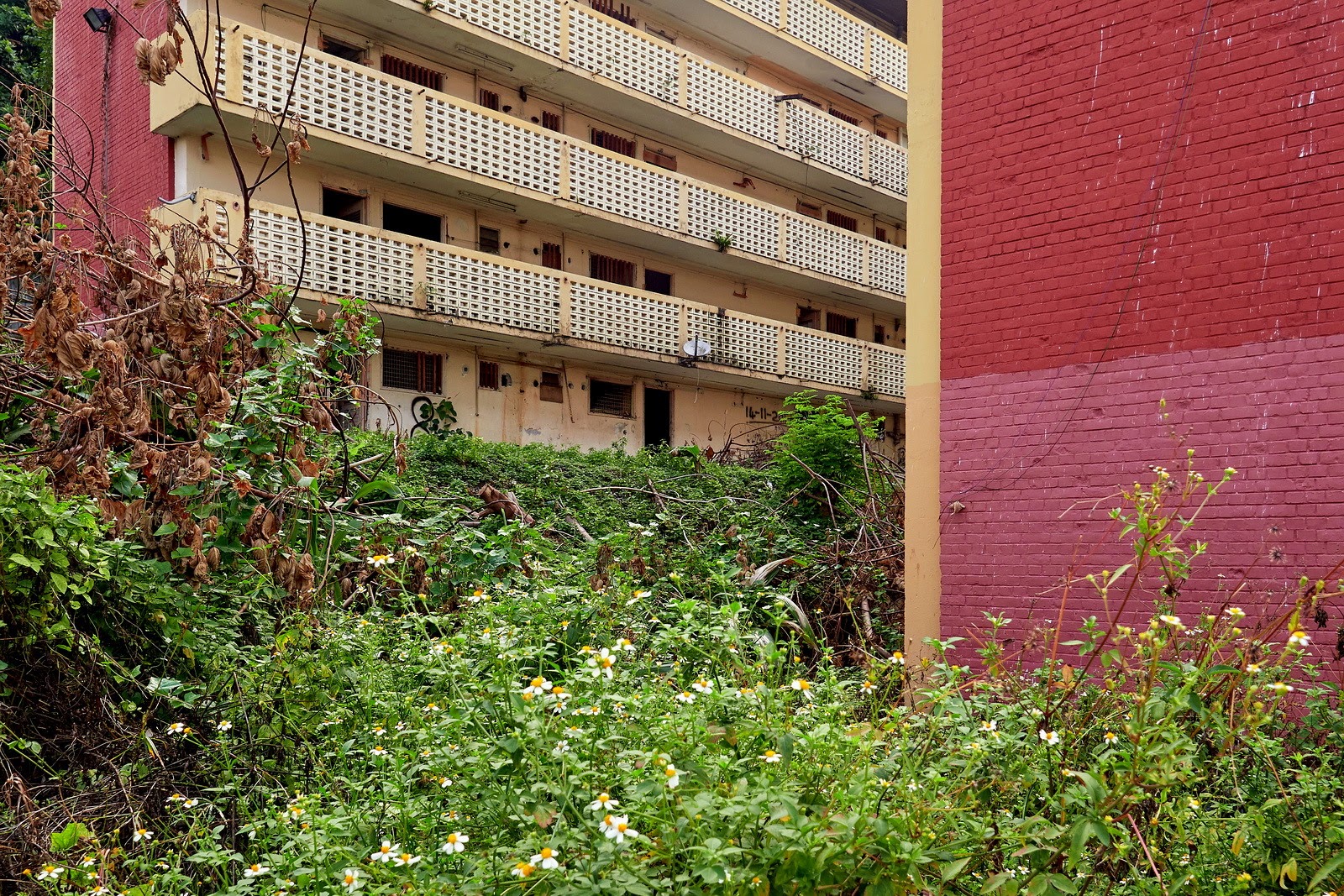
During one of my recent short walks from a train station to a nearby cafe, I chanced upon a stretch of abandoned residential flats. It had been a while since I last did urban decay photography and the thought of exploring these flats got me and my friends excited. Therefore, after some planning and gathering an adequate number of people we made our way into these abandoned buildings and started shooting. This was the perfect opportunity for me to exercise my wide angle compositional skills, something that I do not do frequently enough. I brought along the Olympus OM-D E-M1 Mark II and M.Zuiko 7-14mm PRO lens for this particular shoot.
Understanding color, from a workflow perspective: part 2
It is possible to make a calibration profile for every camera that takes you back to neutral color and tonal response; I do precisely this in PS Workflow III because I need to use a variety of tools for the range of work I do. It allows me to have a consistent color palette/ tonal signature across all of my images, regardless of hardware: this is important because some projects last for years and I may change hardware several times across the duration; but I cannot change the way the images look too much, else you sacrifice visual consistency. I also do this to get control over the output palette: subtle biases can influence viewer emotional response; this is one of the many tools in a storytelling photographer’s arsenal. Note: whilst some cameras allow for a wide range of adjustability of the in-camera processing, none of them allow full HSL adjustments (which would be required to get a totally neutral profile). Currently, the Olympus Pen F comes closest – but you still can’t fully escape the slightly warm default tuning, nor can you compensate on the fly for scenes of wildly different contrast levels (which our eyes do automatically).
Understanding color, from a workflow perspective: part 1
We first need to understand a bit of history to appreciate the origins of ‘house color’ or ‘company color’ or a particular tonal palette: in the early days of color photography, it simply wasn’t possible to make a film emulsion that responded equally to every color, much less mirrored the response of the human eye to the visible spectrum. It’s also important to note that a recording medium’s color response and luminosity (tonal) response aren’t the same thing but they are linked; further complicating things. And we haven’t even started talking about how different individuals’ eyes respond differently to color*. The best manufacturers could do was offer a range of emulsions (corresponding to a range of different chemicals that had different responsiveness to light) that gave photographers choice. It’s one of the main reasons images from certain eras have a particular look to them: the world didn’t offer different colors or fade; what we’re seeing is a mixture of time-sensitive oxidation of pigment in the output image, and the limitations of the recording medium at the time. As emulsions improved, so did the spread of color that could be recorded. The world didn’t become more realistic: our means of recording and displaying the recording did.
*As you get older or if you have cataracts, certain frequencies become blocked/absorbed by the lens or liquid portion of your eyeball, limiting what reaches the retina. And the retina itself may well not be operating at peak tonal response, too.
Photoessay: Cityscape Hong Kong
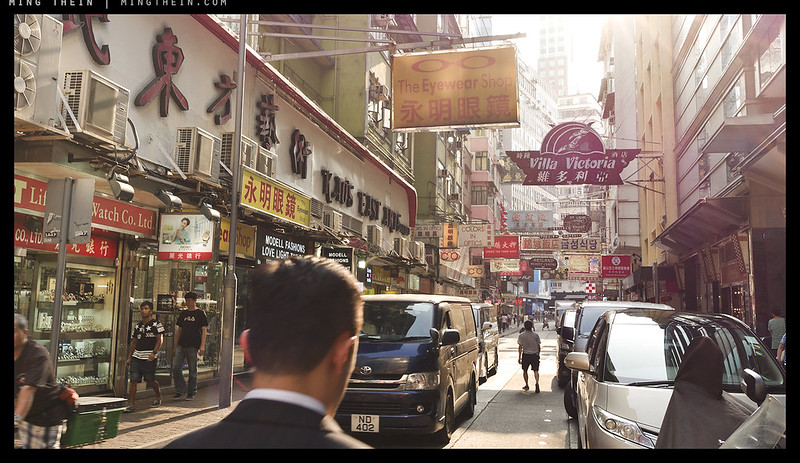
It turns out this one was a lot tougher than I expected – mainly because of the sheer volume of starting material. I’ve lost count of the number of times I’ve been to Hong Kong during my photographic career; and inevitably you land up staying somewhere with a relatively interesting view or two even directly from the hotel room, let alone once you start wandering at street level. The sheer density and rate of change of the city means that these two elements themselves are constants in the overall impression left; only on top of that can you layer the other details. The interesting thing is the details become recursive at multiple scales, resulting in a very dense urban wimmelbild of texture; it was tough to decide where to draw the line between cityscape and street during the curation. It’s also equally easy to get lost in the concrete canyons and forget that there are actually a lot of open green areas around the islands, and of course water. Regardless – there’s a lot to see here, and I’m pretty sure there are no end of arguments as to exactly what constitutes a ‘comprehensive’ interpretation of Hong Kong…
Shot over a long, long period of time with a wide variety of equipment. Mostly processed with PS Workflow III.
Shooting Muay Thai: Round two!
When a friend invited me to shoot a Muay Thai fight from the ringside, I immediately said yes. The organizers of Asian Fighting Championship (AFC) were kind enough to extend opportunities to photography enthusiasts to shoot the event. After my previous experience shooting Mixed Martial Arts (MMA) half a year ago, I thought this would be a great time to revisit fast-paced indoor sports and at the same time subject the best camera Olympus has to offer, the OM-D E-M1 Mark II, to some torture.
Photoessay: Cityscape Chicago
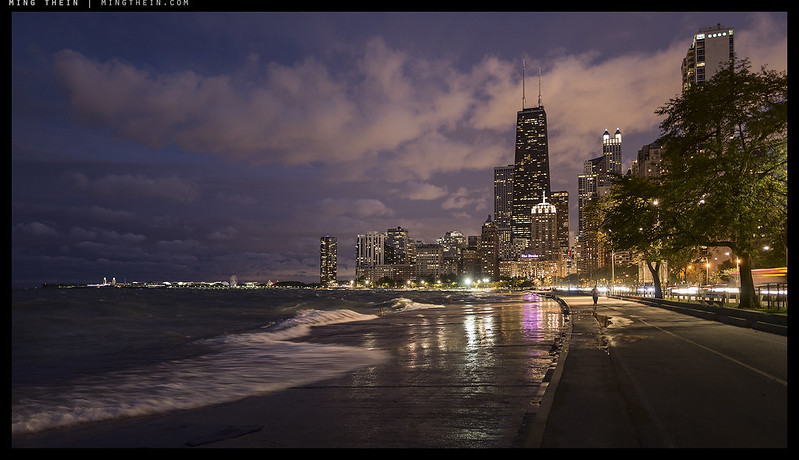
Following on from the previous Cityscape Singapore post – I’ve decided to repeat the curation exercise with all of the other locations I visit frequently to see if my short and long term impressions remain constant. Today’s candidate is Chicago. My expectations prior to visiting were perhaps clouded (oddly) by the 1920s to 1950s period of neo-gothic architecture and pop culture elements; I wasn’t disappointed on arrival, but found the contrast between that and the very modern designs quite compelling. Somehow the city’s architects have managed to integrate both in a harmonious way; perhaps it’s because a lot of consideration is given to the surroundings of any single building before the plan is greenlit. It may well be the same case in other cities, but I can say there’s absolutely zero of this sensitivity in Kuala Lumpur – often plots are developed into their own mini-cities that do not play nicely with the neighbourhood at all, but rather force their way in. It is this preservation of continuity that I found rather intriguing as a visitor…MT
Shot over a long, long period of time with a wide variety of equipment. Mostly processed with PS Workflow III.
Unpreparedness vs opportunity

Seen, and shot on the way to a meeting.
Or, more accurately: the fear of unpreparedness. (The actual chances of me going into a photographic job without sufficient planning, prethought creative options or backup hardware is somewhere close to nil.) Within the confines of an assignment or professional engagement, I would say the fear only manifests vis a vis elements you can’t control – weather, for instance. This isn’t debilitating and most of the time, there’s a workaround (chances are blue hour commissioned images exist because it was overcast all day, and the color temperature difference between artificial light and the fading twilight is the only thing giving the sky some color other than grey; flashes can be added if ambient is ugly). But my guess is that all amateur* photographers face the same kind of anxiety of limitation to some degree or other. So what can we do about it?
*I always use the word ‘amateur’ in the professional sense: i.e. you don’t make a living from it and there is no third party client, irrespective of your skill level. If I’m not commissioned, I’m also acting as an amateur.
Photoessay: Cityscape Singapore
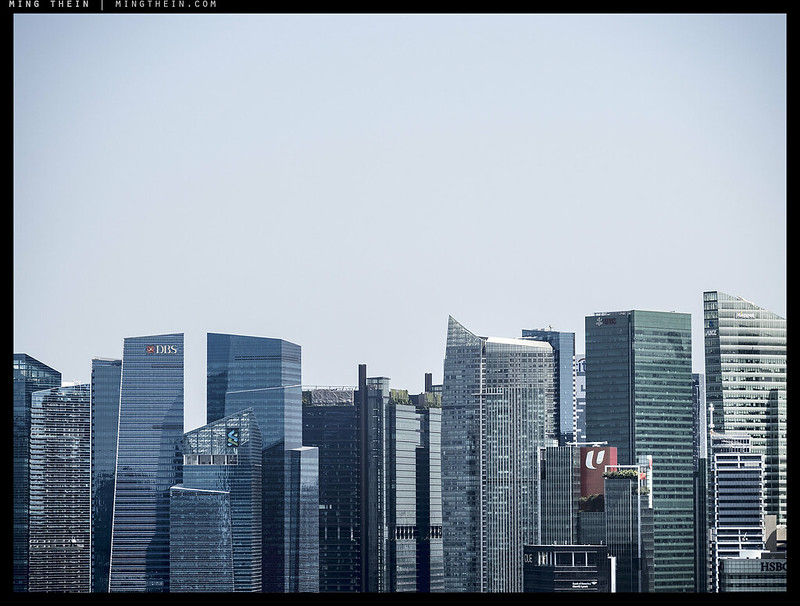
Another photoessay today with the benefits of multiple visits and longer curation – perhaps the start of a mini-project for me to revisit the archives with the benefit of separation and objectivity for places I’ve paid multiple visits to. The purpose would be both to curate something of a set ‘representative’ of the personality of the place – as far as that’s possible with a dynamic entity like a living city (especially in the case of somewhere that rapidly develops such as Singapore or Tokyo), as well as to see how my own personal feelings and impressions have changed over time. To some degree we might also be seeing the effect of different approaches to photography – from more casual to more formal/structured/deliberate and back again; tripods and not; preference for 28 vs longer lenses etc – it may well turn into some interesting insights into one’s own observational preferences over time…MT
Shot over a long, long period of time with a wide variety of equipment. Mostly processed with PS Workflow III.