Photoessay: Tropical skies

_Z701136 copy

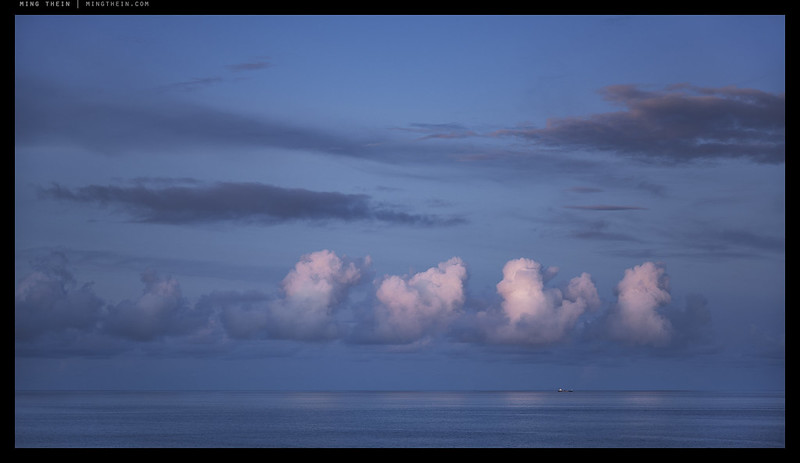
Dreamlike is probably the best description for this series: evocative of palm trees, sea breezes, long drinks and days of doing not very much. (I wish!) I find more than ever I need a break to disconnect and plan the next move, but there’s less and less time available in which to do so. So the only solution is to at least try to create the same feeling through reviewing images with those subjects – after all, if I’ve done a decent job at the time of capture, I should have managed to freeze and translate the way I felt at the time. And if it doesn’t work for me, then it’s doubtful it’d work for anybody else: but I feel myself relaxing already… MT

This series was shot with a Nikon Z7 and 24-70/4 S. No post processing, just the custom color picture control from the Z7/D850 profile pack…
[Read more…]

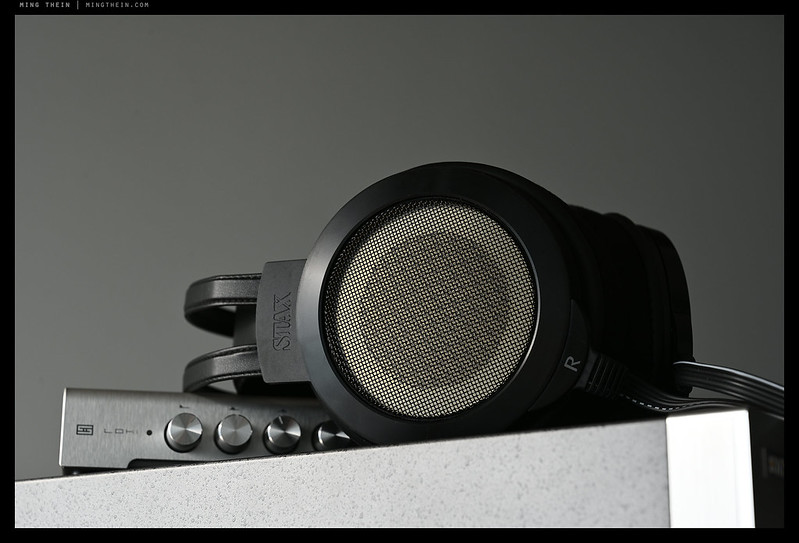
Adventures of the travelling audiophile: Endgame (nearly)

_Z708371 copy

First confession: I’m listening to them now.
Second confession: I seem to have come full circle; it isn’t the first time I’ve heard them. Not by a long shot; in fact, they may well have been the first
really exceptional bits of hifi I’ve heard.
Third confession: I don’t know when to stop; there’s the beginnings of diminishing returns, and then there’s $1,000 cables. I’m not quite there yet, thankfully. And I admit I’ve tried to find something better, but fortunately, failed miserably.

You might have noticed I’ve abandoned the in-ear setup from the previous instalments; part of the problem is one of prolonged comfort/sensitivity – namely my ears’ inability these days to feel good about something crammed in tightly for more than an hour or so – and part of the problem is sonic. In-ears also tend to have a very forward presentation that feels like MAXIMUM ATTACK all of the time, and moreso if you have a detailed, hard-hitting monitor. You don’t get the spatial separation and airiness of an open, over-ear can; much less the coherence of just one driver doing all of the sound generation. The problem with in-ears is they either require you to accept some fuzziness and interstitial connections between the notes and the accompanying lack of definition and precision (if a single driver), or have multiple drivers to cover multiple frequencies, then risk tonal imbalance and coherence issues. It’s not easy to get anywhere up to 12 (!!) drivers per ear to play nice with each other. And that doesn’t even start on the 2018 setups that use as many as three types of drivers – miniature dynamic, balanced armature and electrostatic – in each earpiece. I can’t help but think that’s a reliability nightmare waiting to happen too, given the number of tiny components in there. Having gone off the deep end here (to the point of commissioning my own monitors with their own configuration and tuning, and a modest six drivers per ear) – I’ve gone the over-ear route for the aforementioned reasons of coherence and comfort.

There’s only one problem with all of this: the travelling part. I just can’t do it with this setup, but I have the most amazing static listening experience short of probably some six figure speakers.

[Read more…]

On-assignment photoessay: Monolithic

_Z720123bw copy

There’s something about the visual gravity only the deepest registers the monochrome tonal scale can provide; those zones that make or break a good printer and convey tonal richness and texture. Whilst such work tends to be more the preserve of editorial and fine art photography and less so in commercial, I can’t help myself from seeing such subjects during the course of a cleaner, higher key commercial assignment. There are always structural and physical elements of such massiveness as require these tonal registers to do them justice; I shoot and file them away for later personal satisfaction. Overcast weather may be the bane of most commercial available light work, but it matters not a bit in this case. This particular set is the curation of several assignments; there’s a deliberate change in pace between the images where the monolithic element may be the entire frame, or just a small (but visually heavy) part of it. Or it may be an otherwise light-coloured subject but still somehow that sort of chalky, textured grey… MT

This series was shot with a Nikon Z7, D850, 24-120/4 VR, 70-200/4 VR. No post processing, just the monochrome picture control from the Z7/D850 profile pack…

[Read more…]

Testing the E-M1 Mark II’s AF with updated FW v3.0

Back in 2017, I covered the first Let’s Rock mini concert here and when the gang returned for Let’s Rock 2 this year, I was privileged to be invited to shoot the dress rehearsal. The timing could not have been better, as the date of the shoot coincided with the release of the new firmware. I took the opportunity to test out the new and improved AF algorithm on the new Olympus E-M1 Mark II’s (as of firmware 3.0) while immersing myself in some awesome rock music. I equipped myself with the E-M1 Mark II, 45mm F1.8, 40-150mm F2.8 PRO lens and 12mm F2 lens but mostly used the 40-150mm PRO lens for this shoot.

[Read more…]

Photoessay: Tokyo life

_Z713448 copy

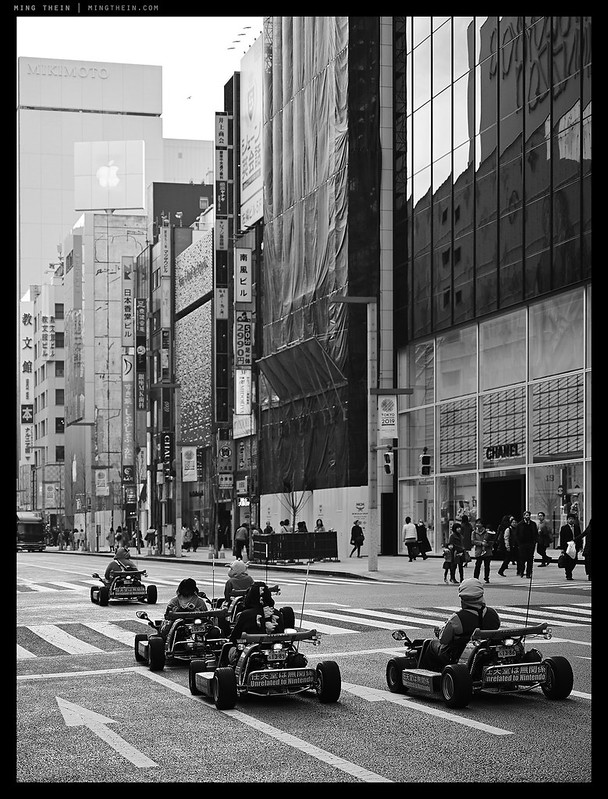
Trying something a little different with the curation this time: think of today’s presentation as a sequence of places visited and a journey rather than a similar collection of images. Note the rhythm of transition between indoors/outdoors; bright/dark; intimate and detached. It is a series of interactions between observer (me) and the environment and people around me; I experienced first and shot second, rather than focusing purely on photography. Trying to put my new approach to travel and image-making into practice… MT

This series was shot with a Nikon Z7, 24-70/4 S and SOOC with my custom Z7 Picture Control profiles.

[Read more…]

Modularity

fp_size_main_image

What do the Sigma FP and the Hasselblad CFV-50CII/907X have in common? Hint: it’s in the title. Of course, modularity is nothing new, but for whatever reasons it’s been restricted to very niche applications in the past – medium or large format, cinema, or strange mutations like the Ricoh GXR. We’ve seen the CFV backs before, of course – but this is the first one with an integrated battery, electronic shutter and full controls, plus electronic system support. It’s only in recent years with the growth of mirrorless cameras that we’ve seen the first tentative steps towards true universality – in the form of adaptors. Any lens with a longer flange distance can be used on any body with a shorter one, so long as the lens has mechanical controls and the camera has its own shutter. There are some cross-platform fully electronic adaptations, but they obviously don’t work as well as something native thanks to the protocol reverse engineering required. Still, it’s impressive that they work at all – moreso when you consider the mount mechanisms and the electronics are crammed into something as thin as a couple of millimetres, in the case of the Sony E to Nikon Z adaptor. Adaptation is now commonplace on pretty much every format – from 1″ to medium format; but read on for the reasons I think these two specific “cameras”* might be the start of something greater.

[Read more…]

Photoessay: Long goodbye

_3500142 copy

Something a little different today: curated over a period of time into a narrative area whole bunch of images that actually have little to no actual causality. Rather these are an example of how you can stitch a storyline together by implication alone, and both the power (and misleading danger) of photojournalism with its implicit veracity. That said, I think of today as a series of departures and moving-ons; a mix of melancholy, reminiscence and optimism that tomorrow will be a better day. There is enough ambiguity for you, the audience, to decide how you want to feel. The end can also be the beginning. MT

Shot over a long period of time with a wide variety of hardware.

[Read more…]

What defines small/medium/large formats, anyway?

1 copy

Originally published by yours truly in the April issue of Medium Format Magazine.

The use of any nomenclature of size already implies some degree of relativity. If a cellphone sensor is ‘small’, then arguably even APSC might be considered ‘large’. Yet there is a legacy expectation that medium format necessitates a recording area of at least ‘645’ (in itself misleading, usually being a bit smaller than 60x45mm at around 54x40mm or so) or larger. At some point – usually 4×5” – this becomes ‘large’ format. The digital sensor size of 44x33mm has challenged this somewhat, being much cheaper to produce than 54×40 (as low as a quarter of the price, due to finite wafer sizes, yield rates, etc.) whilst still offering about 68% more area than 36x24mm ‘full frame’.

[Read more…]

Photoessay: Pitlane

_Z717748 copy

A continuation of an earlier post but with the colour removed to focus solely on the homogeneity of the actions of all team members. Fundamentally, there is very little difference in what each team does, but it doesn’t feel that way simply because of the distraction and synchronicity of color and livery. I wasn’t attending on assignment (for a change) and so had the luxury of photographing a little more stream of consciousness and focusing on what was immediately interesting/ outstanding to me… MT

This series was shot with a Nikon Z7, 24-120/4 VR and SOOC with my custom Z7 Picture Control profiles. I elected to go with the 24-120 on the FTZ adaptor instead of the 24-70S and 70-200/4 for a more convenient single lens solution.

[Read more…]

Stay positive and improvise

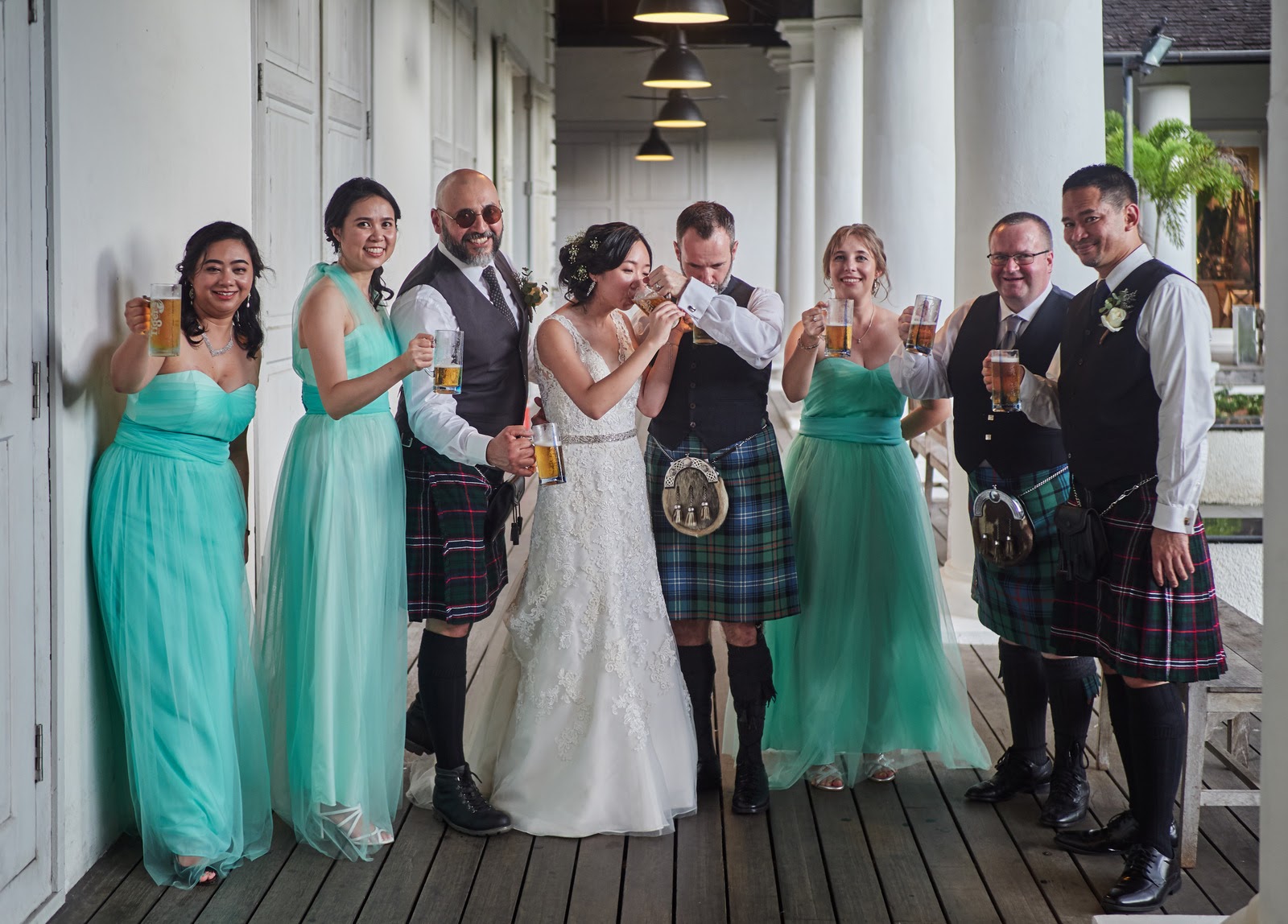
In one of my recent wedding day shoots, the schedule was delayed and we had to cut short the outdoor shooting from ninety minutes to little over thirty minutes. The gloomy weather and an imminent downpour didn’t do us any favour either. The most important lesson I have learnt as a photographer is that things don’t always go according to plan and you have to stay calm and react as positively as possible. The shoot still had to go on and I was expected to deliver photographs; I could either choose to complain about all the setbacks or improvise with everyone’s cooperation to do the best that we can under the circumstances.

For this assignment, I used the Olympus OM-D E-M1 Mark II and M.Zuiko PRO lenses.

[Read more…]