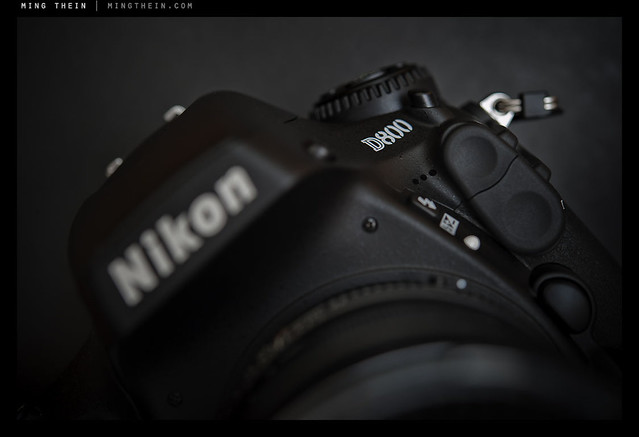
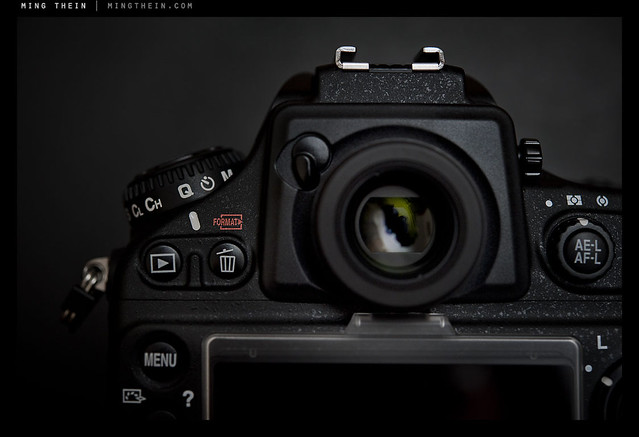
How-to: Improving your autofocus performance with the AF Fine Tune setting

Over the last few days and in the light of focus criticality with the Nikon D800, I’ve had a huge number of questions specifically regarding focus precision, and whether there’s anything we can do about lenses that are obviously off. Specifically, how does the AF fine tune setting work, and how does one calibrate their lenses?

1. Make sure your camera has AF fine tune. Any of the newer Nikons or Canons offer this feature, and perhaps other brands, too.

2. Find a suitably well-lit target that you and the camera can focus, and preferably one that’s flat but slightly off-plane to the camera, so it offers a variety of different focus distances. An ideal test chart is a world map on a wall, but with the camera to a slight angle to the wall (i.e. sensor plane is not perfectly parallel.)

3. Use a sturdy tripod, and set single AF. This is to rule out camera shake or false-AF movements from the camera attempting tracking.

4. Perform this test with the aperture set wide open. Stopped down, depth of field will hide focus errors.

5. If you have live view (I believe most cameras with AF fine tune do), then use magnified live view to achieve critical focus and take one shot. This will be your benchmark image – the sharpest that the lens can possibly deliver, when focused perfectly.

6. Switch back to single AF, and viewfinder mode.

7. Defocus the lens between attempts: this is important, otherwise the camera may be trying to move the focus gearing in too small an increment to overcome backlash.

8. Let the camera focus normally, and take a shot.

9. Compare the image from step 5 with the image from step 8 – if they’re the same at 100% size, then you’re fine – move on to the next lens.

10. If the images from 5 and 8 aren’t the same, then adjust the AF fine tune setting – say by 5 notches (if you have +/- 20 notches like the Nikons) and repeat 7, 8, and 9. If it’s better, keep going – do another 5-notch adjustment in the direction that created your improvement. If worse, then go back in the opposite direction. Reduce the adjustment amount changes and keep going. Basically, you want to iterate the process until you match your viewfinder-AF image with your live view focused image.

11. Save the adjustment value – if you can’t save camera settings to a card, you might want to write it down somewhere just in case.

12. Repeat for all of your other lenses.

A special note for zooms: most AF fine tune functions don’t let you input separate values for different focal lengths, so you’ll just have to try both ends of the zoom range and see which is worse; then run steps 1-12. Try to find a compromise setting that works acceptably well for all focal lengths in the range. Or, if you use one particular end of the zoom more than the other, you might want to weight your adjustment to this end of the range. MT

More D800 autofocus observations

After a couple more days of testing, I’ve got more observations on the D800’s autofocus system:

1. I think we’re reaching the limits of accuracy for CAM3500FX, and in fact, any phase detect based AF system. There are just too many parts that have to be precisely perpendicular and in exact alignment to achieve focus accuracy – the AF sub mirror assembly, the AF sensor itself, and the main imaging sensor. If any of these is out of plane by a few microns, then you’re going to see some softness. We’re now getting enough resolution that the planarity of the lens mount relative to the sensor becomes an issue – to say nothing of perfect alignment of optical elements. I believe there was an article posted a while back on the Luminous Landscape about shimming a sensor and how much resolution improved by both on-center and especially in the corners of the frame.

2. Future AF systems will have to be hybrid – i.e. use some form of contrast detect or phase detect embedded into the imaging sensor in order to work around these limitations. It doesn’t however solve the problem of mount planarity or lens element alignment.

3. There are some things you can do as a photographer to counter these limitations, chief of which is use live view for critical focusing, or stop down – or better yet, both. Live view eliminates problems of AF sensor/ sub mirror alignment. Stopping down covers slight sensor misalignment with depth of field.

4. AF fine tune is an absolute must to get the most out of the AF system.

5. Bad news for manual focus fans. I did my mirror alignment and calibration this morning – it was almost perfect from factory, which is a first; however, my joy died after removing the focusing screen. The focusing screen in the D800 is a different size to anything Nikon has yet produced. Worse still, it’s the largest one I’ve ever seen, so you can’t even cut something down to fit – it’ll just drop out. This is a real shame; I can only hope a third party produces replacement screens for MF aficionados.

6. Finally, lenses you thought were fantastic on the previous 12MP FX cameras may now only be mediocre or average on the D800 – you have been warned. MT

A very long term (and final) review: The Nikon D700

_1KD_MG_0064 copy

Bear with me here. The Nikon D700 may be a 2008 camera, (ouch, that’s four years old? Why is he reviewing it now?) and even worse, I received it’s successor – the D800 – on 22 March. (My initial review is up, here) It’s now time to close the book on the D700 – its days as my primary workhorse are just about over; I shot my final assignment with it earlier this week. And that’s the reason why I’m reviewing it – I think I’m now qualified to pass an opinion.

Nikon’s pricing has left a gap in its FX lineup – there’s the D7000 at approximately RM3,000/US$1000; the D300s (though hardly ever bought, and arguably bettered by the D7000 in almost every way) at RM4,500/US$1500 or thereabouts; then we’re into FX territory with the D700 at RM6,300/US$2100 and the D800 at US$3000. Notice how the pricing steps up in nice increments: $500-600 gets you appreciably more camera in every increment – well, perhaps with the exception of the D300s, which is to be replaced soon.

_7049641 copy
Kuala Lumpur dawn. Nikon D700, 28-300VR

The D700 was left in the lineup for two reasons: to clear remaining stock, and to provide an entry level option for FX upgraders. And guess what: according to every dealer I’ve spoken to, it’s still selling just as well as the day it was launched. So why does everybody think it’s obsolete? Clearly, because the successor was launched. Hell, even I’m buying one – but only because my D700 has been shot to death and is on the way out; it doesn’t make sense for me to buy another D700 when I could pay a little bit more, and offer more resolution to the clients that require it.

_7047913 copy
Alfabeti. Nikon D700, 60/2.8 G Micro

To me, the D700 was a landmark camera: the same amazing low light performance as the flagship D3, no compromises in AF or features – anywhere – at a price that was affordable to the majority of serious amateurs, whilst being robust enough to deal with professional abuse. I had two of them at one point. It was the first camera – aside from the D3 – that I felt turned me, the photographer into the limitation, rather than the camera or the lenses. If you could see it well enough to compose, you could get a useable image. If you could aim the camera fast enough, it would focus. And it would track subjects with unerring accuracy.

_7050874 copy
LED array. Nikon D700, 60/2.8 G Micro

And from a user’s point of view, that’s the all important question answered: yes, it’s good enough. The image quality is beyond reproach; you get 12 extremely clean, high-durability (more on that later) megapixels – which if used properly, is sufficient for any use. The resolution represents a sweet spot between diffraction limits – f27 is about where it starts to kick in – and depth of field. The large photo sites mean that you have a very high signal-to-noise ratio – coupled with high color accuracy and good dynamic range (that’s what I mean about high-durability pixels). In fact, exposed and processed with care, you can get around 13 useable stops out of the camera – which is right up against the limit of its 14 bit raw files. This does require judicious use of the highlight recover slider in ACR and a little deliberate overexposure (a stop is quite doable) – so you have to plan for it at the time of shooting. In any case, any more dynamic range looks unnatural and flat – remember, screens at best can only display 8 bits of tonal range, and even less for print.

_7040287 copy
Seiko ‘Fifty Three Fathoms’. Nikon D700, 60/2.8 G Micro

Much has been made of the high ISO capabilities of the D3 around the time of its launch; the same holds true for the D700. It isn’t a camera that’s particularly sensitive to color temperature with regards to noise (for example, the D2H and D200 of the previous generation were, due to IR and blue-channel sensitivity issues). Properly exposed, ISO 6400 is clean, and ISO 12800 is useable. To be honest, if you need any higher ISOs than that and you’re shooting wide open with f1.4 lenses, you probably won’t even be able to see the subject well enough to compose.

_7024121 copy
Thaipusam. Nikon D700, 85/1.4 G

Bottom line: image quality remains on par with the best of the DX cameras, even the new 16MP and 24MP ones. The latter may resolve slightly more at base ISO, but they lose out on dynamic range, edge integrity, and anytime you need to exceed ISO 800. Color accuracy is always slightly better, in my opinion. It remains to be seen if the D800 has the same pixel integrity as the D700, given the benefit of four years of development. I’m not expecting miracles due to its pixel density, however.

_7025478 copy
BMW 320d M Sport. Nikon D700, 28-300VR

Image quality is the largest factor in the success of a camera as a tool, but usability is right up there, too. Suffice to say that Nikon has been doing this for a long time, and it shows. The ergonomics of this camera are very comfortable, even for extended use, and with larger lenses. In my mind, it balances best with something large-medium – around the size of the 85/1.4, for instance. Larger is a bit front heavy, but still comfortable. If you need more weight, or speed, there’s of course the MB-D10 battery pack – with the right batteries, 8fps is possible. (Curiously, 8fps is also possible without the battery pack if you select flash bracketing, single-shot mode, and hold down the function button to select a 9-frame burst.)

_7022462 copy
Teatime. Nikon D700, Zeiss ZF.2 2/28 Distagon

There are a lot of nice little touches here:
– The metering mode switch is still my favorite of any camera; it’s easy to flip to spot when required, though that’s seldom because the 1005 pixel RGB meter is usually spot on. One doesn’t actually appreciate just how accurate this meter is until you use something else.
– Viewfinder blind and eyepiece lock
– The built in flash. Many people question why you’d want to have this on a professional camera, but clearly those people never work with speed lights – I do all the time, and it’s invaluable to use as a remote commander.
– My Menu.
– The ability to use the multi-selector center button to instantly zoom playback images – to check for sharpness – then toggle between the same magnified point on successive images with the command dial.
– Tethered port caps, finally. Too easy to lose the little screw in plugs on the last generation, and much too expensive to replace.
– The battery grip communicates via a series of small contacts on the base of the camera, and doesn’t require you to remove the original battery and battery door: it’s functional with them still in, and much easier to store and put on/ take off.
– Weather sealing – though I wouldn’t complain if it were fully gasketed like the single-digit cameras, it can still survive a pretty serious downpour unprotected.
– Programmable buttons. Give us more, please.
– DX crop mode – useful when you need more reach in a pinch, but will be better if there was more resolution to support it.
– AF fine tune – very, very important with fast lenses.
– Rangefinder with arrows to tell you which direction to turn the lens in; helpful for manual lenses.
– The LCD is actually good enough for you to be able to judge critical sharpness, and with experience, exposure and color.

_7034850 copy
Bride leaving. Nikon D700, 24/1.4

But there are also things that need fixing, some of which were addressed with the D800:
– Live view is far too complicated to access – rotate drive mode dial, hit shutter. Should just be a button. (fixed)
– AUTO should be an option on the ISO selection button. (fixed)
– It’s difficult to see the entire finder with eyeglasses – really needs a higher eye point.
– DX crop mode – the masking is far from obvious.
– The focus points could be spread out more; often I still have to shift and recompose even using the extreme points. Curiously, the camera can still track subjects even if they move outside the AF points – it uses the color of the subject and the metering CCD to do this.

_7046623 copy
Girard-Perregaux F1-047. Nikon D700, 60/2.8 G Micro

Let’s talk a bit about AF. Simply, it works. I use either single point mode, with 11 selectable points – when shooting static subjects, and then switch to 3D-tracking with 51 points on the back toggle switch when shooting action or photojournalism. Once you lock on to your subject with the center point, you can recompose and the camera will automatically track. With fast lenses, AF-C is imperative because of field curvature and small movements in either camera or subject – either situation will rob critical sharpness. AF obviously works better when shooting at 5fps because there’s more information reaching the AF sensor, so it’s easier for the camera to predict where your subject is going to go; it’s still good at 8fps, though. Same underlying 51-point CAM3500FX module as the D3-series.

_7045802 copy
Chopard LUC. Nikon D700, 60/2.8 G Micro

Battery life is excellent. A standard EN-EL3e cell will last me a day; easily a thousand shots or more, with moderate LCD use. With the grip and EN-EL4a cell from the D3 series, you’re looking at easily 5000 or more frames – more than enough for a day of use for even the most prolific photographers. And you can still keep your EN-EL3e in the camera if you’re worried about running out of juice. Simply put, this is the longest-lasting camera that Nikon makes, period.

_7003689 copy
Nikon D700, 16-35/4 VR

This is actually a very different review to the one I wrote in CLICK! magazine shortly after the release of the camera; I was shooting with a D3 at the time, and didn’t feel that impressed by the camera. But I think I was missing the point: the fact that I wasn’t really missing anything, either, should have been more impressive: flagship performance for almost half the price.

_7047003 copy
GUB Marine Chronometer movement. Nikon D700, 60/2.8 G Micro

Four years later, I’ve shot nearly a hundred thousand frames between two D700s; both have performed nearly flawlessly. My primary body is throwing the occasional black frame, which suggests a sticky shutter issue. I’m loath to send it in for replacement because my camera is also quite heavily modified, which I’m afraid Nikon will undo if it appears at their workshops. At one point, I was shooting all Zeiss manual focus glass; I discovered the hard way that the viewfinder wasn’t really up to the task of focusing accurately with very fast lenses. My finder has a new screen – a Type J bright matte with micro prisms and split-prism from the F6; it doesn’t fit natively so it had to be filed down. The screen has been perfectly shimmed to be planar and perpendicular with the sensor, and the mirror zero return position and alignment adjusted for the same. Basically, as close to perfect WSYWIG as possible. I’ll probably have to go through the same process again with the D800, but I doubt I’ll bother with the focusing screen as I prefer the Nikon AFS f1.4 lenses these days.

_7017897 copy
Temple on Hoan Kiem Lake, Hanoi. Nikon D700, 28-300VR

It’s time to answer the inevitable question of D700 vs D800: it’s not as clear cut as you might think. Yes, the D800 offers higher resolution and video but at the expense of per-pixel noise and demands on lenses and technique; in that sense it’s a much less forgiving camera. You’re also giving up the potential of full resolution shooting at 8fps. Ergonomically, both are good; the D800 takes a slight edge due to refined controls, however I personally find the D700 grip more comfortable. The D700 is more of a general, do-anything, go-anywhere camera, but the D800 is a specialist tool that can produce amazing results – under the right conditions.

Although both are clearly interchangeable from a function point of view, if we examine the strengths of each camera, I think the balance splits as follows.
D700 if you:
– Do not make prints beyond 2×3 ft, or use images for digital purposes only
– Shoot a lot of sport or other things that require high frame rates
– Aren’t willing to invest in the best glass or technique

D800 if you:
– Need the resolution for large prints
– Need the increased dynamic range
– Need video capability

In the meantime, my D700 goes into retirement as my backup/ high-speed body. I think I know what kind of beast it is now: the Goldilocks camera: not too big, not too small, just right, and incredibly versatile.

_7044336 copy
The giant lightbulb illuminates. Nikon D700, 24/1.4

____________

Visit our Teaching Store to up your photographic game – including Photoshop Workflow DVDs and customized Email School of Photography; or go mobile with the Photography Compendium for iPad. You can also get your gear from B&H and Amazon. Prices are the same as normal, however a small portion of your purchase value is referred back to me. Thanks!

Don’t forget to like us on Facebook and join the reader Flickr group!

appstorebadge

Images and content copyright Ming Thein | mingthein.com 2012 onwards. All rights reserved

A quick note on Nikon D800 autofocus…

Up to this point, I’d been shooting the camera with the same autofocus settings I used on the D3 and D700 – which share the same CAM3500FX AF module. I think I just discovered why the AF system doesn’t seem to be as precise as before.

Previously, I used single point AF-S for static subjects, and 51-point dynamic 3D tracking AF-C for everything else. I could lock on with the center point, focus and recompose, and everything would be fine. It seemed like a good starting point for the D800.

Turns out I was wrong. Single point AF-C is MUCH more accurate and slightly faster than 51-point dynamic 3D. It’s solved a good number of my AF issues. Remains to try it out tonight when the light gets low to see if performance is improved under those conditions too. MT

____________

Visit our Teaching Store to up your photographic game – including Photoshop Workflow DVDs and customized Email School of Photography; or go mobile with the Photography Compendium for iPad. You can also get your gear from B&H and Amazon. Prices are the same as normal, however a small portion of your purchase value is referred back to me. Thanks!

Don’t forget to like us on Facebook and join the reader Flickr group!

appstorebadge

Images and content copyright Ming Thein | mingthein.com 2012 onwards. All rights reserved

A couple more Nikon D800 images, and some commentary

_8001029 copy

Shadows. Nikon D800, 28-300VR

One of the big questions that’s been running around the internet is whether the D800 can replace medium format – the answer isn’t quite as simple as you might think. Firstly, the resolution is definitely there to compete with the lower pixel count options – and even more so once the D800E joins the fray. However, a very large part of the medium format ‘look’ is a product of the interaction between lenses, sensor size (i.e. angle of view) and tonal response of the sensor. Remember that almost all medium format sensors are CCDs, which have a very different – and less linear – tonal response to CMOS sensors. For comparison at the 35mm/FX size, the D700 and D800 both have a different tonal palette to the CCD-based Leica M9. Undoubtedly the look is different already due to no other factors.

However, once you consider the angle of view vs DOF equation, then things look different again – it’s similar to the difference between APSC and full frame – for a given angle of view and aperture, you’re going to have ever decreasing depth of field (and quicker transitions between in-focus and out of focus areas) with the larger sensors.

Some of the other things which have been of concern to shooters – like having enough light and decent support – are nothing new in the medium format world, especially to users of very high resolution backs like the IQ180 or H4D-MS; this is perhaps why a lot of people are crying ‘so what?’. Even so, good support pays off for both medium and smaller formats – even compact shooters have something to gain. The tradeoff is always weight and flexibility.

A quick note on color reproduction: the D800 has the most accurate color I’ve ever seen. This seems to be corroborated by the recent batch of DXOMark tests, which rank the D800 first (!). Most cameras have trouble accurately reproducing the blue-green-cyan tone of glass reflections (due to UV transmission/ reflection issues) – but the D800 required only minimal corrections. Furthermore, the very fine repeating patterns between the squares on the textured floor panels do not show visible moire, but plenty of detail. It’s also worth noting that nothing is blown out, and I crushed the shadows for the visual effect – there weren’t any blocked up blacks, either.

_8001224 copy
The look. Nikon D800, 28-300VR

Again, I was very pleased with the quarter tone reproduction quality here. I’m actually finding that for a lot of images – especially those with less contrast – you need to apply a curve with a very long, shallow shadow tail in order to get the right ‘look’. This is undoubtedly due to the D800’s huge dynamic range at low ISOs. As for detail, you can see the weave in the man’s shirt and my reflection in his glasses.

_8001190bw copy
Bike traffic. Nikon D800, 28-300VR

This shot was a test in many ways – extreme highlights and shadows; lots of fine detail; tonality of B&W conversions. The short answer is, the camera passes. The image (which looks much better on a large monitor at full size, by the way) retains good detail even into the extreme corners, despite being shot with the weakest end of the 28-300VR, and has nice rich quarter and half tones, which make for a good B&W image.

_8000812bw copy
The reader and the thinker. Nikon D800, 28-300VR

This portrait is a little deceptive, because there was a lot less light than it appears – 1/125s at ISO 1800, f5.6 and 150mm. Yet the camera held on to shadow details well – with remarkably little noise, I might add – and I can read the text in the newspaper at full size. I don’t think the files make as outright punch B&W conversions as say the Leica M9-P, but black and white conversions from the D800 seem to have a unique signature of their own – perhaps best characterized by subtle tonal gradations and deep shadow detail. In short, I like what I’m seeing, but I’m going to need to adapt the processing style a little to get the most out of it. MT

Nikon D800 review update: daylight shooting

_8000881 copy
On reflection. D800, Zeiss ZF.2 2/28 Distagon

As promised, here’s an update to the Nikon D800 first impressions review I posted last night. I’ve now had the chance to shoot with the camera for several hours under bright daylight conditions (read: no problems with running out of light, base ISO and nice high shutter speeds) and want to share some more images, impressions and report back on a couple of things.

_8001170 copy
Are you my mother? D800, 28-300VR

Firstly, I think I need to clarify a few points that have repeatedly come up on both the forums and in the comments to the first part of the review.

_8000848 copy
Out of place. D800, Zeiss ZF.2 2/28 Distagon

1. AF is not as fast as the D4, nor do we expect it to be.
The difference is similar to that between the D700 and D3 – probably down to battery voltage and the current available to drive the lens motor. It seems subjectively the same as the D700 under very low light conditions – specifically, speed and tracking ability. However, I was using an 85/1.4 G wide open to see if the camera could track moving objects with it – the answer is, hit and miss. Sometimes yes, sometimes no. I suspect the actual AF module performance is no worse than the D700, but with the increased pixel density of the D800, the demands on focus accuracy just got a lot higher – and that’s the shortfall we’re seeing here.

_8001196 copy
Distorted reality. D800, 28-300VR

2. Noise.
People seem to get angry and anxious when I say it isn’t as good as the D700 at the pixel level – I don’t know how it could be, the photosites occupy half the area! (Probably less, once you take into account the additional power and read circuitry required to run the sensor.) HOWEVER, if you downsize to 12MP to match the D700 (or print both at the same size) – the D800 is better, markedly so. I’d put it a stop ahead for noise, and there’s of course the extra detail.

_8001141 copy
Not used to being the little one. D800, 28-300VR

3. A lot of people have said the images are noisy. Yes, they are at the pixel level, but remember a) mixed light sources; b) I run zero noise reduction and sharpen fairly aggressively – I much prefer grain to smearing and indistinct edges; c) this is a worst-case scenario, overall.

_8001166 copy
Virtual continuation in reflection. D800, 28-300VR

4. Usability and ‘demandingness’.
To achieve the same PIXEL LEVEL quality as the D700, you’re going to have to up your game. And the camera itself cannot deliver the same level of quality at the individual pixel level (think 100% enlargement on screen) because the pixels themselves are smaller. Those are laws of physics. In reality, this means shooting at one stop lower ISO, and taking care with camera shake. If you’re just talking about the overall appearance of a print at a given size, see #2.

_8000816 copy
Man-mountain to capitalism. D800, 28-300VR

With that settled, let’s move on to the update part of the review. This is to address performance of the camera under bright daylight, i.e. close to optimal conditions.

AF, under daylight
Focusing is snappy, positive, and noticeably faster than the D700. I was testing the AFS 28-300/3.5-5.6 VR today – not known for being a snappy lens – but nevertheless, the picture was in focus before I expected it to be. I often re-focused again, because I wasn’t sure it had locked – subsequent testing revealed it always had. AF-C mode is best described as being a little bit skittish – you can hear the AF motor chattering away as it tries to keep the lens elements in optimum position. Whether this is because of the new AF system, the interaction between the camera and the lens or something else, I don’t know. Tracking moving subjects – in this case motorbikes coming towards the camera – was no problem at any focal length using the 28-300VR. I’m certain performance would be better if a lens with a faster motor was used.

_8001054 copy
Untitled. D800, 28-300VR

Resolution
In short: at base ISO and sufficiently high shutter speeds that camera shake isn’t a concern, there’s more resolution here than you can shake a stick at, even with decidedly ordinary lenses: even the 28-300VR delivers pretty amazing levels of detail. With the Zeiss ZF.2 2/28 Distagon, it’s on par with the entry level medium format systems. Retouchers, beware. This thing is going to produce files that take two or three times as long to fix as previous cameras, simply because there’s so much more information here. I would honestly recommend NOT getting the D800E if you’re shooting portraits, because it’s going to produce downright unflattering results for anybody without absolutely perfect skin or makeup. Bottom line: the D800 delivers what you’d expect it to, and in a most impressive way. The anti-aliasing filter in the regular D800 is evidently very weak; fine detail remains well resolved, but simultaneously it’s just strong enough to prevent moire. I haven’t seen any evidence of it in the ~2000 images I’ve shot so far, even in fine repeating textures (which you’ve be surprised by how many of them there are when you have this much resolving power).

_8001178 copy
Porthole-barnacles. D800, 28-300VR

Some more resolution examples:

_8000890 copy
Work in progress. D800, 28-300VR

_8000890 crop
100% crop of above

_8000753 copy
Morning skyscrapers. D800, Zeiss ZF.2 2/28 Distagon

_8000753 crop
100% crop of above

_8000874 copy
The much-maligned pump room. D800, Zeiss ZF.2 2/28 Distagon

_8000874 crop
100% crop of above

Dynamic range
Nikon’s claims about more dynamic range than the D700 are true, but must be accompanied with a caveat. I’m finding that while there was a lot of recoverable headroom in D700 files, there isn’t so much in the D800 – however, there’s more useable shadow detail and less noise. Subjectively, I think we’ve lost 1 stop in the highlights and gained around 2 in the shadows; this at base ISO. You could probably pull a bit more out of it with judicious use of the right sliders in your raw converter, but then color accuracy starts to wane. At higher ISOs, color accuracy in the shadows is a bit suspect and heavily influenced by the ambient light source.

_8001011 copy
Urban dynamic range torture test canyon. D800, 28-300VR

White balance, color and tonality
The D800 seems to deliver the same general white balance as the D700, but with a slightly different tonal response. I can’t put my finger on exactly how it’s different, but the files are quite reminiscent of the Leica M9’s output – my color profiles for that camera actually deliver better results during conversion than the D700’s profiles. I can only put it down to new sensor architecture, or perhaps a change in the filter pack in front of the sensor. It’s definitely more pleasing, that’s for sure. Note that I’m talking about RAW file output converted via ACR for both cameras, which removes any manufacturer-specific processing.

_8001015 copy
Untitled. D800, 28-300VR

The other crop modes
I’m actually finding these surprisingly useful. The 15+MP file you get from the smallest DX crop is still a serious amount of resolution. On a personal note, I’m also starting to like 5:4 a lot. 3:2 is increasingly feeling like no-mans’-land between 16:9 and square for me.

_8001081 copy
Verticals. D800, 28-300VR

Battery life
Seems even better than yesterday after a full charge and cycle – I shot 500 frames today, and at the end was only down by 20% – again with heavy LCD use and mucking around in the menus. I was also using a VR lens, which wasn’t the case yesterday. That means an estimated 2,500 shots per charge – on par with my D3, as far as I recall. I don’t know what Nikon have done with power consumption, but it’s impressive. I don’t think I need to buy that third battery anymore.

_8000919 copy
Voluntarily caged people. D800, 28-300VR

Commentary on the AFS 28-300/3.5-5.6 VR
This lens has been a bit of a mixed bag for me in the past – it’s so-so on the D700, good at some focal lengths (the longer end) and downright unusable at 28mm until you hit f5.6 or preferably f8. Oddly, it did pretty well on my D5100; enough that I’d actually use it. On the D800, it’s a big, big surprise. The midrange is excellent at f5.6 and outstanding at f8 – we’re talking about 35-200mm or so here; the ends are slightly less good, with the 28mm lagging slightly behind the midrange (but useable wide open, if slightly hazy due to flare) and the 300mm end being just okay to good. Still, it’s a surprise given the resolution of the sensor. I didn’t think the lens was capable of resolving this well. Don’t get too excited though, while it delivers excellent macro contrast, micro contrast structure lags far behind the Nikon primes, let alone the Zeiss primes. Look out for a full review of this lens in the near future.

_8000837 copy
Chevrons. D800, 28-300VR

_8000837 crop
And a 100% crop of the above – can you say ‘detail’?

The shutter mechanism
Although it’s a bit more hollow-sounding than the D700, and frankly I was a little disappointed it wasn’t as smooth and well-damped as the D7000, it’s got one other trick up its sleeve: low vibration. Again, subjectively because I have no way of testing this, the D800’s shutter and mirror mechanism has a lot less recoil than the D700 – this is very, very, very important because it helps us reduce camera shake. Bravo.

_8000884 copy
The glass ceiling. D800, 28-300VR

Intermediate conclusion
Initially, I thought I’d shoot this camera at full size raw and then reduce by 50% to 18MP; not so. Instead, I’m processing at full resolution but forcing myself to be more selective about the keepers. I guess it’s a rare example of a camera actually driving you to be a better photographer – which isn’t necessarily a bad thing. I still need to go out to buy more hard drives, though. MT

Look out for more updates and images over the coming days and weeks. I’ll be shooting some studio assignments this week and next week, so I’ll report back after on how the camera performed. I’ll also try to make some video with it in the near future.

_8001188 copy
Keep on smilin’. D800, 28-300VR

____________

Visit our Teaching Store to up your photographic game – including Photoshop Workflow DVDs and customized Email School of Photography; or go mobile with the Photography Compendium for iPad. You can also get your gear from B&H and Amazon. Prices are the same as normal, however a small portion of your purchase value is referred back to me. Thanks!

Don’t forget to like us on Facebook and join the reader Flickr group!

appstorebadge

Images and content copyright Ming Thein | mingthein.com 2012 onwards. All rights reserved

A (very detailed) first impressions review: The Nikon D800

_7062045 copy

We all know the paper specs for the Nikon D800: 36MP, 4fps, full frame. Same ISO range as the D700 – 100 to 25,600. 100% viewfinder, full HD movies, and an improved 51-point AF system derived from the previous camera. And to boot, a D800E version with no anti-aliasing filter for even more resolution, as if 36MP with a weak filter wasn’t enough for you. What we don’t know is how it fares in the real world.

What follows is what I believe is the one of, if not the first, complete, real-world test by a photographer of a production D800. 8 hours of non-stop flat-out work – so, please leave a comment if you enjoyed it.

_7062028 copy

I first heard D800-shaped noises way back at a Nikon event in March 2011, both locally and from my sources in Japan. These definitely wasn’t the same information as what was going around on the popular rumor sites at the time – I was told specifically D3X replacement, slightly higher pricing. An interesting strategy; too bad the initially planned May-2011 release got derailed by the tsunami. The Sendai plant that produces the D700, D800, D3S and D4 was inundated and had all of its precision machinery replaced; an amazing feat considering the magnitude of the disaster.

_8000063 copy
Stall chef. D800, 85/1.4 G. 

All images in this review were shot as 14-bit lossless compressed NEF and converted in ACR 6.7/ PSCS5.5.

Still, the camera has finally arrived, and delivered precisely on the promised date – even in a small market like Malaysia. That’s impressive. I got mine through NPS; apparently there are around 200 members, 90 D800 orders, and…only 18 cameras to go around. Mine must be one from the very very first batch – serial number 234.

_8000411 copy
Literally, Mickey Mouse color. D800, 85/1.4 G, DX crop mode.

Initially, I wasn’t going to order one. Then my high-mileage D700 began to give up the ghost, and I downloaded some sample images – which in short, blew me away. They were honestly better than the output from the Hasselblad H3D-39 I used a couple of years back in mid-2010 – and quite close to what I’ve seen out of the Leica S2 (I do have access to one, I will try to do some comparisons soon) so far. I called my local NPS rep and put in an order for the D800E; however, playing with both sets of demo files further, it became clear that a) you weren’t really giving up that much getting the regular D800, and as a bonus, it would arrive sooner – an increasingly important factor given this month’s shooting commitments – and b) lenses and diffraction would be the limiting factor for me, not the camera’s sensor. Furthermore, for most purposes outside the studio environment, I intend to shoot the D800 in 14 bit compressed RAW, but downsize by half to 18MP for manageable output, lower noise, and better per-pixel detail.

_8000317 copy
Untitled. D800, 85/1.4 G

At some point, I will probably source a split prism screen and have the focusing screen and mirror precisely adjusted for manual focus planarity; for now, I’m relying on AF. I do really miss the focusing snap of the custom-cut F6 type-J screen on my D700; it’s just so much easier to tell if things are in focus or not. The standard D800 screen is bright but doesn’t have much snap. This may sound odd, but I’m having trouble getting used to the 100% finder again – I’ve become so accustomed to mentally adding a little bit around the edges of the D700 frame (97% finder) that now I’m chopping things off. Just one of those little differences between the two cameras, but important nevertheless.

_8000136 copy
Minor copyright infringement hotel. D800, 85/1.4 G

First impressions on lenses
But this is a camera review! Glass matters. Two big things: a) AF fine tune matters a LOT; b) the optimal set of lenses for this camera is different to the D700, again. The 24/1.4 never quite focused properly on my D700 – I was at the extreme limit of AF fine tune adjustment – but it’s bang on with the D800 with zero adjustment, and incredibly sharp all over. The 85/1.4 needs a lot of shutter speed while handheld to shine; probably double what you’d expect – in the 1/125s range or higher. I’m also seeing a lot of edge CA that wasn’t there before (1-2 pixels worth; that’s probably less than a pixel on the D700). My 60/2.8 G Micro is soft until f5.6 and focus shifts, which isn’t something I’ve ever seen before. Oddly, the 28-300VR is actually rather impressive at 300mm on the D800 – NOT something that could be said about the lens on the D700. In fact, it performs much better on the D800 than it did on my D700 – curious considering the demands of this sensor.

_8000506 copy
Mall performance. D800, 85/1.4 G

_8000506 100pc crop
And a 100% crop – this is a best case scenario for CA, with the lens wide open at f1.4. There were other, much worse shots; I suspect being ever so slightly out of focus also contributes to visible CA in a big way. The older 85/1.4 D is very likely going to be unusable wide open with any subject that’s even moderately contrasty.

The sole lens that has been outstanding on every camera it’s been mounted on is the Zeiss ZF.2 2/28 Distagon – wide open, I think it has the highest resolution of any of my lenses. Makes me want to get the 2/100 Makro-Planar again, and possibly also the 4/18 Distagon. Generally, lenses I though were good wide open on the D700 are showing a slight but noticeable improvement stopped down, even if only by a stop – I’m talking about my workhorse AFS 24/1.4 G, AFS 60/2.8 G Micro and AFS 85/1.4 G here. Also, lenses that vignetted a bit before will vignette more strongly now; I suspect it’s because the individual photo sites are smaller, and there’s no trick offset micro lens array like in the Leica M8/M9 to counter it.

_8000147 copy
Disposal. D800, 85/1.4 G

It was dark by the time I got the camera and had a chance to shoot with it, so take it as a worst case scenario and impressions will almost certainly improve when I have more light to work with. I will not be providing full size files, so please don’t ask. There may be crops. Clicking on any of the images will bring you to a larger version on Flickr; the EXIF data is all intact.

_8000127 copy
Untitled. D800, 85/1.4 G

Autofocus
Seems to be about the same speed as the D700 in good light, no difference as far as I can tell in low light. Has issues focusing the 85/1.4 G accurately in low light; this may be true of the D700 but it’s a lot more noticeable here due to the higher resolution. Tracking ability seems slightly improved. More tests are required before I can reach a conclusion here. Contrast detect AF for live view subjectively seems at least twice as fast as the D700, and doesn’t require as many passes while hunting.

_8000040 copy
KL Tower peeking. D800, 85/1.4 G

Ergonomics
First thing you notice is the camera is lighter – about 100g, according to the specs. However, I personally find it not quite as comfortable as the D700; my fingers were cramping after use. This is because the lower section of the grip is thinner – not sure why, perhaps their testers had small 4th/5th fingers, or perhaps Nikon just really, really wants you to buy the vertical grip.

_8000071 copy
Fruit choices. D800, 85/1.4 G

That’s about the only bad thing ergonomically – I don’t know if it’ll be a deal breaker for extended use. Sadly I don’t find it anywhere near as comfortable as the D4, which is pretty amazing. Oh, there IS one more thing: the mode button is a stretch to access; I feel like I’m going to dislocate my index finger by pressing it. Too often I hit the movie record button by mistake and wondered why nothing was happening. A firmware fix to make the movie button change exposure mode when shooting stills would be a nice easy fix. I do like the new angle for the shutter button, though – it’s much more comfortable.

_8000342 copy
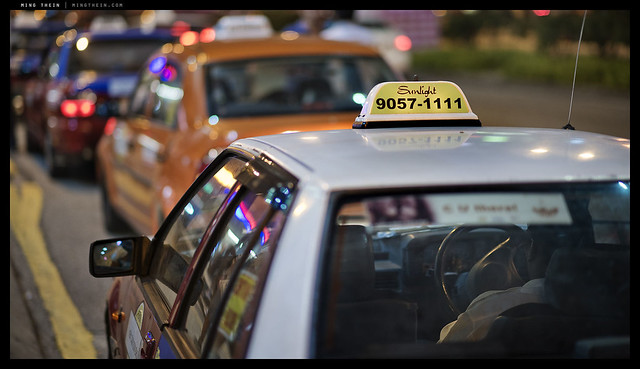
Taxi man. D800, 85/1.4 G

There are a lot of nice touches though. Live view is a lot easier to access thanks to the button where the AF mode switch used to be; am I the only person who misses the AF mode switch though? That little button near the lens mount is not so easy to find, but at least you can see what the camera is set to in the finder. The new drive mode dial is also a lot easier to use – it locks and still has detents, so you can count positions and change modes in the dark – there’s a big difference between using CH and Q in a theatre, for instance. Speaking of the shutter, it’s slightly more hollow sounding than the D700; crisper, too. Sadly not as quiet as the D7000, which is nearly silent in Q mode. Interestingly, the mirror doesn’t cycle when shooting in live view – just the shutter – so the camera is actually very quiet, and doesn’t vibrate much. Although the maximum frame rate is 4fps, it doesn’t feel any slower than the 5fps D700. Mirror blackout time is the same, which is to say, effectively instantaneous.

_8000236 copy
Dial-a-sunlight. D800, 85/1.4 G

Metering
I mention this because it seems that Nikon’s newest meter isn’t quite as accurate as the last one. My D800 definitely meters a bit hot compared to the D700, and seems a bit more erratic. Further investigation is required here.

_8000241 copy
Plugged in. D800, 85/1.4 G

Turning AUTO ISO on and off is an option from the button, finally! You use the front command dial to toggle on/off, and the rear one to select ISO. There’s also an option to automatically select minimum shutter speed as a 1/focal length, with some fine tuning in either direction – sadly, the fine tuning isn’t granular enough. For example, the 85mm defaults to 1/90; adjusting this to ‘faster’ gives 1/200 rather than say 1/125, which would be perfect. Back to manually selecting shutter speed again, it seems. In short: you will be needing to use higher shutter speeds than 1/focal length would suggest. Think about what you’d set on a D7000, and that’s about right – remember, the pixel density is the same.

_8000164 copy
Communist taxi. D800, 85/1.4 G

Image quality
Bearing in mind that I’ve only shot it under low light/ night/ available darkness conditions, I’m impressed. It’s doing a decent job for the pixel density – though I would not pick this over a D700 for reportage work. The few flash-based tests I have done have left me stunned. Color accuracy is slightly better than the D700, but resolution is out of this world. Dynamic range is about the same, subjectively; however, instead of being highlight-biased as with the D700/D3, it’s shadow biased – you’ve got to be careful not to blow highlights because there simply isn’t as much recoverable color information there. Still, I wish I’d had the camera earlier today for the food assignment I just shot; it would be the ultimate tool for things like that. No matter, because I’ve got several watch shoots in the coming weeks. Early impressions are that the pixels don’t have the same degree of elasticity/ integrity as the D700 (duh) and are probably somewhere between that and the D7000; probably closer to the D7000.

_8000130 copy
The burden. D800, 85/1.4 G

Noise
See the following crops; they were shot under pretty dark conditions and tungsten light, i.e. a torture test. Subjectively, I think it’s ~1 stop behind the D700 at a pixel level; if you downsize to D700 size, it’s actually a stop ahead. Now if only Nikon would give us a pixel-binned half-resolution sRAW size for low light! If you are shooting full resolution, I recommend stopping your auto-ISO at 6400; anything higher than that has to be downsized to look good. 3200 is definitely acceptable, and anything below is good. The reality of printing, however, is that because you’ve got so many more pixels, a print will look a lot better than at 100% on screen. There’s no sign of banding, but beware of strong noise in one particular channel over another in the shadows, but it depends on the temperature of your light source – for instance, heavy shadow recovery or dodging under fluorescent lights is going to give you a red cast to that area.

Note that I didn’t bother with ISO 100 and 200, they look the same as ISO 400. Click to go see larger versions on flickr – the ‘original’ size is a 100% crop.


D700-D800-ISO400-800
ISO 400-800

D700-D800-ISO1600-3200
ISO 1600-3200

D700-D800-ISO6400-25k
ISO 6400-25600

Here’s a real world ISO 6400 example, sodium-vapor street light. Yes, it’s noisy at 100%, but I’m fairly confident it’ll print just fine.

_8000558 copy

_8000558 ISO6400 100pc crop
And a 100% crop.

Movie mode
I’m not a huge video person, though I have dabbled (to be the subject of a future article). I do know what good quality footage looks like. The D800 is excellent. Dynamic range is great; noise is low, and above all, there’s no rolling shutter effect that I can see – even while panning rapidly under fluorescent light operating off a 60Hz AC supply.

_8000082 copy

Battery life
Pretty darn good, I think – I just grabbed the battery that came with the camera; 36% charged; shot about 650 frames, and it went down to 6%. Extrapolating, that’s about 2,100 shots per charge. And that was with heavy LCD use and some live view. One battery should more than get you through a day – you’ll run out of card space far, far sooner. I can’t honestly say I’m pleased about the complete battery system change (I have plenty of EN-EL3es and EN-EL4as) – but at least the new power system lasts longer, and also has a little catch that allows for a spring loaded (read: easier to replace) battery.

_8000696 copy
Salad days. D800, Zeiss ZF.2 2/28 Distagon

Buffering and file handling
The manual claims 25 images for 14-bit compressed raw – the camera shows r13, but I’m getting 17, using a UHS-I Sandisk Extreme 32GB SDHC card. Still trying to find out where the difference is; auto ISO gives back three more frames, but curiously NR makes no difference. The buffer flushes surprisingly quickly, and you never feel like you’re waiting for files to write – although there is a slight lag when playing back images, probably due to the file size.

It’s probably worth noting that file handling is a bit slower, but not 3x slower (despite 3x the resolution) – however some operations like brushes etc. and even converting in ACR definitely take longer, so budget time accordingly. I’m using a mid-2010 MacBook Pro with the 2.66GHz i7 and 8GB of RAM. I don’t even want to think about retouching files this big yet.

_8000696 100pc crop
100% crop of the above.

Early conclusion
It doesn’t take a rocket scientist to figure out that getting the most out of the D800 is going to require a lot more care than the D700; the resolution is so high, in fact, that I think the AF system may be letting it down slightly – not from a speed point of view, but from a precision standpoint. And I’m not sure it’s the AF sensor per se, but possibly the granularity with which the lens motors can move the elements small distances. I know that in live view, there’s a point of critical sharpness that’s usually very tough to hit using the focusing rings of AF lenses; the travel is simply too fast.

_8000702 copy
Untitled soaking tomatoes. D800, 60/2.8 G Micro

I don’t think the D800 is a general purpose tool. It definitely isn’t a run-and-gun photojournalist’s camera; in fact, I find it more demanding to shoot street with this than the Leica M9-P. It’s probably at a two stop or more disadvantage to the D700 if you want critical sharpness at the pixel level – firstly, you’ve got a slightly noisier sensor, and secondly, you’re going to need higher shutter speeds to maintain pixel integrity and combat camera shake. Although downsizing the files to 12MP yields lower noise and more detail than the D700, I don’t think I’ll be using the D800 for photojournalism at the moment; I’m going to have to figure out the AF and lens foibles first.

_8000702 100pc crop
100% crop of the above.

Where the camera will shine is in the studio for work with controlled lighting, or landscapes – the resolution is outstandingly impressive, and dynamic range at base ISO seems subjectively on par with the D700 – no mean feat indeed. However, I need to do more testing in daylight (not experiments with flash) to determine for sure. Stay tuned for more images and thoughts over the next few days; at some point I want to try to get hold of a Leica S2 to do a head to head comparison. Please leave a note in the comments below if you’ve got any questions or have something you’d like me to test, and I’ll do my best. Right now, I’m going to get some sleep. MT

Get the D800 from B&H and here and the D800E Amazon

____________

Visit our Teaching Store to up your photographic game – including Photoshop Workflow DVDs and customized Email School of Photography; or go mobile with the Photography Compendium for iPad. You can also get your gear from B&H and Amazon. Prices are the same as normal, however a small portion of your purchase value is referred back to me. Thanks!

Don’t forget to like us on Facebook and join the reader Flickr group!

appstorebadge

Images and content copyright Ming Thein | mingthein.com 2012 onwards. All rights reserved

Quick tip for the Leica M9: toggling images while zoomed in

I just discovered that if you hold down the play button and press the left or right arrow simultaneously, you can quickly toggle to compare successive images while zoomed in. I previously thought this was something only Nikons had – glad to see this handy review feature on the M9 and M9-P, too. Should make assessing images on the fly a lot faster. MT

Nikon D800 update

I’m impressed, Nikon is delivering on time for once: worldwide launch day is supposedly Thursday, 22 March; I got a call from my local NPS rep informing me that my D800 will be ready for collection that morning. However, I’ve got a whole day shoot booked – no chance that’s going to happen – so I’ll pick it up first thing Friday. Can’t wait! Expect first impressions Friday evening. Now I’m off to pick up new hard drives and cards – these files are going to be monstrous. MT

The Nikon D4 – ergonomics

I was at my regular purveyor of addictive substances camera equipment this afternoon; fresh in: four Nikon D4s. That’s it. Four units for one of the largest dealers in the country, and only because he had two stores. The unit that I got to handle briefly was a customer unit to be collected later this week; because of that, I got to hold it and that’s about it – certainly no deflowering of somebody else’s baby.

Three surprises. Firstly, it was light – it felt a lot lighter than the D3 I used for a year or so; almost as light as my D700. Secondly, the ergonomics are the best of any Nikon I’ve held to date: everything just falls to hand precisely under your fingers, as though the thing was designed for you, personally. The D3 felt a touch large to me, but the grip was comfortable. The D4, is perfect. Perfect

The final surprise was the price: close to RM20,000 – or US$6,500. Apparently, the deferral in collection by that customer was because he wasn’t sure if it was worth it – and for a tantalizing moment, I could have walked home with it (and a much, much lighter wallet). It felt so good in the hand that I was contemplating it seriously, if only for a moment. And how things feel in the hand is very important because if something feels good, you’ll want to use it more, rather than cast it aside in frustration.

However, I did come to my senses: I actually need the built in flash to trigger my speed lights and strobes, and 16MP is not really a meaningful increase in resolution. I don’t need 9fps or a vertical grip. And I certainly don’t need to pay that kind of money for it. But – if you do need the speed, then you’re absolutely going to love using this camera – I figure the image quality and menu system/ firmware can’t be any worse than the D3, and that is still the benchmark in many ways. MT