Photoessay: Serious Tokyo

100D_MG_2064 copy

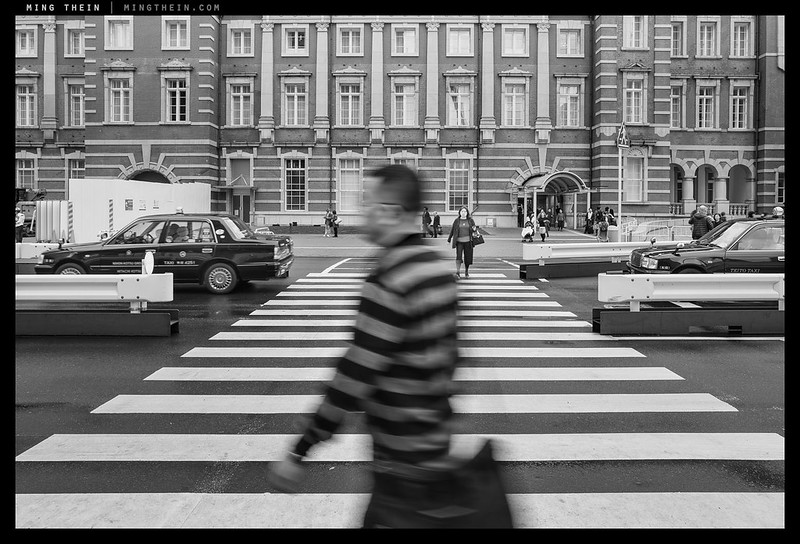
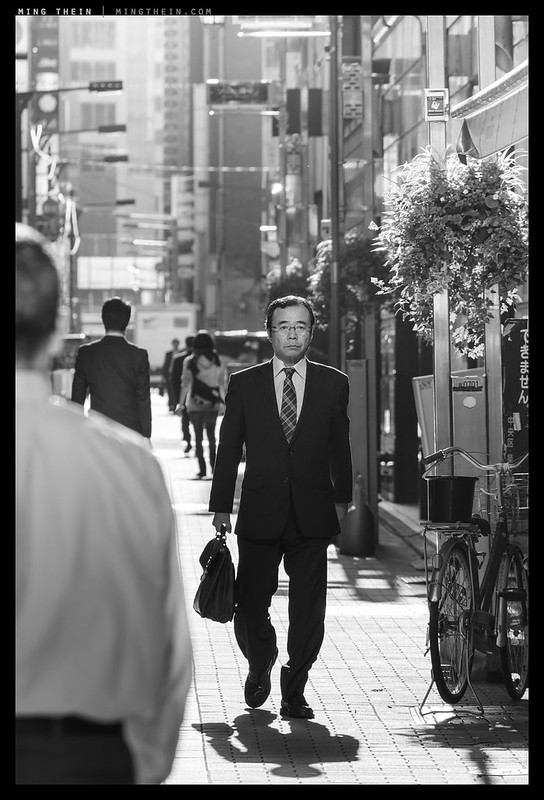
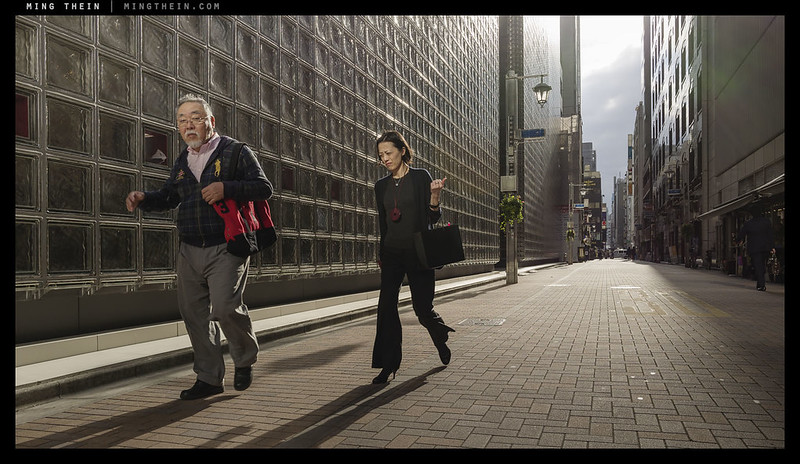
I can only surmise this is a cultural thing, or I’m going to the wrong places – in the ten years or so I’ve been regularly visiting Tokyo, the majority of people, the majority of the time – appear to have quite a load on their minds. Maybe it’s the economy, maybe it’s the government, maybe it’s because they don’t see a way out from whatever they’ve been doing for the last 30 years – oddly, though Japan once felt so societally, culturally and technologically different from the rest of the world as to be light years ahead like some porto-future, I keep getting the impression that everywhere else seems to have caught up in the last couple of decades. There is no longer this sense of wonder when I arrive, but more like a comfortable familiarity and a search for something hidden – which I can never quite quantify, but occasionally find in the form of something very traditional (think hundreds of years of continuity) or reinterpreted (hundreds of years of continuity but with modern influences). I’ve always found it interesting that Japan can be such a philosophical paradox: on one hand, so traditionally rigid, and on the other, still rather freeform and kooky. Or perhaps I’m just not being allowed into the wilder karaoke and hostess bar places… MT

This series was shot with a Canon 100D, 24STM and 55-250STM lenses, and an X1D-50c and 90mm, and post processed with Photoshop Workflow III. Travel to Tokyo vicariously with How To See Ep.2: Tokyo, learn to be stealthy with S1: Street Photography and see how to capture the essence of a location with T1: Travel Photography.
[Read more…]

Photoessay: On the verge of anonymity

100D_MG_1948 copy

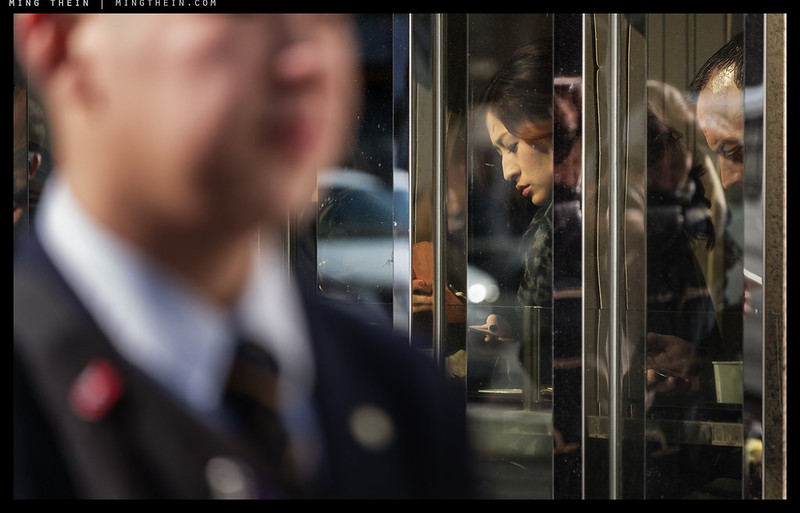
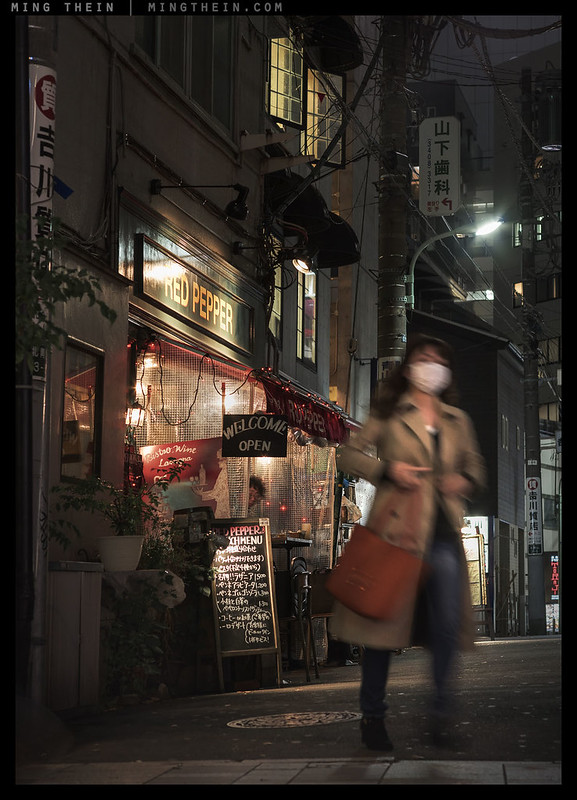
An experiment of sorts, today: more ‘stream of consciousness’ style photography, but this time shot through my left eye instead of my (usual) right. The idea is to test the hypothesis of left-brain-right-brain influence on structure, order and general perception; personally, I think using the non-dominant eye tends to result in somewhat more organic overall structure and composition. That, and significantly more skew for some reason – I didn’t seem to hold the camera straight in any of these. It’s also been a long time since I’ve had the time to go out on my own for a day or two with no objective other than to wander around and shoot the streets; Tokyo is of course a great place for this with no end of possible material. MT

This series was shot with a Canon 100D, 24STM and 55-250STM lenses, and an X1D-50c and 90mm, and post processed with The Monochrome Masterclass workflow. Travel to Tokyo vicariously with How To See Ep.2: Tokyo, learn to be stealthy with S1: Street Photography and see how to capture the essence of a location with T1: Travel Photography.
[Read more…]

Photoessay: Tokyo street monochromes III

_5502319 copy
Yin-yang tribute to Fan Ho

I actually prefer to think of these as little stories, or vignettes – I suppose that should really be the objective of street photography; to capture an transient and narrative element of life in a documentary way. That little slice of time might not be significant to anybody other than the main players, but it’s no excuse for a lack of story. I’m going to complete my version of the story by adding titles…even if audience preferences may differ 🙂 Enjoy! MT

This series was shot with a Nikon D5500, 55-200/4-5.6 DX VR, Sony A7RII, Zeiss 2.8/21 Loxia, Zeiss 1.8/85 Batis, and Contax Zeiss 2.8/85 Sonnar and post processed with the Monochrome Masterclass workflow. You can also get your weekly dose of PS right here

[Read more…]

Photoessay: Motion in Tokyo/ The Idea of Man II

_7R2_DSC3754 copy

I view The Idea of Man project as mostly complete; the story is tight and stylistically consistent. But I’ve been thinking a lot about its sequel in the time since the exhibition; to begin with – is there one at all? Where does one go from the story of the individual finding their place in the world? The answer came to me after some long exposure urban landscape: it’s in community, in groups, in the flow and interaction of individuals. And that idea will be at the core of The Idea of Man II.

[Read more…]

Photoessay: Tokyo solos

_Q116_L1070004 copy

There are times when you shoot to push the envelope; others when you need to work to an objective, and still others when you feel like but shooting with no particular objective in mind in more of a meditative state. We tend to default back to habit – which can result in some very similar images to ones we’ve made before, but also a sort of liberation where you shoot ‘in flow’ and almost let the environment do the driving. This was one of those times – I present nothing too serious or deep today: just a series of individual (or are they?) Tokyoites. Enjoy! MT

This series was shot with a Leica Q, Nikon D5500 and Sony A7RII and post processed with PS Workflow II.

[Read more…]

Photoessay: Urban jungle, Tokyo

_Q116_L1070562 copy

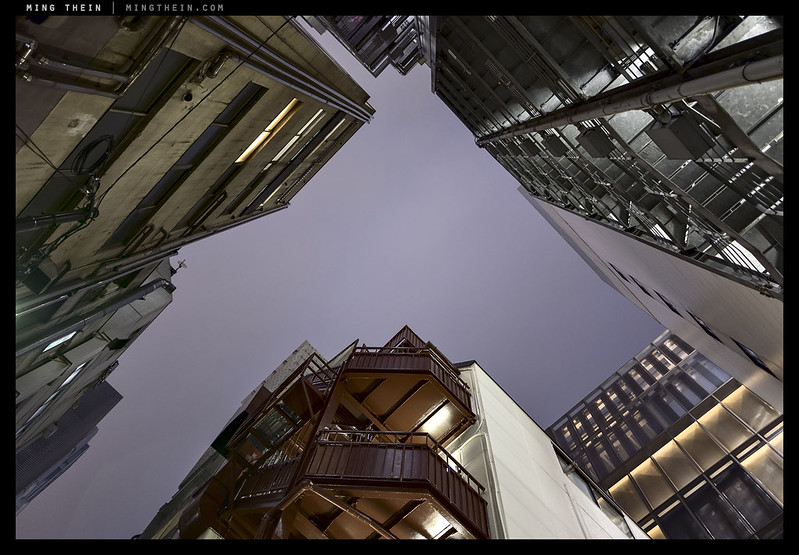
One of the things that I think strikes every visitor to Tokyo is the sheer density of the place: no space is wasted, and every single available nook and cranny fully utilised – and then some. I find this makes for a very chaotic appearance on the surface – and of course a huge number of quasi-abstract photographic opportunities – but with a little more contemplation some underlying semblance of order begins to poke through – you can almost see what they were thinking when they built bits of the city.

[Read more…]

Photoessay: Ethereal forms in Tokyo

_5501547 copy

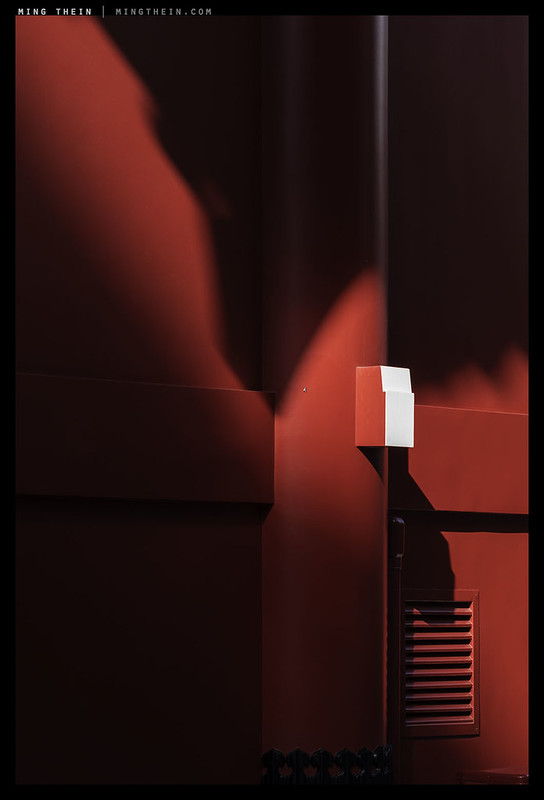
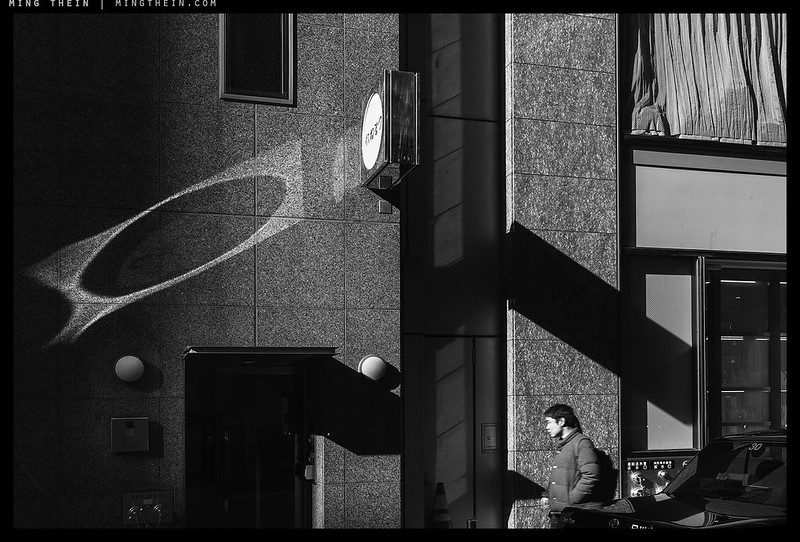
Every time I visit Tokyo, I can’t help but think the city’s districts tends to take two very divergent forms: either a sort of incredibly dense chaos born of years of layering without any possible initial foresight, with some entropic decay thrown in for character –  or a very precise order that’s almost identical to what was laid out by the architect’s draftsman. The first sort of neighbourhood is interesting because of the history literally layered in. The second sort is both dystopic and utopic in a way; are we looking at an impersonal bad dream that’s become reality, or something else? Moreover: where do the humans fit? There is a sort of stark minimalist beauty in the abstractions of form created by transient light, too. The shadows must have their time in the sun, too. MT

This series was shot with a Leica Q, Sony A7RII, Zeiss 85 Batis, Contax-Zeiss 2.8/85 MMG, Nikon D5500 and 55-200/4-5.6 VR II. You can learn the underlying postprocessing in the Weekly Photoshop Workflow series.

[Read more…]

Photoessay: 28mm in Tokyo

_Q116_L1070166 copy
Camouflage (urban jailbreak)

People, an urban centre, 28mm, and monochrome – is there a more ‘classical’ recipe for what might be traditionally classified as street photography? Perhaps, perhaps not. The whole genre is so fluid that I think it is impossible to define anyway; I instead think ‘snippets from the quotidian’ is probably more accurate in this case. They are vignettes and observations of the repeated, the mundane, and the boring. But the pace of the world changes so fast that who knows what the same activities will look like in twenty or fifty years? MT

This series was shot with a Leica Q and post processed with The Monochrome Masterclass. You can also look over my shoulder at the underlying postprocessing in the Weekly Photoshop Workflow series.

[Read more…]

Photoessay: People of Tokyo II

_5502278 copy

As usual, it is impossible not to be in a place like Tokyo and do at least some street photography; the very difference in the way people act and the things they do already attracts our attention because it breaks the pattern which we’re used to seeing. Furthermore, Japan’s tolerance for photography in general as a society and the close proximity in which people usually find themselves makes things even easier. It is however impossible to avoid people on phones: I still think this is the ‘hat-and-newspaper’ of the 21st century; just as life-documenting photographers eighty years ago could not avoid that cliche – which now seems quaint to us – we are locked into the era of the cellphone. It is harder to find somebody not using one. I’ve always said the best street work should be pretty close to documentary in nature, though much more personal in significance. If phones are the nature of reality today, so be it. That of course doesn’t mean there isn’t plenty else going on. I did get a feeling of longing and melancholy I didn’t observe the last time I was there; the usual conspicuous isolation was even stronger on this visit. A sign of the times for society, perhaps? MT

This series was shot with a Leica Q 116, Nikon D5500 and 55-200/4-5.6 DX VR II, Sony A7RII and Zeiss 2.8/21 Loxia and 1.8/85 Batis lenses and post processed with The Monochrome Masterclass workflow. You can also look over my shoulder at the underlying postprocessing in the Weekly Photoshop Workflow series.

[Read more…]

Photoessay: Tokyo cinematics II

_Q116_L1080008 copy

Continued from part one.

I frequently get asked if it is possible to work in the cinematic style with a wide lens; the answer is of course yes. There are a couple more considerations over the more traditional conception of the genre that is heavily dependent on longer focal lengths to split the scene into planes and blur the unimportant portions; it is true that the latter is much easier with a longer focal length due to simple rules of physics. However, use of the wide perspective is also important for several reasons, with the main one being trying to create a feel of involvement and immediacy for the audience. It can also be used in tight quarters and to create the impression of distance between observer and scene/subject. In all situations, the frame has to perceptually appear level – otherwise a very strong (and distracting) tipping sensation is produced. The wider the lens, the more care you need with levelling and keeping subjects away from the edges of the frame to avoid geometric distortion drawing attention to itself. Lens choice is also fairly critical because any out of focus areas are unlikely to be drastically out of focus; there will be a lot of transition zones. I personally prefer a smooth rendering here rather than a crisp one because it’s very difficult to reduce the prominence of background or foreground distractions after capture. Enjoy! MT

This series was shot with a Leica Q 116, and post processed using the Cinematic workflow in Making Outstanding Images Ep.5. You can also look over my shoulder at the underlying postprocessing in the Weekly Photoshop Workflow series.

[Read more…]