The most important things in photography

_PF04042 copy

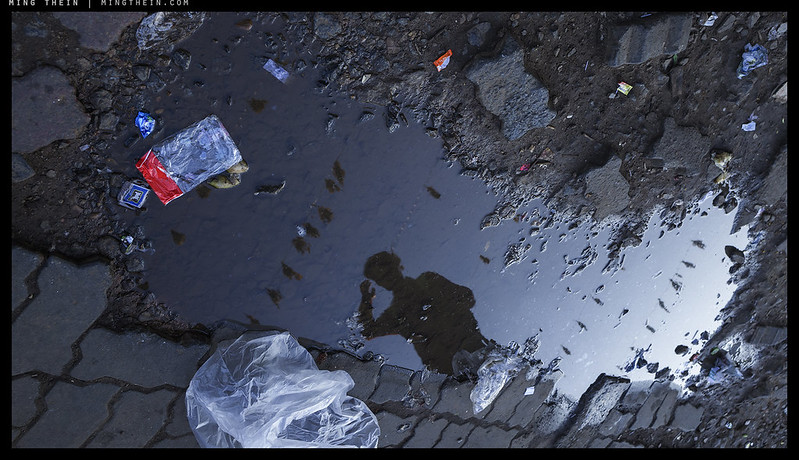
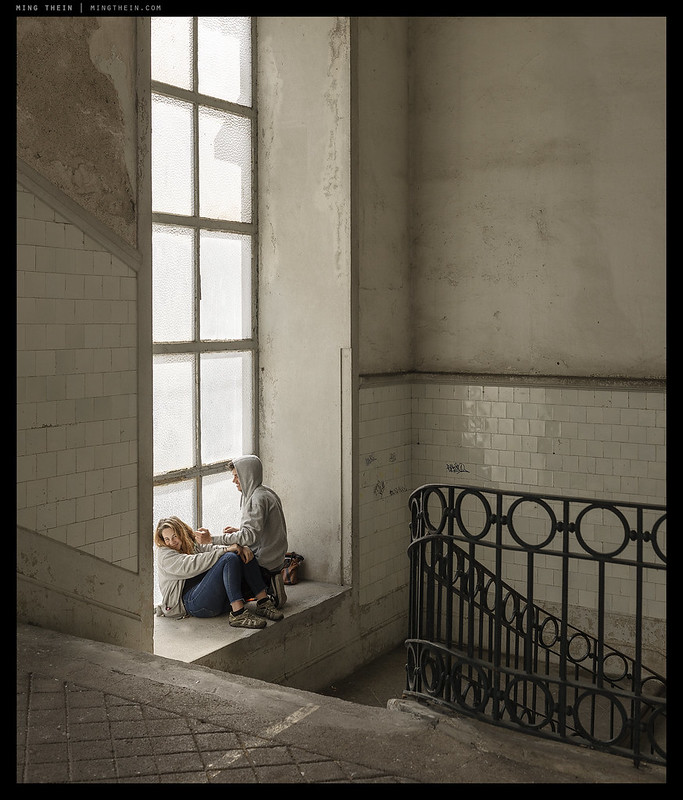
In the better part of 17 years’ worth of shooting – there are just a few critical things I find are inescapable when taking the shot. I perhaps have the benefit of having gone full circle a couple of times around the effort and equipment wheel, and shifting priorities force me to work both faster and smarter. Please note that the descriptions following have some subtlety and may at first seem contradictory, but bear with me…

[Read more…]

Working with overcast light

When the weather is overcast and light is not great, street photographers (myself included) usually lose motivation to continue shooting. After all, light plays a vital role in producing results. With less than ideal lighting, there is no opportunity for the widely practiced deep shadow and highlight play, silhouette shots or even dramatic high contrast shots, both in color or black and white. I do envy photographers in regions further away from the tropics (Japan, Australia, Northern European countries), where directional beautiful light is more common and present for an extended period of the day. In Malaysia where I reside, if there isn’t tropical afternoon showers, then we have to contend with haze or harsh light for most of the day. Directional and interesting light is confined to mornings and just before sunset.

[Read more…]

MT’s scrapbook: Duo

_PF04260 copy

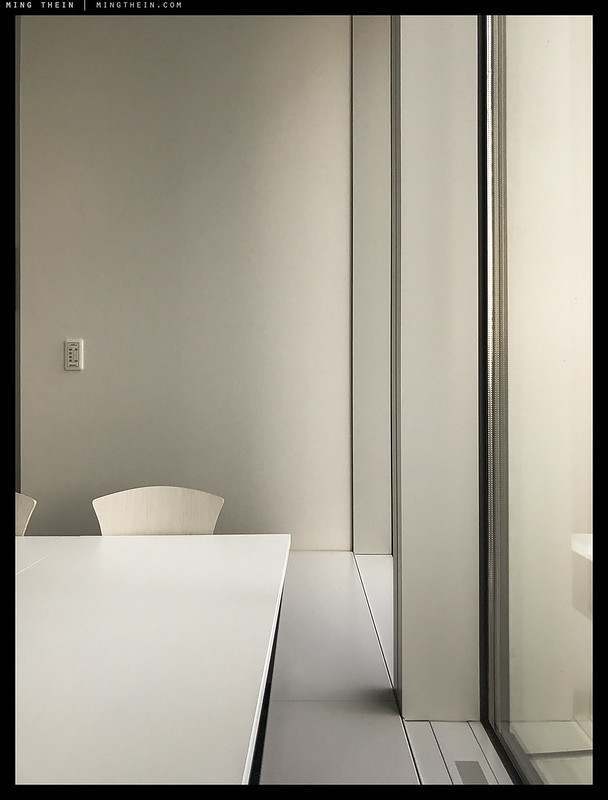
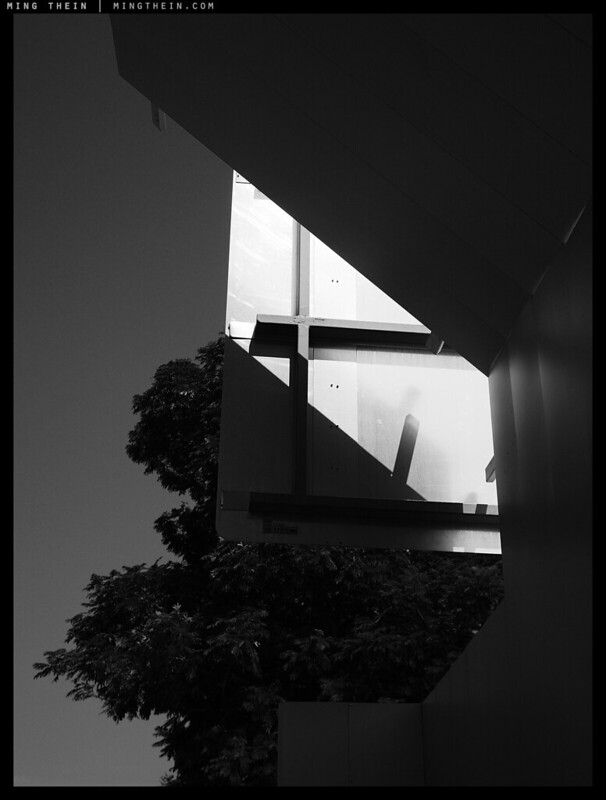
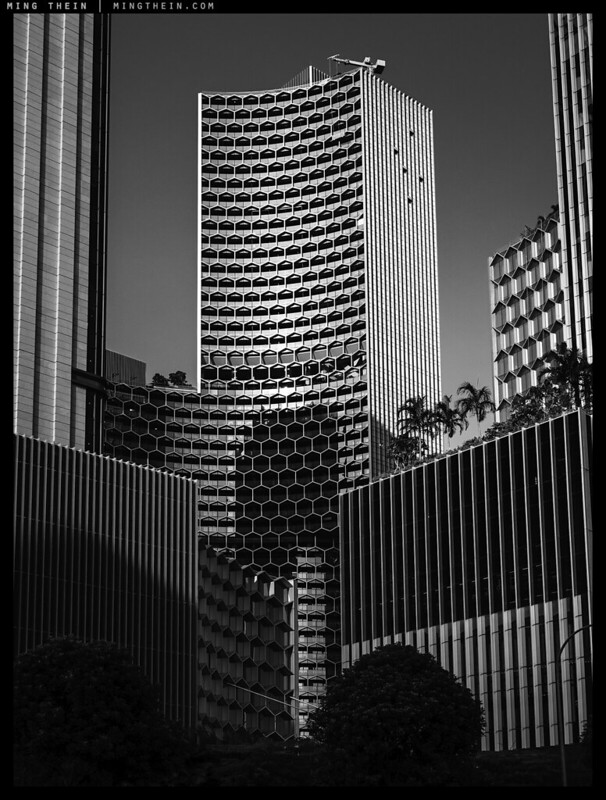
I happened to be staying at the hotel in this rather interesting property a couple of months back; whilst I don’t think I’d want to live here (there are apartments in one of the other towers) because it feels a bit cold and impersonal – the architects did a good job breaking up the potentially overbearingly massive geometric forms with cladding and ground landscaping, so you never feel that dominance at ground level. There’s no question some very clever structural engineering was involved to make the masses balance (and to install that curtain wall). The interior spaces are strange though – despite the size of the building, they never feel very large inside; I don’t know if this is due to the internal space division or the very non-square geometry. Still, it made for a pleasant half an hour or so’s worth of diversion wandering around and hunting for images. MT

The Scrapbook series is shot on an Olympus PEN F, with unedited JPEGs straight from camera bar resizing (and of course some choice settings). One or two were reprocessed to match the rest of the set using The Monochrome Masterclass workflow, for visual consistency and correction of verticals.

[Read more…]

Photoessay: vignettes of melancholy and longing

_Q116_L1100334 copy

Here’s a slightly unusual (and personal) curation, matching my usual mood: I hugely cut down the amount of travel I’ve been doing (after pretty much ten years of non stop, at least twice a month work trips), starting in the second half of 2017 and continuing on to 2018. But the last couple of months have reminded me precisely why I made that choice: yes, you get to do some fun stuff, but it’s also fatiguing, you don’t see your family (worse, if your wife happens to have an opposite travel schedule which means you’re never in the same place at the same time), hotels are soulless, and working off a laptop with a malfunction keyboard (hello, double alphabets) and trackpad (goodbye, click!) when you’re used to a dual screen 27″-32″ setup is positively claustrophobic (and unproductive). Hell, I even miss my car and my polar bears. Sometimes these feelings concentrate, and leave you with an odd sort of creative inspiration that makes you search the back catalog and realise that at some point – many points, really – in your previous travels, you’ve felt exactly the same way. And it somehow made you a little creative at the time. And I have to say, in an odd way – that cheered me up. MT

Shot over a long, long period of time with a wide variety of equipment. Mostly processed with PS Workflow III.

[Read more…]

Exploring Pulau Lang Tengah

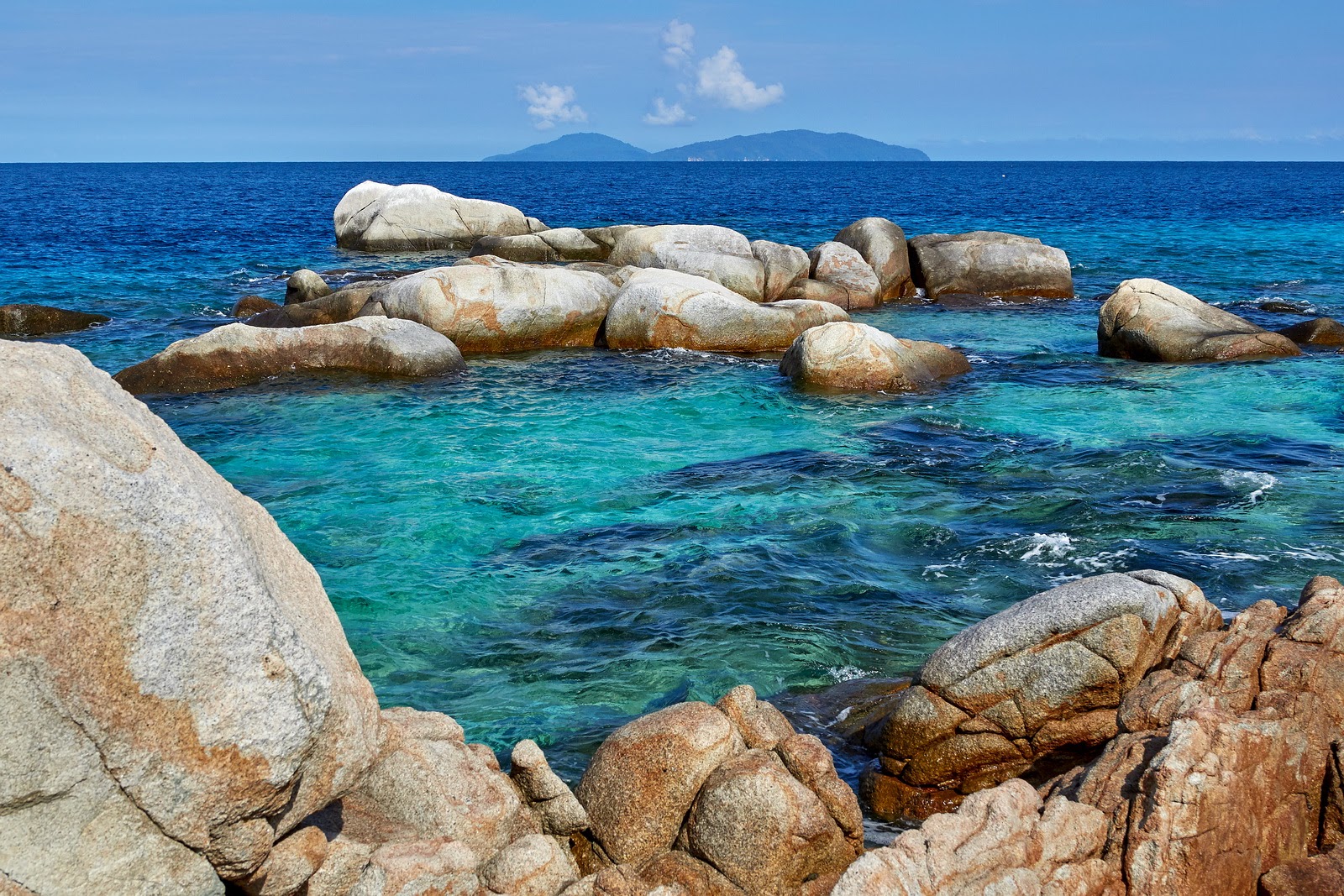
At a recent Olympus event for bloggers and social media influencers, I was requested to conduct a night photography workshop at Pulau Lang Tengah – an island off the eastern coast of Malaysia. Since it was the start of the monsoon season, we anticipated rain and cloudy weather which is counter-productive to night sky and landscape shooting. I had most of the day before sunset to myself – a good opportunity to explore the island. I’m a land creature, allergic to the presence of water. So scuba diving or snorkeling was a non-starter, but given the great location and my purpose for being there, landscape photography was the natural answer!

[Read more…]

Photoessay: Autumn again

_8505981 copy

Autumn in Japan these days seems to come later and later – the end of November or early December, in some areas further south. It probably ranks second only to the cherry blossoms as the season for landscapists to chase; I can’t say I did that but I did time the visit to coincide with some color in at least one of the locations we visited. It’s perhaps also my favourite season of the year as it’s the one I see the least of, living in the tropics – we get summer and an approximation of winter (monsoons) and spring isn’t that different, but the leaves never turn, the landscape doesn’t become warm, and the city isn’t redolent of reminiscence of the year that’s just passed. I’m sure I’d probably get bored of it if I lived at higher latitudes, but for now, please enjoy a (even) more abstract set than my usual landscapes. MT

This series was shot in various parts of Japan in the last year, with a Nikon D850 and 24-120 VR, and post processed with Photoshop Workflow III.

[Read more…]

Wide angle urban exploration

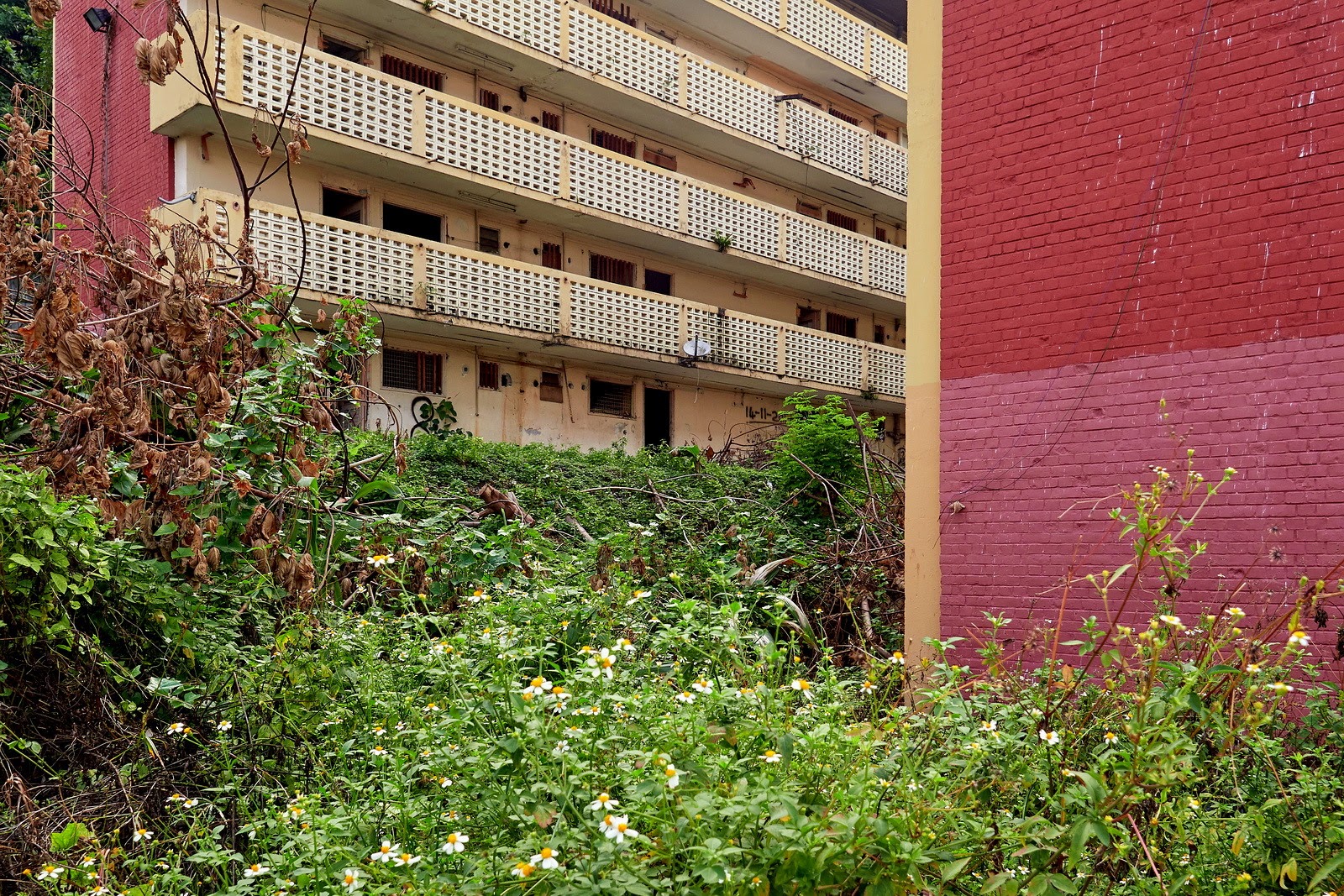
During one of my recent short walks from a train station to a nearby cafe, I chanced upon a stretch of abandoned residential flats. It had been a while since I last did urban decay photography and the thought of exploring these flats got me and my friends excited. Therefore, after some planning and gathering an adequate number of people we made our way into these abandoned buildings and started shooting. This was the perfect opportunity for me to exercise my wide angle compositional skills, something that I do not do frequently enough. I brought along the Olympus OM-D E-M1 Mark II and M.Zuiko 7-14mm PRO lens for this particular shoot.

[Read more…]

Understanding color, from a workflow perspective: part 2

IMG_5661b copy

Continued from part 1

It is possible to make a calibration profile for every camera that takes you back to neutral color and tonal response; I do precisely this in PS Workflow III because I need to use a variety of tools for the range of work I do. It allows me to have a consistent color palette/ tonal signature across all of my images, regardless of hardware: this is important because some projects last for years and I may change hardware several times across the duration; but I cannot change the way the images look too much, else you sacrifice visual consistency. I also do this to get control over the output palette: subtle biases can influence viewer emotional response; this is one of the many tools in a storytelling photographer’s arsenal. Note: whilst some cameras allow for a wide range of adjustability of the in-camera processing, none of them allow full HSL adjustments (which would be required to get a totally neutral profile). Currently, the Olympus Pen F comes closest – but you still can’t fully escape the slightly warm default tuning, nor can you compensate on the fly for scenes of wildly different contrast levels (which our eyes do automatically).

[Read more…]

Understanding color, from a workflow perspective: part 1

H51-B0005761 copy

We first need to understand a bit of history to appreciate the origins of ‘house color’ or ‘company color’ or a particular tonal palette: in the early days of color photography, it simply wasn’t possible to make a film emulsion that responded equally to every color, much less mirrored the response of the human eye to the visible spectrum. It’s also important to note that a recording medium’s color response and luminosity (tonal) response aren’t the same thing but they are linked; further complicating things. And we haven’t even started talking about how different individuals’ eyes respond differently to color*. The best manufacturers could do was offer a range of emulsions (corresponding to a range of different chemicals that had different responsiveness to light) that gave photographers choice. It’s one of the main reasons images from certain eras have a particular look to them: the world didn’t offer different colors or fade; what we’re seeing is a mixture of time-sensitive oxidation of pigment in the output image, and the limitations of the recording medium at the time. As emulsions improved, so did the spread of color that could be recorded. The world didn’t become more realistic: our means of recording and displaying the recording did.

*As you get older or if you have cataracts, certain frequencies become blocked/absorbed by the lens or liquid portion of your eyeball, limiting what reaches the retina. And the retina itself may well not be operating at peak tonal response, too.

[Read more…]

Photoessay: Cityscape Hong Kong

X113_L1140200 copy

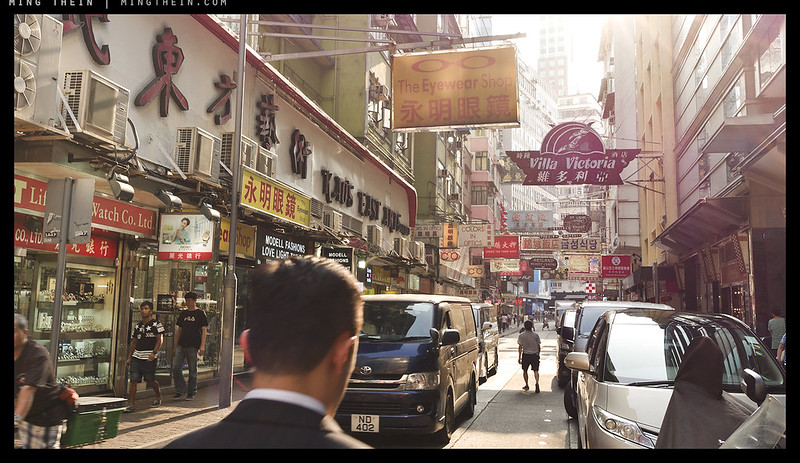
It turns out this one was a lot tougher than I expected – mainly because of the sheer volume of starting material. I’ve lost count of the number of times I’ve been to Hong Kong during my photographic career; and inevitably you land up staying somewhere with a relatively interesting view or two even directly from the hotel room, let alone once you start wandering at street level. The sheer density and rate of change of the city means that these two elements themselves are constants in the overall impression left; only on top of that can you layer the other details. The interesting thing is the details become recursive at multiple scales, resulting in a very dense urban wimmelbild of texture; it was tough to decide where to draw the line between cityscape and street during the curation. It’s also equally easy to get lost in the concrete canyons and forget that there are actually a lot of open green areas around the islands, and of course water. Regardless – there’s a lot to see here, and I’m pretty sure there are no end of arguments as to exactly what constitutes a ‘comprehensive’ interpretation of Hong Kong…

Shot over a long, long period of time with a wide variety of equipment. Mostly processed with PS Workflow III.

[Read more…]