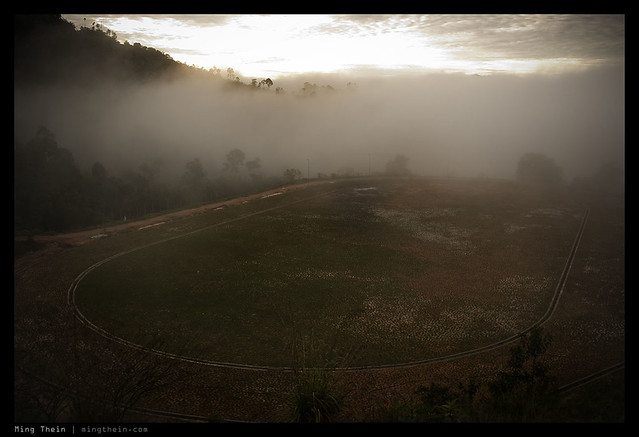
An unfair fight? 35mm vs Medium Format: Nikon D800E and the Leica S2-P

_7064022 copy

I want to say upfront that until I did the test, I had no idea how the result was going to turn out. What I suspected wasn’t quite the outcome that occurred; but you’re going to have to read on to find that out 🙂 I apologize in advance, because what was supposed to be a quick A-B image comparison has turned into a 3,500 word dissertation. There are a lot of things that must be said, clarified and put into context when dealing with these cameras.

The best conceived test is completely useless if the methodology isn’t sound; likewise, a seemingly unfair fight can be actually relevant if properly executed. Both cameras are in the high 30MP range; 36.3MP for the Nikon D800E, and 37.5MP for the Leica S2. Close enough to make as near as no difference. (Also, the S2-P is the same camera as the S2 except for the sapphire cover over the screen and professional service.) Everything was shot at base ISO on a sturdy tripod (a heavy Manfrotto 444 Carbon One with Hydrostat head) and mirror lockup. Lossless compressed RAW for both, with files processed via ACR 6.7 final release with equal sharpening, zero noise reduction, and equal shadow/highlight recovery slider settings. Images were then saved as quality 12 jpegs – the full frame shots you see are reference for color only, not resolution of course – and the 100% crops are also quality 12 jpegs. There is some minor quality degradation but not a lot. The first cityscape had both cameras set to the same Kelvin temperature for white balance, however subsequent shots were point balanced in ACR to the same location as this was more representative of real-life workflow.

In addition to outdoor subjects – the dynamic range torture test – I also shot a number of indoor subjects to test both front and back bokeh, sharpness, high ISO performance, lens performance in the macro range, and a trial run for something I’d use both cameras for – watch photography.*

Similarly, I matched lenses as closely as possible; we chose the best for each system. Not difficult with the S2 – all of the lenses are incredible, and nearly flawless. It is simply one of the highlights of the system; there are no lenses worse than excellent. And each lens has its own calibration firmware embedded at the factory, to ensure perfect focus on every camera body – why other manufacturers don’t do this is beyond me. I certainly wouldn’t have had the D800 AF issue if this was the case. I used the Leica 35/2.8 Summarit-S and 120/2.5 APO-Macro-Summarit-S on the S2, and the Zeiss ZF.2 2/28 Distagon and Nikon 85/2.8 PCE Micro-Nikkor on the D800E – both lenses I consider to be the best of their focal length in F mount.

Focusing was done either via the AF system (and results checked via live view or manually bracketed) to achieve optimum sharpness. Everything was shot within minutes of each other, so there should be minimal differences in lighting. There will be some differences in the final watch shot as I couldn’t get the tripod to hold in that overhead position with the weight of the S2; the shot was handheld and there are some minor differences in lighting due to watch positioning and reflections.

*I shot part of an architectural assignment recently with the S2, 30mm and 70mm lenses; see an upcoming On Assignment for the rest of that article.

Part one: Cityscape – dynamic range and resolution test. Zeiss 2/28 and Leica 30/2.5

_8010052 copy
The full D800E + Zeiss ZF.2 2/28 Distagon frame

_S22_L1000854 copy
The full Leica S2 + 35/2.5 Summarit-S frame

The first obvious thing is that the color response of both sensors is hugely different, despite both being set to the same color temperature; I’m guessing it has to do with many factors, including a) CMOS vs CCD architecture; b) the nature of the Bayer algorithm used and the color filter array layout; c) internal signal processing and ‘company color profile’; d) ACR’s interpretation of the files.

The D800E’s file looks quite natural but is a touch too warm; the S2 is very blue-green biased and would make for great landscapes, however it doesn’t get the color right either. Both cameras could be corrected to accurate (as their sensors’ tonal response is broad enough) however neither gets it right out of the box. The S2 has slightly better dynamic range – perhaps half a stop or so – but there isn’t a lot in it. Neither camera has blown areas or blocked up shadows.

_8010051-1 copy
D800E 100% center crop, at f2.5

_8010052-1 copy
D800E 100% center crop, at f8.

_S22_L1000853-1 copy
S2 100% center crop, at f2.5

_S22_L1000854-1 copy
S2 100% center crop, at f8

In the center, the Zeiss/D800E combination is already excellent at f2.5 (set to match the S2) and barely improves at f8. The Leica, however, is even better at f2.5 (wide open!) and seems to soften a bit at f8. I repeated this test several times with the same result – the lens is best used wide open, it seems.

_8010052-2 copy
D800E 100% edge crop, at f8

_S22_L1000854-2 copy
S2 100% edge crop, at f8

The corners tell a very different story; the Zeiss/D800E is very good, but the Leica is outstanding. The former has clear softening due to CA at high contrast edges (note white building) due to field curvature; the Leica shows none of this whatsoever and is sharp enough to show minor evidence of color moire (!). This is best seen in the air conditioning condensers in the windows of the white building.

Note – shadow noise here is high because I’ve run a 50/50 setting for the shadow/highlight slider to maximize dynamic range.

Part two: Indoors, wide-angle bokeh test and flare test

_8010058 copy
D800E + Zeiss ZF.2 2/28 Distagon full frame

_S22_L1000857 copy
S2 + 35/2.5 Summarit-S full frame

There’s really not a lot in this one – both images look great. Color is accurate, and bokeh is pleasant – though I’d give the edge to the S2 because the highlight rolloff is a little smoother; which no doubt has much to do with the dynamic range of the sensor. What is noticeable here is vignetting on the D800E/ Zeiss combination; almost a stop. I guess it’s one of the factors that contributes to the cinematic look of the Zeiss. The Leica has zero vignetting, despite being shot wide open. Depth of field is about the same; the D800E/ Zeiss was shot at f2, and the Leica at f2.5.

_8010058-1 copy
D800E 100% center crop, at f2

_S22_L1000857-1 copy
S2 100% center crop, at f2.5

Both lenses are commendable in the way they handle the strong backlight with almost no flare; the coatings on both are superb and you see very little of the first few elements. However, on closer inspection at 100%, we see the Zeiss has a definite purple fringe, and the Leica appears almost completely apochromatic. I’d say resolution here is a tie.

Part three: telephoto bokeh and flare test

_8010060 copy
D800E + 85/2.8 PCE full frame

_S22_L1000860 copy
S2 + 120/2.5 APO full frame

We’ve now switched lenses to the short tele macros; the 85/2.8 PCE on the D800E, and the 120/2.5 APO-Macro-Summarit on the S2. The tripod was moved between shots to try to match the angle as the Leica 120 is about 95mm equivalent; I don’t have the AFS 105/2.8 VR handy, and besides, I think the 85/2.8 PCE is a better lens anyway – the micro contrast structure is a lot more refined, and LoCA is lower.

The D800E seems to have a slight dynamic range advantage here, though it could be due to exposure. Bokeh from the S2 is definitely better, as would be expected from a lens that’s both faster and longer. Both lens/ camera combinations deliver a very 3D feel, and pleasant foreground bokeh – something that’s frequently ignored by photographers, but contributes heavily to a workable defocused foreground as part of the composition or not.

_8010060-1 copy
D800E 100% center crop at f4

_S22_L1000860-1 copy
S2 100% center crop at f4

On closer inspection, we see both lenses are easily capable of matching the resolving power of the sensor; if forced to choose, I’d give a hair to the Leica, but there’s almost nothing in it. Where there is a difference is in longitudinal chromatic aberration (‘bokeh fringing’) which is very obvious on the Nikon crop, but almost completely absent from the Leica – the 120mm is an APO lens, after all. This may contribute to the overall impression of the Leica being slightly sharper. Interestingly, the micro contrast structure and color transmission between the two lenses is very similar indeed, which is to say very neutral.

Part four: high ISO test

_8010061 copy
D800E full frame, ISO 1250

_S22_L1000861 copy
S2 full frame, ISO 1250

The same scene, again – however, this time at ISO 1250, which is the upper limit for the S2. The D800E can of course go a lot higher – to 25,600 – but I wouldn’t touch this with a barge pole. Notice the reduction in dynamic range for both cameras – more so on the S2, as expected from its CCD sensor architecture. Color transmission is commendably consistent between the two. In case you’re not convinced it’s dark, exposure time was 1/40s at f4 ISO 1250 for both cameras. Although this isn’t pushing the limits of the Nikon with it’s CMOS sensor, it is pretty much forbidden territory for most medium format systems.

_8010061-1 copy
D800E 100% center crop, ISO 1250 f4

_S22_L1000861-1 copy
S2 100% center crop, ISO 1250 f4

THe S2 displays a similar noise profile to the M9 at the pixel level; this of course isn’t surprising because they share the same base sensor architecture from Kodak. It is clear that both cameras are showing noise (there is zero NR applied here; it could be much improved by judicious use of the noise reduction tools in ACR). The D800E’s noise pattern is very fine grained luminance noise only; there’s a hint of chroma noise in the S2, but it’s still mostly luminance. I’d put it at being 1.5-2 stops behind the D800E. This is clearly not an available light camera; frankly, neither one is; I’d pick a D3s or D4. Detail retention for both cameras is still excellent, with the edge again going to the Leica – more clearly this time – perhaps the Nikon is applying some noise reduction on its raw files (though I switched this option off in camera.)

Part five: practical applications

_8010074 copy
D800E + 85/2.8 PCE full frame

_S22_L1000870 copy
S2 + 120/2.5 APO full frame

What you see here is a processed (but un-retouched – that would take too long) final photo achieved with multiple Nikon flashes – triggered via CLS on the D800, or via an optical SU4 trigger on the S2 – which is representative of the kind of shoot I’d use either camera for. Of course, this doesn’t take into account the minimum practical frame size on the D800E being about 10x7mm, vs 60x90mm for the S2.

The S2 image pops more – it could be due to a slight change in camera position for reasons mentioned earlier – but I suspect it may be due to the Leica 120mm having slightly higher overall contrast than the Nikon PCE. Both cameras have done outstandingly well; I like both images very much. Color is commendably accurate after adjustment.

_8010074-1 copy
D800E 100% center crop, f5.6

_S22_L1000870-1 copy
S2 100% center crop, f5.6

Close up, there’s there’s a bite to the S2 image that’s lacking from the D800E; somehow the finest structures aren’t being completely transmitted by the lens; it seems the S2 lenses have more micro contrast. Once again, both images were shot at the same aperture, but somehow the S2 appears to have a hair more resolution and acuity.

Part six: specific comments on the Leica S2

There are a lot of things I like about this camera. It’s the first Leica system designed from the ground up in a long time, and it shows. There’s DNA from the R9 ‘Hunchback of Solms’ about the way the shoulders of the camera slope, the gigantic shutter dial, and the almost vertical shutter release (which is a great design choice, by the way – squeezing the grip greatly reduces camera shake compared to a vertical plane release). Even the power switch positioning is reminiscent of that lever on the R9 whose function I’d never been able to figure out. In fact, it’s pretty amazing that they managed to fit such an enormous viewfinder inside that prism hump – it’s not much bigger than the D800E’s hump, in fact (though the latter also contains a pop up flash).

Despite the legacy DNA, the control system is well thought out and remarkably simple – four hot keys around the LCD have soft functions; selections and scrolling are taken care of by the thumb wheel, which also clicks in to select or change exposure mode. It’s a very elegant and easy to use system. The camera and lenses are also fully weather sealed, with elaborately precise flanged gaskets that make the Nikon look positively crude by comparison. (Strangely, I was also told that it was probably not a good idea to shoot with the camera in the local monsoon rain). Build quality is excellent; it feels like a solid block of metal (and weighs about the same too, but a lot of this is attributable to the lenses), and there are very few external screws except on the base, which is rubberized; I’d say it’s a level above even the D4. The mirror mechanism is remarkably well damped, and for such a large mirror, blackout time is negligible. The one thing I don’t like about the ergonomics is the hand grip; that odd finger cut just doesn’t seem like it was made for Asian hands.

The viewfinder is enormous – as expected for medium format – and hugely addictive, being both of high magnification and high eye point. In fact, magnification is about 100% with the 70mm, which means you can comfortably shoot with both eyes open. I never thought I’d say this, but it makes the D800E’s finder feel like a dark tunnel. And there’s no comparison when it comes to ease of manual focus – though the D800E does of course have live view. Battery life is excellent, too – in my time shooting with the S2, I’ve never been able to make the charge indicator move more than a small fraction even during a heavy day of shooting with several hundred images. I’d estimate you’d get at least a thousand, possibly even two thousand, images off one charge.

The crown jewel of the system, however, has to be the lenses. The S system lenses are hands down the most impressive optics I’ve ever used; they’re almost flawless wide open, even in the corners, and even more perfect than the best M system lenses. And they focus themselves! Sadly they’re also enormous and heavy – which I suppose is the price paid for perfection. The 120 macro is almost the size of a 70-200 VR.

It’s not all roses, though. The S2 doesn’t work well as an available light camera; it’s very difficult to nail critical focus, stop camera or subject motion, and still stay within the good quality ISO range. I’d go to ISO 640 with reservations, and 1250 in emergencies. But then again, it was never supposed to be. The LCD could be improved, and some parts of the menu just look crude. The reverse-turning (at least relative to Nikon) aperture dial is also immensely confusing; I wish they put an option in the menu to allow users to reverse the direction. Autofocus is precise, but by no means fast; with the 120 APO-Macro it might take a while as the focusing helicoid nearly runs a full 360 degree turn of the barrel.

Part seven: specific comments on the Nikon D800E

You can find plenty of my thoughts on the nearly identical D800’s detailed first impressions review.

After a month of using the sibling of this camera in various ways, my opinion still hasn’t changed: it’s a game changer as far as image quality in the small format goes. There isn’t anything that can touch it, and the D800E stretches that bar even further. I thought the image quality of the M8 was good, but this is like having two M8 sensors welded together side by side – that’s a noticeable increase in resolution.

The D800E does require care with regards to moire; I’ve seen it several times already during my very short time with the camera. Both luminance and chrominance moire are possible; watch carefully with high frequency repeating patterns such as architectural detail or fabrics.

It’s a shame, however, that most of Nikon’s lenses don’t seem up to the task. They have built a monster of a camera body capable of incredible resolution and color that seems to have outstripped the rest of the system somewhat – very, very few Nikkors can do the sensor justice. The PCEs are a safe bet, as are most of the Zeiss lenses; of the AF glass, be careful with the primes. Yes, there were focusing problems, yes, they’re being repaired, and yes, my D800E is much better than the D800 – though still affected to a very slight degree. Enough that I’ll be careful, but not a deal breaker as most of my work with the D800E will be done under controlled studio circumstances with longer lenses.

Conclusion

What I find interesting is that we’re at a convergence point: my complaints of the S2 are because I’m treating it like a normal SLR; on the opposite hand, I’m expecting medium format quality from the D800E. This says a lot: both cameras have achieved and surpassed their design objectives. The Leica S2 was designed to make medium format easy and convenient; it does – to the point where we forget that we’re shooting with medium format. The D800E was supposed to raise 35mm-format DSLRs into the medium format realm; it does. I don’t think I’ll ever take the D800E with me on holiday; I’d certainly pack something lighter, smaller and less demanding to shoot. But I can offer my clients a new level of quality, but without the limitations of medium format (wireless TTL flash, magnification, focal length selection). By the same token, I’m quite happy walking around with the S2 and 70/2.5 (which is my favorite lens for the S system) and treating it as I would my M9-P. Both have a place in the photographer’s arsenal; however, you probably shouldn’t buy either unless you know you’re going to use the resolution – and in that case, the S2 wins on the quality its lens system.

You’ve probably read all the way to the end of this review hoping I’ll pronounce one better than the other; the reality isn’t that clear cut. The Leica S2 wins on lens quality (by a large margin), resolution (by a hair), dynamic range (though this may be debatable) and build; the D800E wins on color, practical usability (ISO 6,400 at medium format resolutions, anybody?), lens selection, speed and portability.

I honestly like both cameras and systems very much; I don’t think I could pick between the two if money weren’t an issue. The reality is that unless you’re going to torture your files and print them at enormous sizes, the D800E does deliver much better value for money. However, you’re going to have to spend a lot of money on lenses to do the sensor justice – that is if you can even find anything suitable; this lens selection is very, very small; and it’s also not cheap. I’d give the edge overall to the S2; because of the matched lenses, it feels like a more complete system, but you’ve got to climb a steep diminishing returns slope to get there. However, with the ever rising pixel densities of lower end cameras – 24MP APS-C, for instance – I’d be surprised if there wasn’t an even higher resolution D4x in the future, and given the undoubtedly huge investment for Leica, this is just the beginning of the S system. MT

Note: I don’t think I’ll be doing a direct comparison with the regular D800 as I no longer have one handy; however what I will do is try to dig out some similar files and do an approximate comparison that way. What I see from the D800E definitely has higher acuity at the pixel level, though I’ve also seen clear evidence of color and luminance moire – much in line with expectations.

____________

Visit our Teaching Store to up your photographic game – including Photoshop Workflow DVDs and customized Email School of Photography; or go mobile with the Photography Compendium for iPad. You can also get your gear from B&H and Amazon. Prices are the same as normal, however a small portion of your purchase value is referred back to me. Thanks!

Don’t forget to like us on Facebook and join the reader Flickr group!

appstorebadge

Images and content copyright Ming Thein | mingthein.com 2012 onwards. All rights reserved

Long term review postponed: The Nikon D800

I was originally going to post a long term review of the Nikon D800 today, but seeing as my camera has been autofocus-crippled and I’ve only used it under studio conditions with manual focus, it wouldn’t be fair. Instead I’ll roll my conclusions into the D800 vs D800E review which will go up later this month, once my camera arrives – I’m told later this week.

But what I can say is that the sensor is absolutely stunning, and remains one of the best, if not the best I’ve ever used – at least in 35mm format (sorry, I haven’t had a chance to shoot with the H4D-50MS or IQ180 backs). And it definitely provides more flexibility than anything larger; you can use the high ISOs, you can shoot faster than 1fps with it, it can do video…and I’ve not run out of useable dynamic range yet. Yes, the product definitely has some early teething troubles – and I’m not for one minute saying that we should let Nikon off the hook, because it is a lot of money – but if you stop for a minute and think about what we’re actually getting, it’s pretty amazing. Ten years ago, the same money got you a D100: the output from that camera was so soft that you wouldn’t even know if you were having edge AF issues or not; in fact, nobody would think to use the edge AF points for anything other than viewfinder decoration because they were that inaccurate.

I don’t know how many more large leaps in technology we’re going to see at the advanced consumer/ pro level – look at the incremental changes to the flagship Nikon and Canons – but I honestly feel the D800 is a game changer in the sense that it’s now truly made the next step in image quality accessible at a much lower price point than before; forget the Pentax 645D. But the same caveat always remains: just because you can afford the tool, doesn’t mean you know how to use it properly. And no amount of money can replace dedication and hard work in achieving photographic results. Then again, I suppose you could just buy a large print. MT

Review: A controversial lens: the Nikon AFS 28-300/3.5-5.6 VR G


Image from Nikon USA.

This lens is the full-frame equivalent of the very popular 18-200/3.5-5.6 DX VR; and like the DX equivalent, it’s an optic that seems to breed two kinds of people: blind fanboys who think it’s the one and only lens you need to own, and others who think it’s a horrible compromise that does nothing well, and is best avoided.

_7015068 copy
Dayabumi. The first marble-facaded skyscraper in Kuala Lumpur. Nikon D700, 28-300VR

I picked up this lens together with the new (at the time) AFS 85/1.4 G at the latter end of 2010; I never intended to use it as a one-size fits all, but rather as as more flexible replacement for the AFS 70-300/4.5-5.6 VR – itself which was great up to about 200mm, but required much smaller apertures to be useable at 300mm, and it never got as sharp as it was at shorter focal lengths – despite stopping down.

Bottom line: the 28-300VR does the job. My sample, at least, matches the 70-300VR optically in the 70-200mm range; neither one is really great at 300mm, but I’d give a slight edge to the 28-300VR. Never mind the fact that it isn’t 300mm all the time – I’ll talk more about this later.

_7039347 copy
Honda HSV-010 detail. Super Japan GT, Sepang International Circuit. Nikon D700, 28-300VR

Let’s start with the physical stuff. It isn’t a small lens – in fact, it’s similar in size and heft to the 24-70/2.8 without the hood – but it’s made entirely of textured polycarbonate. It also extends considerably when zoomed out, which shifts the weight in the hand quite noticeably. Fortunately, the extensions are quite robust. The lens is gasketed, and I’ve shot with it in light rain; I probably wouldn’t do this under more adverse weather conditions, because the water will naturally go inside the lens as you zoom in and out – you can see evidence of this as water streaks are left behind. There’s a narrow, very short-throw focus ring with rudimentary distance scale, no DOF markings, and very little feel. Clearly, this lens wasn’t mean to be manually focused – good luck doing it precisely. In front of that is a wide rubberized zoom ring. Zoom spacing is nice and linear, though a little stiff – you can feel the plastic-on-plastic action inside the lens. The remaining controls are switches for AF/MF, VR ON/OFF, and VR ACTIVE/ NORMAL mode. There’s also a lock switch to prevent the lens extending past 28mm – clearly Nikon learned something from the self-tromboning 18-200VR, though the zoom action is actually stiff enough not to require it.

_7039042 copy
GT500 at Sepang International Circuit. Nikon D700, 28-300VR

It’s a proper AF-S lens, which means that you have full time manual override. Focusing is midrange-fast, even at the long end of the zoom. It isn’t as fast as the pro lenses, obviously. Fast enough.

The stabilizer uses Nikon’s second generation technology – denoted by the gold VR plaque, rather than red as on the first versions. It’s quite effective – with good technique, critically sharp shots at 1/15s 300mm on FX or 1/50s 450mm equivalent on DX are possible. It has automatic panning detection, and an ACTIVE mode that cancels out all subject motion – i.e. panning off. However, you should be turning the stabilizer off if your shutter speed is above the safe speed required – the time required for the stabilizer to move into position can actually create a weird double-image effect if left on at very high shutter speeds. VR is much more effective if you give it a couple of seconds to ‘lock in’ before shooting. Curiously, it also works much better if the camera is held horizontal – extreme up or down shooting tends to render it mostly ineffective.

_7021180 copy
Polo. Cue panning mode. Nikon D700, 28-300VR

Let’s talk about optics: I strongly suspect with a lens this complex, there’s some sample variation going on. And this might well be the source of the strong polarization between user camps. Mine isn’t so hot at 28mm – in fact, it’s downright crappy (flare, aberrations, lack of sharpness and contrast) at 28mm until f5.6; curiously, you can manual focus it to a sharper image – however, using that AF-fine tune calibration throws out every other focal length. From 35mm to 200mm or so, this lens is right up there with the rest of them – it’s sharp, contrasty, and has plenty of bite. It’s lacking micro contrast though, which I suspect is a consequence of having a huge number of elements and air-glass interfaces: a little bit of contrast is lost at each one, no matter how good your coating is. Above 200mm, things soften to the point that 300mm isn’t that good wide open, and requires f8 to be useable.

_7049396bw copy
A swimmer’s portrait. Nikon D700, 28-300VR

That was for FX. Curiously, the lens seems a little sharper on DX (16MP D5100); this might be because it’s using only the central portion of the image, though that doesn’t explain the much improved results at the extreme ends of the range. Curiously, it works much better on the D800 than it did on the D700 – it could be my sample – in fact, it’s much the same as on the D5100 which has similar pixel density. On the 12MP FX cameras, I’d use it from 28-100 at f5.6, and 100-200 at f8 or lower. On the 36Mp D800, 28-300 at maximum aperture is useable but a little soft; improves greatly one stop down, and is actually pretty good by two stops down from maximum. There’s always vignetting, at pretty much every aperture; however it’s an easy fix in Photoshop. Weakest performance is actually at 28mm on all formats and sensors – on the high density sensors, it’s sharp but hazy; on the D700, it’s just hazy.

It seems that slightly better results may be obtained at 28mm on the D700 if live view is used, which points to an AF calibration error – however, if one calibrates for 28mm, every other point in the focal range becomes soft. I think this is very much a design or batch QC issue as all of the samples of the lens I’ve tested have exhibited the same issue.

_5100_DSC1853 copy
Rear fuselage. Every rivet is sharp in the full size version, despite being shot at 28mm. Nikon D5100, 28-300VR

Sharpness is about the only optical thing that the lens has going for it. It flares in a dramatic, cinematic way; distortion is horrible and complex; (as you’d expect from an optical design that has to correct for wide-angle and telephoto aberrations) and high contrast edges exhibit lateral chromatic aberration, though not as bad as you’d expect from a lens of this complexity. Bokeh is actually neutral to good.

_7018371 copy
Aeroplanescape. Nikon D700, 28-300VR

By far the worst thing about this lens is the focal length shortening. You didn’t think you were really going to get 300mm at the near limit of 0.45m, did you? If so, that would be one hell of a macro lens. The reality is that up close, it’s probably giving you no more than 135mm, no matter what the position of the zoom ring. This is an optical trick that allows for less movement of the focusing group to deliver the same minimum focus distance. Out to infinity, the lens delivers around 290mm.

_7028122 copy
Fountain. Nikon D700, 28-300VR

Curiously, Canon also makes a 28-300mm lens – but it’s a heavy duty, L-series weather sealed push-pull zoom monster, costing at least four times as much as the Nikon. I used one briefly with a 1D Mark III, which has similar pixel density to the D700 – the Nikon is much, much better. There’s a general softness and slight edge flare to the Canon that makes images feel ill-defined. I hear a replacement is in the works, however. There’s also a Tamron version, which I can’t comment on as I haven’t used it – other than it’s f6.3 on the long end. I think though then physical aperture of the Nikon or Tamron may be f5.6 or f6.3, the T stop is much, much lower – possibly as bad as f8 or higher.

_7016463 copy
Morning mountains. Would have been better with a little more micro contrast; the original file was very, very felt indeed. Nikon D700, 28-300VR

Practically, what is this lens good for? What do I use it for? Basically, two things: it’s a Swiss army knife, for times when I know there’ll be plenty of light out, and I’m not aperture-limited; when I don’t know what I’m shooting or know that I’ll require a lot of perspectives; and finally, when I need telephoto reach. I shoot most of my work below 85mm, so this is a kind of emergency tool for when I need to go longer. It works, and having said all of the above, it is capable of delivering pretty good images – if you use it within its limitations. Just don’t try and shoot architecture in the dark hand-held with it. MT

_7018406 copy
Sky hole. Nikon D700, 28-300VR

The Nikon AFS 28-300/3.5-5.6 VR G is available here from B&H and Amazon.

____________

Visit our Teaching Store to up your photographic game – including Photoshop Workflow DVDs and customized Email School of Photography; or go mobile with the Photography Compendium for iPad. You can also get your gear from B&H and Amazon. Prices are the same as normal, however a small portion of your purchase value is referred back to me. Thanks!

Don’t forget to like us on Facebook and join the reader Flickr group!

appstorebadge

Images and content copyright Ming Thein | mingthein.com 2012 onwards. All rights reserved

Nikon D800 quick update: Diffraction and studio work

One of the most frequent questions I’ve heard about the Nikon D800 is “where are the new diffraction limits?”

I spent the last two days using the camera for a studio product shoot – watches, of course – and now feel qualified to answer that question. Yes, my camera does have a misaligned AF module, but since you manual focus and stop down, it isn’t much of an issue for this kind of work. Low light wide-angle photojournalism, yes. But I digress.

Bottom line: with the 60/2.8 AFS Micro (which I think is the best of the macro lenses Nikon currently makes), everything is good up to f16, there are hints of it by f22, clear diffraction at f25, and I wouldn’t go past f29 even in emergencies – you’re probably back down to maybe 18MP of real resolution.

This is obviously a serious problem for the kind of photography I do. The solution? I just ordered the PC-E 85/2.8 Micro. MT

Addendum: I don’t know how many people this is going to matter to, but I notice the refresh rate of the built-in flash is slower – it matters to me because I’m an iTTL-CLS kinda guy, especially for my product and food photography work. What’s worse is that with the D700, if the camera wasn’t going to let the flash fire, you could cycle the power once and have a shot straight away. But with the D800, you’ve just got to wait, and wait, and wait for the capacitor to cool down and recycle. Cycling the power makes absolutely no difference whatsoever.

Review: The Leica X1

_3100_DSC1318 copy

Why write about this camera now? The X1 may not be a new camera by any means, but curiously I think if anything it has become relevant again, now that large sensor compacts are all the rage (I can only hope for a digital full frame Ricoh GR1v or Olympus Mju II). I owned one of these for the second half of 2010 and into early 2011, before swapping it for the much-vaunted (and somewhat disappointing) Fuji X100 – to be the subject of another review.

What is interesting is that X1s are popping up used here and there at quite reasonable prices – though like most Leicas, they seem to resist extreme depreciation quite well. At the time, I couldn’t resist, and I was getting impatient waiting for the X100, so I traded in my Sony NEX-5 and bit the bullet.

_3100_DSC1400 copy

A little background: early attempts at mirrorless cameras seemed like a great idea to me – but also somewhat half-baked; here was a camera large enough to be inconvenient, but not large enough to do the job properly. And slow enough to make you want to tear your hair out. But yes, the image quality was definitely better than a small sensor compact. So I persevered. Early micro four thirds attempts weren’t just terrible, they were utterly dire. The Olympus E-P1 was so slow as to be unusable. And the control layout from the Panasonic G1 somehow just didn’t work well – despite being just fine on the LX3. Hmmm. The Sony NEX-5 was next; decently fast, getting smaller, but oh boy the interface was utterly horrible. And none of them had a good EVF, let alone a nice optical finder. Like every other equipment fanboy, the X100 seemed to be the perfect fix – EVF, OVF, manual controls, nice fast lens.

But the X1 got in the way.

_X1_L1000849 copy Hood reflections. Leica X1

First impressions: whoa, it’s light. There really isn’t that much inside the camera – although it’s metal, it gives the impression of being hollow rather than solidly packed like the Ms. It’s also nice and simple: the limited menu from the M8/9 made it over, keeping the important things and not adding anything superfluous. Shutter speed and aperture control dials are nicely obvious and pleasantly tactile, although they could perhaps be a bit stiffer to prevent accidental knocking. I’d ask for a lock button, but that isn’t part of the Leica gestalt. In fact, it looks and feels like nothing so much as a Barnack camera – especially if you put a compact finder on top. I like the Ricoh GV-2 28mm bright line – yes, it’s a 36mm equivalent lens, but if you use the insides of the 28mm bright line, it actually provides more accurate framing than a dedicated 35/36mm finder, which tends to be a bit too conservative for my liking. (I’m one of those people who composes their shots with the outside of their M’s frame lines.)

_X1_L1000782 copy
KLPAC. Leica X1

So, a digital Barnack – that’s a good thing, right? Well, yes and no. Let’s get the bad out of the way first: it’s slow; not in the control/ UI interface, but AF and MF were positively glacial. MF required too many turns of the little wheel to use accurately for zone focus; AF was just slow, period – even with the fastest ‘single point HI’ setting chosen. And it doesn’t focus closer than 30cm, though at times it seems even that’s a little generous. A firmware update improved things somewhat, but still doesn’t bring this camera into ‘this feels fast’ territory. I’m faster with an M9. And let’s not even talk about the Olympus Pen Mini. While I’m griping, I want to bring up two more issues: the battery life is abysmal – I mean I can exhaust a battery in an hour or two of shooting. Perhaps 300 frames and it’s flashing at me. Finally, in low light, the LCD doesn’t gain up enough; maybe it can’t without being grainy and unusable. It also doesn’t have enough pixels to manual focus easily. There are a few other niggles too – like peeling leatherette, which I was told is a tropical climate + glue compatibility issue and has been fixed on newer cameras; the flash sometimes not popping up…a bigger buffer would be nice, too.

_X1_L1001362 copy
Corporate sponsored roaring 40s party. Leica X1

With that done, let’s talk about the good things.

1. The sensor’s image quality is really excellent. For a 12MP camera using a last generation sensor. I understand it’s a derivative of the Sony sensor used in the Nikon D90, which was excellent but very much a first generation product for large sensor live view and video, and certainly without a fast enough refresh rate to be used for contrast detect autofocus – which is what the X1 does. ISO 3200 is definitely useable, and produces crisp results – with compromised dynamic range, of course; but the grain is nice and random, and mostly in the luminance channels. The tonal response of the sensor makes it excel at black and white work, even at higher ISOs. I believe the X1 also has a very weak (or possibly no) AA filter – and it shows.

_X1_L1001345bw copy
Shadow of the photographer. Leica X1

2. The lens’ image quality is also excellent. I was told that the optics are identical to the discontinued but highly regarded 24/2.8 Elmarit-M ASPH – except in a collapsible, autofocus version with an extended helicoid to allow focusing to 30cm instead of 70cm. It’s sharp corner to corner, and at every aperture. The lens clearly out resolves the sensor – aperture control is for depth of field control only, not improving optical performance. Microcontrast structure, flare resistance and chromatic aberration performance are all exemplary. Moreso when you remember that the lens is collapsible, with all of the various small potential alignment errors introduced by moving tubes and the like.

_X1_L1001184 copy
Redhead. Leica X1

3. The camera seemingly never fails to focus. Wait a minute, didn’t I say before that AF was terrible? I said slow: not inaccurate. It might take several seconds, but the camera will find focus. And that will be on the money. It doesn’t seem to get confused by point light sources, unlike most other compact system cameras I’ve used.

_X1_L1001273 copy
The mysterious oval in the mountains. Very, very low contrast – but no focusing problems. Leica X1

4. Flash sync speed is…1/2000s! Really? Yes, really. Say thank you to the leaf shutter. That means you can do a lot of creative work with it because you can sync at outdoor daylight speeds, as well as freeze motion very well. Oh, and there’s that handy built in flash: it’s quite useless for social work and as a primary, but as an optical slave trigger when manually set to minimum power, it’s great. One other benefit of the leaf shutter is that it’s an incredibly low-vibration camera – the release is just a smooth, quiet ‘snick’. I wish the Ms had a shutter like this – and the nice-feeling shutter button to go with it.

_X1_L1000998 copy
Hair flick. Leica X1, 1/2000s, Nikon SB900s in umbrellas.

Does it deliver the ‘Leica look’? Yes and no. These days, with enough processing, you can make a image shot from any camera look like it was shot using another one; however, there are some subtle differences like tonal accuracy and dynamic range that you can’t easily fake. The X1 feels to me like a half-Leica: the sensor is a CMOS, which by definition will have a very different – much more linear in the shadows and highlights – tonal response to a CCD, which is what is used in the M8/M9/S2 (and responds much more similarly to film, i.e. non-linearly). However, the lens definitely imparts some Leica DNA; you can see it in the way the images ‘pop’, but the color and palette might not be quite what you expect – that’s the sensor.

_X1_L1000466bw copy
Looking down. Leica X1

The bottom line is that this camera delivers what it’s supposed to: image quality. Ease of use is there, but speed could be seriously improved. And I’d like to see either a short zoom version (a 28-35-50 Tri-Elmar style lens arrangement could be interesting too) or a telephoto – say an 85/2 – which would be great for studio work.

_X1_L1000845 copy
More building color. Leica X1. I actually really liked this camera for architectural work; more than my Ms because of the precise framing afforded by the LCD. Wider would be nice, though.

I’m still trying to figure out who this camera is aimed at, though: it’s not automatic enough for a novice-who-wants-a-Leica to use and appreciate without feeling frustrated; you do need to know something about photography to get the most out of it by working around its limitations. (Hint: pre focusing is your friend). I think it’d make a good backup camera for an M user – if they sorted out manual focus; the wheel should be a bit more responsive, and it needs virtual DOF scales, I think – or an upgrade camera for a D-Lux 5 owner; but they might still want to keep the D-Lux around for the added focal length flexibility. It might also make the perfect weekend toy for the jaded SLR owner who wants to try something different.

_X1_L1001167 copy
Ferrari 430. Leica X1

One final word: as with all of the large sensor compacts I’ve used so far, don’t expect to shoot it the same way you shoot your SLR – it’s not designed for that. Instead, think of it more as an introduction to M-style photography – slower, more contemplative and more anticipative – and I believe the results will come. MT

_X1_L1001174bw copy
Lamborghini Gallardo. Leica X1

More D800 autofocus observations

After a couple more days of testing, I’ve got more observations on the D800’s autofocus system:

1. I think we’re reaching the limits of accuracy for CAM3500FX, and in fact, any phase detect based AF system. There are just too many parts that have to be precisely perpendicular and in exact alignment to achieve focus accuracy – the AF sub mirror assembly, the AF sensor itself, and the main imaging sensor. If any of these is out of plane by a few microns, then you’re going to see some softness. We’re now getting enough resolution that the planarity of the lens mount relative to the sensor becomes an issue – to say nothing of perfect alignment of optical elements. I believe there was an article posted a while back on the Luminous Landscape about shimming a sensor and how much resolution improved by both on-center and especially in the corners of the frame.

2. Future AF systems will have to be hybrid – i.e. use some form of contrast detect or phase detect embedded into the imaging sensor in order to work around these limitations. It doesn’t however solve the problem of mount planarity or lens element alignment.

3. There are some things you can do as a photographer to counter these limitations, chief of which is use live view for critical focusing, or stop down – or better yet, both. Live view eliminates problems of AF sensor/ sub mirror alignment. Stopping down covers slight sensor misalignment with depth of field.

4. AF fine tune is an absolute must to get the most out of the AF system.

5. Bad news for manual focus fans. I did my mirror alignment and calibration this morning – it was almost perfect from factory, which is a first; however, my joy died after removing the focusing screen. The focusing screen in the D800 is a different size to anything Nikon has yet produced. Worse still, it’s the largest one I’ve ever seen, so you can’t even cut something down to fit – it’ll just drop out. This is a real shame; I can only hope a third party produces replacement screens for MF aficionados.

6. Finally, lenses you thought were fantastic on the previous 12MP FX cameras may now only be mediocre or average on the D800 – you have been warned. MT

A very long term (and final) review: The Nikon D700

_1KD_MG_0064 copy

Bear with me here. The Nikon D700 may be a 2008 camera, (ouch, that’s four years old? Why is he reviewing it now?) and even worse, I received it’s successor – the D800 – on 22 March. (My initial review is up, here) It’s now time to close the book on the D700 – its days as my primary workhorse are just about over; I shot my final assignment with it earlier this week. And that’s the reason why I’m reviewing it – I think I’m now qualified to pass an opinion.

Nikon’s pricing has left a gap in its FX lineup – there’s the D7000 at approximately RM3,000/US$1000; the D300s (though hardly ever bought, and arguably bettered by the D7000 in almost every way) at RM4,500/US$1500 or thereabouts; then we’re into FX territory with the D700 at RM6,300/US$2100 and the D800 at US$3000. Notice how the pricing steps up in nice increments: $500-600 gets you appreciably more camera in every increment – well, perhaps with the exception of the D300s, which is to be replaced soon.

_7049641 copy
Kuala Lumpur dawn. Nikon D700, 28-300VR

The D700 was left in the lineup for two reasons: to clear remaining stock, and to provide an entry level option for FX upgraders. And guess what: according to every dealer I’ve spoken to, it’s still selling just as well as the day it was launched. So why does everybody think it’s obsolete? Clearly, because the successor was launched. Hell, even I’m buying one – but only because my D700 has been shot to death and is on the way out; it doesn’t make sense for me to buy another D700 when I could pay a little bit more, and offer more resolution to the clients that require it.

_7047913 copy
Alfabeti. Nikon D700, 60/2.8 G Micro

To me, the D700 was a landmark camera: the same amazing low light performance as the flagship D3, no compromises in AF or features – anywhere – at a price that was affordable to the majority of serious amateurs, whilst being robust enough to deal with professional abuse. I had two of them at one point. It was the first camera – aside from the D3 – that I felt turned me, the photographer into the limitation, rather than the camera or the lenses. If you could see it well enough to compose, you could get a useable image. If you could aim the camera fast enough, it would focus. And it would track subjects with unerring accuracy.

_7050874 copy
LED array. Nikon D700, 60/2.8 G Micro

And from a user’s point of view, that’s the all important question answered: yes, it’s good enough. The image quality is beyond reproach; you get 12 extremely clean, high-durability (more on that later) megapixels – which if used properly, is sufficient for any use. The resolution represents a sweet spot between diffraction limits – f27 is about where it starts to kick in – and depth of field. The large photo sites mean that you have a very high signal-to-noise ratio – coupled with high color accuracy and good dynamic range (that’s what I mean about high-durability pixels). In fact, exposed and processed with care, you can get around 13 useable stops out of the camera – which is right up against the limit of its 14 bit raw files. This does require judicious use of the highlight recover slider in ACR and a little deliberate overexposure (a stop is quite doable) – so you have to plan for it at the time of shooting. In any case, any more dynamic range looks unnatural and flat – remember, screens at best can only display 8 bits of tonal range, and even less for print.

_7040287 copy
Seiko ‘Fifty Three Fathoms’. Nikon D700, 60/2.8 G Micro

Much has been made of the high ISO capabilities of the D3 around the time of its launch; the same holds true for the D700. It isn’t a camera that’s particularly sensitive to color temperature with regards to noise (for example, the D2H and D200 of the previous generation were, due to IR and blue-channel sensitivity issues). Properly exposed, ISO 6400 is clean, and ISO 12800 is useable. To be honest, if you need any higher ISOs than that and you’re shooting wide open with f1.4 lenses, you probably won’t even be able to see the subject well enough to compose.

_7024121 copy
Thaipusam. Nikon D700, 85/1.4 G

Bottom line: image quality remains on par with the best of the DX cameras, even the new 16MP and 24MP ones. The latter may resolve slightly more at base ISO, but they lose out on dynamic range, edge integrity, and anytime you need to exceed ISO 800. Color accuracy is always slightly better, in my opinion. It remains to be seen if the D800 has the same pixel integrity as the D700, given the benefit of four years of development. I’m not expecting miracles due to its pixel density, however.

_7025478 copy
BMW 320d M Sport. Nikon D700, 28-300VR

Image quality is the largest factor in the success of a camera as a tool, but usability is right up there, too. Suffice to say that Nikon has been doing this for a long time, and it shows. The ergonomics of this camera are very comfortable, even for extended use, and with larger lenses. In my mind, it balances best with something large-medium – around the size of the 85/1.4, for instance. Larger is a bit front heavy, but still comfortable. If you need more weight, or speed, there’s of course the MB-D10 battery pack – with the right batteries, 8fps is possible. (Curiously, 8fps is also possible without the battery pack if you select flash bracketing, single-shot mode, and hold down the function button to select a 9-frame burst.)

_7022462 copy
Teatime. Nikon D700, Zeiss ZF.2 2/28 Distagon

There are a lot of nice little touches here:
– The metering mode switch is still my favorite of any camera; it’s easy to flip to spot when required, though that’s seldom because the 1005 pixel RGB meter is usually spot on. One doesn’t actually appreciate just how accurate this meter is until you use something else.
– Viewfinder blind and eyepiece lock
– The built in flash. Many people question why you’d want to have this on a professional camera, but clearly those people never work with speed lights – I do all the time, and it’s invaluable to use as a remote commander.
– My Menu.
– The ability to use the multi-selector center button to instantly zoom playback images – to check for sharpness – then toggle between the same magnified point on successive images with the command dial.
– Tethered port caps, finally. Too easy to lose the little screw in plugs on the last generation, and much too expensive to replace.
– The battery grip communicates via a series of small contacts on the base of the camera, and doesn’t require you to remove the original battery and battery door: it’s functional with them still in, and much easier to store and put on/ take off.
– Weather sealing – though I wouldn’t complain if it were fully gasketed like the single-digit cameras, it can still survive a pretty serious downpour unprotected.
– Programmable buttons. Give us more, please.
– DX crop mode – useful when you need more reach in a pinch, but will be better if there was more resolution to support it.
– AF fine tune – very, very important with fast lenses.
– Rangefinder with arrows to tell you which direction to turn the lens in; helpful for manual lenses.
– The LCD is actually good enough for you to be able to judge critical sharpness, and with experience, exposure and color.

_7034850 copy
Bride leaving. Nikon D700, 24/1.4

But there are also things that need fixing, some of which were addressed with the D800:
– Live view is far too complicated to access – rotate drive mode dial, hit shutter. Should just be a button. (fixed)
– AUTO should be an option on the ISO selection button. (fixed)
– It’s difficult to see the entire finder with eyeglasses – really needs a higher eye point.
– DX crop mode – the masking is far from obvious.
– The focus points could be spread out more; often I still have to shift and recompose even using the extreme points. Curiously, the camera can still track subjects even if they move outside the AF points – it uses the color of the subject and the metering CCD to do this.

_7046623 copy
Girard-Perregaux F1-047. Nikon D700, 60/2.8 G Micro

Let’s talk a bit about AF. Simply, it works. I use either single point mode, with 11 selectable points – when shooting static subjects, and then switch to 3D-tracking with 51 points on the back toggle switch when shooting action or photojournalism. Once you lock on to your subject with the center point, you can recompose and the camera will automatically track. With fast lenses, AF-C is imperative because of field curvature and small movements in either camera or subject – either situation will rob critical sharpness. AF obviously works better when shooting at 5fps because there’s more information reaching the AF sensor, so it’s easier for the camera to predict where your subject is going to go; it’s still good at 8fps, though. Same underlying 51-point CAM3500FX module as the D3-series.

_7045802 copy
Chopard LUC. Nikon D700, 60/2.8 G Micro

Battery life is excellent. A standard EN-EL3e cell will last me a day; easily a thousand shots or more, with moderate LCD use. With the grip and EN-EL4a cell from the D3 series, you’re looking at easily 5000 or more frames – more than enough for a day of use for even the most prolific photographers. And you can still keep your EN-EL3e in the camera if you’re worried about running out of juice. Simply put, this is the longest-lasting camera that Nikon makes, period.

_7003689 copy
Nikon D700, 16-35/4 VR

This is actually a very different review to the one I wrote in CLICK! magazine shortly after the release of the camera; I was shooting with a D3 at the time, and didn’t feel that impressed by the camera. But I think I was missing the point: the fact that I wasn’t really missing anything, either, should have been more impressive: flagship performance for almost half the price.

_7047003 copy
GUB Marine Chronometer movement. Nikon D700, 60/2.8 G Micro

Four years later, I’ve shot nearly a hundred thousand frames between two D700s; both have performed nearly flawlessly. My primary body is throwing the occasional black frame, which suggests a sticky shutter issue. I’m loath to send it in for replacement because my camera is also quite heavily modified, which I’m afraid Nikon will undo if it appears at their workshops. At one point, I was shooting all Zeiss manual focus glass; I discovered the hard way that the viewfinder wasn’t really up to the task of focusing accurately with very fast lenses. My finder has a new screen – a Type J bright matte with micro prisms and split-prism from the F6; it doesn’t fit natively so it had to be filed down. The screen has been perfectly shimmed to be planar and perpendicular with the sensor, and the mirror zero return position and alignment adjusted for the same. Basically, as close to perfect WSYWIG as possible. I’ll probably have to go through the same process again with the D800, but I doubt I’ll bother with the focusing screen as I prefer the Nikon AFS f1.4 lenses these days.

_7017897 copy
Temple on Hoan Kiem Lake, Hanoi. Nikon D700, 28-300VR

It’s time to answer the inevitable question of D700 vs D800: it’s not as clear cut as you might think. Yes, the D800 offers higher resolution and video but at the expense of per-pixel noise and demands on lenses and technique; in that sense it’s a much less forgiving camera. You’re also giving up the potential of full resolution shooting at 8fps. Ergonomically, both are good; the D800 takes a slight edge due to refined controls, however I personally find the D700 grip more comfortable. The D700 is more of a general, do-anything, go-anywhere camera, but the D800 is a specialist tool that can produce amazing results – under the right conditions.

Although both are clearly interchangeable from a function point of view, if we examine the strengths of each camera, I think the balance splits as follows.
D700 if you:
– Do not make prints beyond 2×3 ft, or use images for digital purposes only
– Shoot a lot of sport or other things that require high frame rates
– Aren’t willing to invest in the best glass or technique

D800 if you:
– Need the resolution for large prints
– Need the increased dynamic range
– Need video capability

In the meantime, my D700 goes into retirement as my backup/ high-speed body. I think I know what kind of beast it is now: the Goldilocks camera: not too big, not too small, just right, and incredibly versatile.

_7044336 copy
The giant lightbulb illuminates. Nikon D700, 24/1.4

____________

Visit our Teaching Store to up your photographic game – including Photoshop Workflow DVDs and customized Email School of Photography; or go mobile with the Photography Compendium for iPad. You can also get your gear from B&H and Amazon. Prices are the same as normal, however a small portion of your purchase value is referred back to me. Thanks!

Don’t forget to like us on Facebook and join the reader Flickr group!

appstorebadge

Images and content copyright Ming Thein | mingthein.com 2012 onwards. All rights reserved

A quick note on Nikon D800 autofocus…

Up to this point, I’d been shooting the camera with the same autofocus settings I used on the D3 and D700 – which share the same CAM3500FX AF module. I think I just discovered why the AF system doesn’t seem to be as precise as before.

Previously, I used single point AF-S for static subjects, and 51-point dynamic 3D tracking AF-C for everything else. I could lock on with the center point, focus and recompose, and everything would be fine. It seemed like a good starting point for the D800.

Turns out I was wrong. Single point AF-C is MUCH more accurate and slightly faster than 51-point dynamic 3D. It’s solved a good number of my AF issues. Remains to try it out tonight when the light gets low to see if performance is improved under those conditions too. MT

____________

Visit our Teaching Store to up your photographic game – including Photoshop Workflow DVDs and customized Email School of Photography; or go mobile with the Photography Compendium for iPad. You can also get your gear from B&H and Amazon. Prices are the same as normal, however a small portion of your purchase value is referred back to me. Thanks!

Don’t forget to like us on Facebook and join the reader Flickr group!

appstorebadge

Images and content copyright Ming Thein | mingthein.com 2012 onwards. All rights reserved

A couple more Nikon D800 images, and some commentary

_8001029 copy

Shadows. Nikon D800, 28-300VR

One of the big questions that’s been running around the internet is whether the D800 can replace medium format – the answer isn’t quite as simple as you might think. Firstly, the resolution is definitely there to compete with the lower pixel count options – and even more so once the D800E joins the fray. However, a very large part of the medium format ‘look’ is a product of the interaction between lenses, sensor size (i.e. angle of view) and tonal response of the sensor. Remember that almost all medium format sensors are CCDs, which have a very different – and less linear – tonal response to CMOS sensors. For comparison at the 35mm/FX size, the D700 and D800 both have a different tonal palette to the CCD-based Leica M9. Undoubtedly the look is different already due to no other factors.

However, once you consider the angle of view vs DOF equation, then things look different again – it’s similar to the difference between APSC and full frame – for a given angle of view and aperture, you’re going to have ever decreasing depth of field (and quicker transitions between in-focus and out of focus areas) with the larger sensors.

Some of the other things which have been of concern to shooters – like having enough light and decent support – are nothing new in the medium format world, especially to users of very high resolution backs like the IQ180 or H4D-MS; this is perhaps why a lot of people are crying ‘so what?’. Even so, good support pays off for both medium and smaller formats – even compact shooters have something to gain. The tradeoff is always weight and flexibility.

A quick note on color reproduction: the D800 has the most accurate color I’ve ever seen. This seems to be corroborated by the recent batch of DXOMark tests, which rank the D800 first (!). Most cameras have trouble accurately reproducing the blue-green-cyan tone of glass reflections (due to UV transmission/ reflection issues) – but the D800 required only minimal corrections. Furthermore, the very fine repeating patterns between the squares on the textured floor panels do not show visible moire, but plenty of detail. It’s also worth noting that nothing is blown out, and I crushed the shadows for the visual effect – there weren’t any blocked up blacks, either.

_8001224 copy
The look. Nikon D800, 28-300VR

Again, I was very pleased with the quarter tone reproduction quality here. I’m actually finding that for a lot of images – especially those with less contrast – you need to apply a curve with a very long, shallow shadow tail in order to get the right ‘look’. This is undoubtedly due to the D800’s huge dynamic range at low ISOs. As for detail, you can see the weave in the man’s shirt and my reflection in his glasses.

_8001190bw copy
Bike traffic. Nikon D800, 28-300VR

This shot was a test in many ways – extreme highlights and shadows; lots of fine detail; tonality of B&W conversions. The short answer is, the camera passes. The image (which looks much better on a large monitor at full size, by the way) retains good detail even into the extreme corners, despite being shot with the weakest end of the 28-300VR, and has nice rich quarter and half tones, which make for a good B&W image.

_8000812bw copy
The reader and the thinker. Nikon D800, 28-300VR

This portrait is a little deceptive, because there was a lot less light than it appears – 1/125s at ISO 1800, f5.6 and 150mm. Yet the camera held on to shadow details well – with remarkably little noise, I might add – and I can read the text in the newspaper at full size. I don’t think the files make as outright punch B&W conversions as say the Leica M9-P, but black and white conversions from the D800 seem to have a unique signature of their own – perhaps best characterized by subtle tonal gradations and deep shadow detail. In short, I like what I’m seeing, but I’m going to need to adapt the processing style a little to get the most out of it. MT

Nikon D800 review update: daylight shooting

_8000881 copy
On reflection. D800, Zeiss ZF.2 2/28 Distagon

As promised, here’s an update to the Nikon D800 first impressions review I posted last night. I’ve now had the chance to shoot with the camera for several hours under bright daylight conditions (read: no problems with running out of light, base ISO and nice high shutter speeds) and want to share some more images, impressions and report back on a couple of things.

_8001170 copy
Are you my mother? D800, 28-300VR

Firstly, I think I need to clarify a few points that have repeatedly come up on both the forums and in the comments to the first part of the review.

_8000848 copy
Out of place. D800, Zeiss ZF.2 2/28 Distagon

1. AF is not as fast as the D4, nor do we expect it to be.
The difference is similar to that between the D700 and D3 – probably down to battery voltage and the current available to drive the lens motor. It seems subjectively the same as the D700 under very low light conditions – specifically, speed and tracking ability. However, I was using an 85/1.4 G wide open to see if the camera could track moving objects with it – the answer is, hit and miss. Sometimes yes, sometimes no. I suspect the actual AF module performance is no worse than the D700, but with the increased pixel density of the D800, the demands on focus accuracy just got a lot higher – and that’s the shortfall we’re seeing here.

_8001196 copy
Distorted reality. D800, 28-300VR

2. Noise.
People seem to get angry and anxious when I say it isn’t as good as the D700 at the pixel level – I don’t know how it could be, the photosites occupy half the area! (Probably less, once you take into account the additional power and read circuitry required to run the sensor.) HOWEVER, if you downsize to 12MP to match the D700 (or print both at the same size) – the D800 is better, markedly so. I’d put it a stop ahead for noise, and there’s of course the extra detail.

_8001141 copy
Not used to being the little one. D800, 28-300VR

3. A lot of people have said the images are noisy. Yes, they are at the pixel level, but remember a) mixed light sources; b) I run zero noise reduction and sharpen fairly aggressively – I much prefer grain to smearing and indistinct edges; c) this is a worst-case scenario, overall.

_8001166 copy
Virtual continuation in reflection. D800, 28-300VR

4. Usability and ‘demandingness’.
To achieve the same PIXEL LEVEL quality as the D700, you’re going to have to up your game. And the camera itself cannot deliver the same level of quality at the individual pixel level (think 100% enlargement on screen) because the pixels themselves are smaller. Those are laws of physics. In reality, this means shooting at one stop lower ISO, and taking care with camera shake. If you’re just talking about the overall appearance of a print at a given size, see #2.

_8000816 copy
Man-mountain to capitalism. D800, 28-300VR

With that settled, let’s move on to the update part of the review. This is to address performance of the camera under bright daylight, i.e. close to optimal conditions.

AF, under daylight
Focusing is snappy, positive, and noticeably faster than the D700. I was testing the AFS 28-300/3.5-5.6 VR today – not known for being a snappy lens – but nevertheless, the picture was in focus before I expected it to be. I often re-focused again, because I wasn’t sure it had locked – subsequent testing revealed it always had. AF-C mode is best described as being a little bit skittish – you can hear the AF motor chattering away as it tries to keep the lens elements in optimum position. Whether this is because of the new AF system, the interaction between the camera and the lens or something else, I don’t know. Tracking moving subjects – in this case motorbikes coming towards the camera – was no problem at any focal length using the 28-300VR. I’m certain performance would be better if a lens with a faster motor was used.

_8001054 copy
Untitled. D800, 28-300VR

Resolution
In short: at base ISO and sufficiently high shutter speeds that camera shake isn’t a concern, there’s more resolution here than you can shake a stick at, even with decidedly ordinary lenses: even the 28-300VR delivers pretty amazing levels of detail. With the Zeiss ZF.2 2/28 Distagon, it’s on par with the entry level medium format systems. Retouchers, beware. This thing is going to produce files that take two or three times as long to fix as previous cameras, simply because there’s so much more information here. I would honestly recommend NOT getting the D800E if you’re shooting portraits, because it’s going to produce downright unflattering results for anybody without absolutely perfect skin or makeup. Bottom line: the D800 delivers what you’d expect it to, and in a most impressive way. The anti-aliasing filter in the regular D800 is evidently very weak; fine detail remains well resolved, but simultaneously it’s just strong enough to prevent moire. I haven’t seen any evidence of it in the ~2000 images I’ve shot so far, even in fine repeating textures (which you’ve be surprised by how many of them there are when you have this much resolving power).

_8001178 copy
Porthole-barnacles. D800, 28-300VR

Some more resolution examples:

_8000890 copy
Work in progress. D800, 28-300VR

_8000890 crop
100% crop of above

_8000753 copy
Morning skyscrapers. D800, Zeiss ZF.2 2/28 Distagon

_8000753 crop
100% crop of above

_8000874 copy
The much-maligned pump room. D800, Zeiss ZF.2 2/28 Distagon

_8000874 crop
100% crop of above

Dynamic range
Nikon’s claims about more dynamic range than the D700 are true, but must be accompanied with a caveat. I’m finding that while there was a lot of recoverable headroom in D700 files, there isn’t so much in the D800 – however, there’s more useable shadow detail and less noise. Subjectively, I think we’ve lost 1 stop in the highlights and gained around 2 in the shadows; this at base ISO. You could probably pull a bit more out of it with judicious use of the right sliders in your raw converter, but then color accuracy starts to wane. At higher ISOs, color accuracy in the shadows is a bit suspect and heavily influenced by the ambient light source.

_8001011 copy
Urban dynamic range torture test canyon. D800, 28-300VR

White balance, color and tonality
The D800 seems to deliver the same general white balance as the D700, but with a slightly different tonal response. I can’t put my finger on exactly how it’s different, but the files are quite reminiscent of the Leica M9’s output – my color profiles for that camera actually deliver better results during conversion than the D700’s profiles. I can only put it down to new sensor architecture, or perhaps a change in the filter pack in front of the sensor. It’s definitely more pleasing, that’s for sure. Note that I’m talking about RAW file output converted via ACR for both cameras, which removes any manufacturer-specific processing.

_8001015 copy
Untitled. D800, 28-300VR

The other crop modes
I’m actually finding these surprisingly useful. The 15+MP file you get from the smallest DX crop is still a serious amount of resolution. On a personal note, I’m also starting to like 5:4 a lot. 3:2 is increasingly feeling like no-mans’-land between 16:9 and square for me.

_8001081 copy
Verticals. D800, 28-300VR

Battery life
Seems even better than yesterday after a full charge and cycle – I shot 500 frames today, and at the end was only down by 20% – again with heavy LCD use and mucking around in the menus. I was also using a VR lens, which wasn’t the case yesterday. That means an estimated 2,500 shots per charge – on par with my D3, as far as I recall. I don’t know what Nikon have done with power consumption, but it’s impressive. I don’t think I need to buy that third battery anymore.

_8000919 copy
Voluntarily caged people. D800, 28-300VR

Commentary on the AFS 28-300/3.5-5.6 VR
This lens has been a bit of a mixed bag for me in the past – it’s so-so on the D700, good at some focal lengths (the longer end) and downright unusable at 28mm until you hit f5.6 or preferably f8. Oddly, it did pretty well on my D5100; enough that I’d actually use it. On the D800, it’s a big, big surprise. The midrange is excellent at f5.6 and outstanding at f8 – we’re talking about 35-200mm or so here; the ends are slightly less good, with the 28mm lagging slightly behind the midrange (but useable wide open, if slightly hazy due to flare) and the 300mm end being just okay to good. Still, it’s a surprise given the resolution of the sensor. I didn’t think the lens was capable of resolving this well. Don’t get too excited though, while it delivers excellent macro contrast, micro contrast structure lags far behind the Nikon primes, let alone the Zeiss primes. Look out for a full review of this lens in the near future.

_8000837 copy
Chevrons. D800, 28-300VR

_8000837 crop
And a 100% crop of the above – can you say ‘detail’?

The shutter mechanism
Although it’s a bit more hollow-sounding than the D700, and frankly I was a little disappointed it wasn’t as smooth and well-damped as the D7000, it’s got one other trick up its sleeve: low vibration. Again, subjectively because I have no way of testing this, the D800’s shutter and mirror mechanism has a lot less recoil than the D700 – this is very, very, very important because it helps us reduce camera shake. Bravo.

_8000884 copy
The glass ceiling. D800, 28-300VR

Intermediate conclusion
Initially, I thought I’d shoot this camera at full size raw and then reduce by 50% to 18MP; not so. Instead, I’m processing at full resolution but forcing myself to be more selective about the keepers. I guess it’s a rare example of a camera actually driving you to be a better photographer – which isn’t necessarily a bad thing. I still need to go out to buy more hard drives, though. MT

Look out for more updates and images over the coming days and weeks. I’ll be shooting some studio assignments this week and next week, so I’ll report back after on how the camera performed. I’ll also try to make some video with it in the near future.

_8001188 copy
Keep on smilin’. D800, 28-300VR

____________

Visit our Teaching Store to up your photographic game – including Photoshop Workflow DVDs and customized Email School of Photography; or go mobile with the Photography Compendium for iPad. You can also get your gear from B&H and Amazon. Prices are the same as normal, however a small portion of your purchase value is referred back to me. Thanks!

Don’t forget to like us on Facebook and join the reader Flickr group!

appstorebadge

Images and content copyright Ming Thein | mingthein.com 2012 onwards. All rights reserved