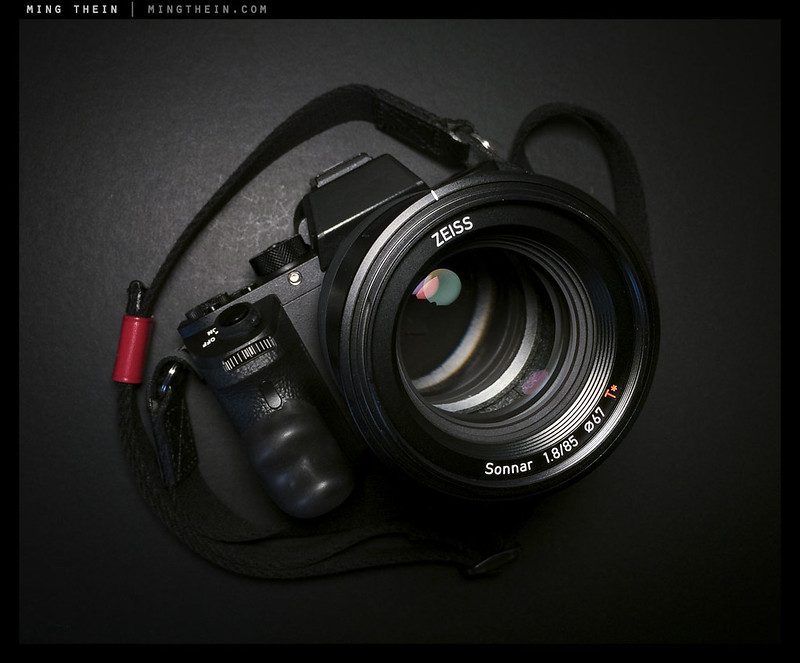
Most asked question via email for July/August 2015: “What do you think of the Sony A7RII?”
Second most asked question via email for July/August 2015: “When will you be reviewing the Sony A7RII?”
Fanboys should stop reading now. There are uncomfortable truths contained within this post. 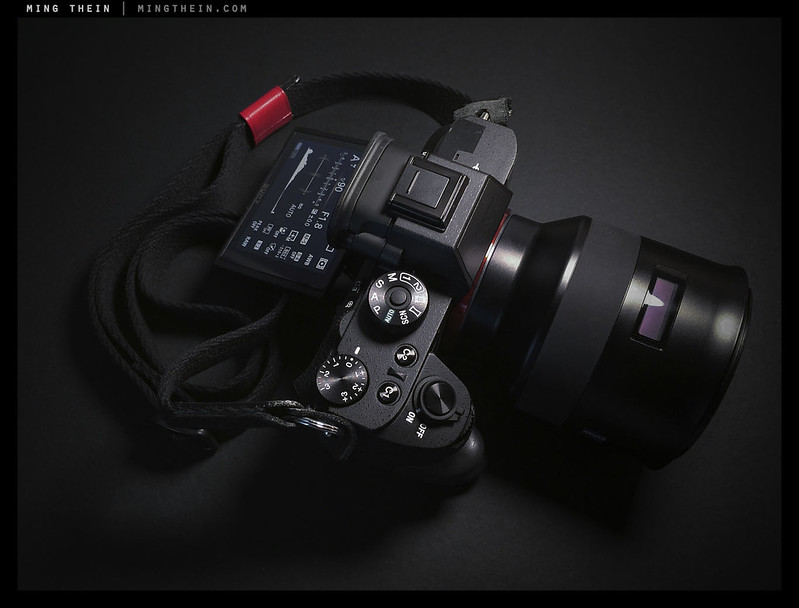
Question #2 comes across as rather entitled but perhaps not surprising given the nature of the internet. However, given the fact that there are a billion reviews by every expert and his cat already circulating, I cannot add any findings to add that won’t unreasonably anger a certain segment of the readership. I have used all of the A7 series cameras except the A7S, and previously reviewed the A7R and A7II in detail. Each of these cameras suffered from significant shortcomings, and the A7RII is no different – though perhaps it has the fewest so far.
I probably should have titled this post as “why I won’t be ‘reviewing’ the A7RII”. This is not a review in the genre the internet has come to expect – a series of gushing observations after a company-sponsored junked, replete with mediocre SOOC snapshots. Instead, it’s both a series of observations from a working pro after two weeks of use, and a rational analysis of whether it merits a place in the bag or not – and more importantly, why. There is good and there is bad, and somehow the nature of the camera makes it much easier not to get emotional about. It does not have the ergonomics of a 5DSR or the endless highlights of a D810 or the firmware updates of a Fuji or Ricoh nor the charm of a Hasselblad V. It will be superseded by a new model in a year, and probably worth very little. This is a disposable consumer tool, nothing more, nothing less.
Update: Sony has announced on 16/9/15 that they intend to implement uncompressed 14 bit RAW via firmware update. It remains to be seen whether this is 14 bits of true information without any preprocessing, or the same file in a larger 14 bit container. I am hoping for the former, of course…
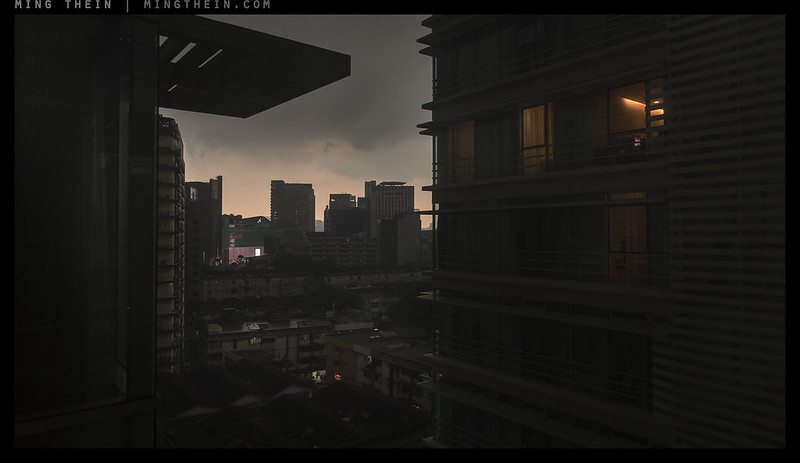 From the project “The disorientation of night”
The body and ergonomics are identical to the A7II, which I’ve already covered extensively. I found it okay but not great in the hand, imbalanced with larger lenses without a grip and that has not changed. If you want to take advantage of the wide variety of other legacy optics available, then the camera is no longer small when configured in a way that’s actually convenient to shoot. On top of that, whilst battery life has improved slightly with the A7RII, by the time you factor in the extra batteries required compared to say a D810, the camera is no lighter. It is both telling that the notoriously stingy Sony not only includes two batteries, but also a wall charger (previously not included with other A7 series cameras) in the box. Note that we are still talking 150, perhaps 200 shots maximum per battery here – this is against anywhere up to 2,000 with the D810. If we compare it to LV mode only, it’s still 3:1. And we don’t have the option to switch back to optical if we’re running low on juice. At least if you could completely turn off the monitor when not in use some power could be saved, but no – it stays on, just showing a black screen that will still draw attention to you and ruin your night vision.
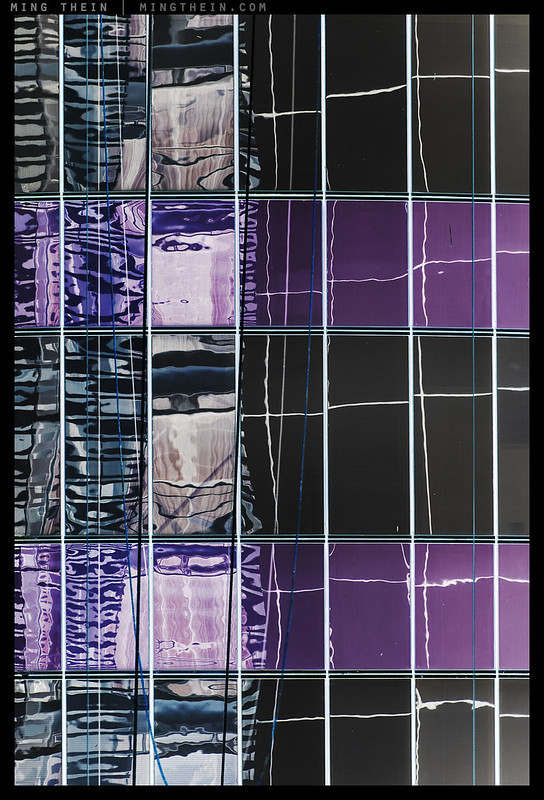
From the project “The disorientation of night”
The menu system is typical Sony. It is passable to those familiar, and completely unintuitive to those who aren’t. Functions aren’t really grouped in a sensible manner, and it seems there are just too many ways of changing things and certain functions that get locked out if others are selected (no custom WB with memory positions on the dial?) – plus there is no help key to aid with figuring out what cryptic abbreviations are on the fly (‘TC/UB Disp Switch’ and ‘Standard’ being direct AF point selection for the center button on the wheel – that’s really, really not obvious).
Operationally, this does not feel like a fast camera. Every action seems slightly delayed, as though damped in oil. Power on is slow. Reviewing images and zooming in is laggy. Moving the focusing point requires at least one extra button press and the box moves in small increments instead of jumping a whole box-width. Even the bite point of the shutter release is a bit too deep, meaning it feels just a little less responsive than is ideal. I’m sure the PDAF sites on-sensor will make for snappy AF with legacy lenses – both Sony and Canon – but the ergonomics are so dire that this is hardly a good solution unless there are some non-IS (but AF) lenses you must have. And practically, if you can afford an A7RII, you can also afford a 5DSR. Even AF with normal E-mount lenses is not exactly speedy – just the right side of acceptable most of the time, but in even slightly backlit situations, be prepared to wait – and get a lot of false positives.
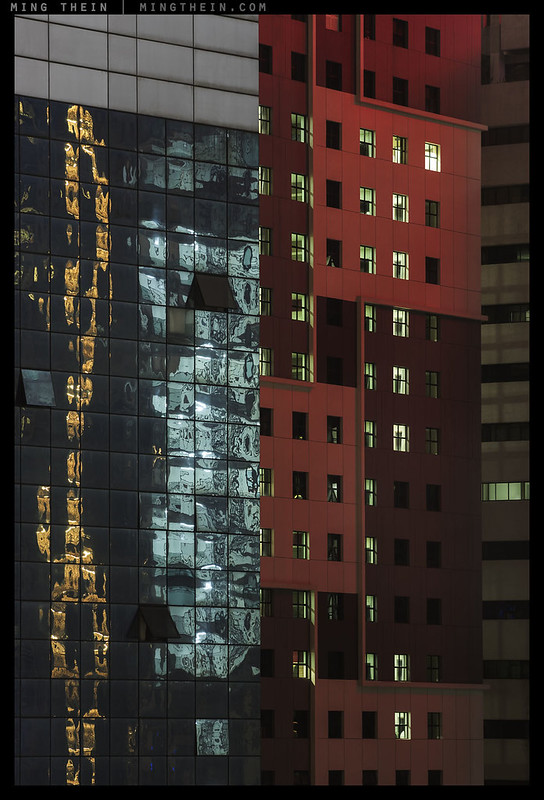
From the project “The disorientation of night”
It is, for all intents and purposes, and A7II with a higher resolution sensor. That is good and bad – if you liked the A7II, you’ll feel right at home here. If you didn’t, then nothing has changed. Unfortunately, that sensor is still crippled by the same 11+7 raw compression and some odd preprocessing that gives rise to strange texture noise in the shadows. However, it’s worth noting that at least empirically, that compression seems to be visually less of an issue with more resolution – I suppose that makes sense given there are more ‘steps’ over which to spread the transition. I’ve encountered posterization in shadow areas, but nowhere near as bad as with the A7II. Even though Sony has promised 14 bit raw, it isn’t going to fix the hardware compression that’s occurring before recording – we’re just going to have a larger container (i.e. bigger files) for the same amount of information.
No matter how many times I profile the camera or what I do with the primary curves or HSL defaults in ACR, there’s some muddiness and color indistinction going on in the shadows if you want to extract the most dynamic range from it; on the other hand, if you want clean shadows, you’re going to be faced with fairly early clipping. More profiling work is clearly required here; perhaps combined with some individual channel curve adjustments. There is perhaps 13.5 or more stops of DR in there, but not all of them are clean. It sits between the D810 and 5DSR in that respect, and is closer to the D810 in highlight handling, DR and the overall ‘look’ (both Sony sensors after all) and definitely lacks the 5DSR’s color. It probably has the least pleasing color of the three, even after profiling. Under ideal conditions, the A7RII can come quite close but does not take the image quality crown from the D810. I really still think that last bit of transparent tonality is being held back by file compression; it will be very interesting to see what Nikon does with this sensor in the inevitable D850 or D900.
Update: For all of the skeptics out there, there is now concrete evidence the compression degrades image quality. It does not matter if you aren’t chasing the last 5%, but I am. I thank DPR for doing it so I don’t have to.
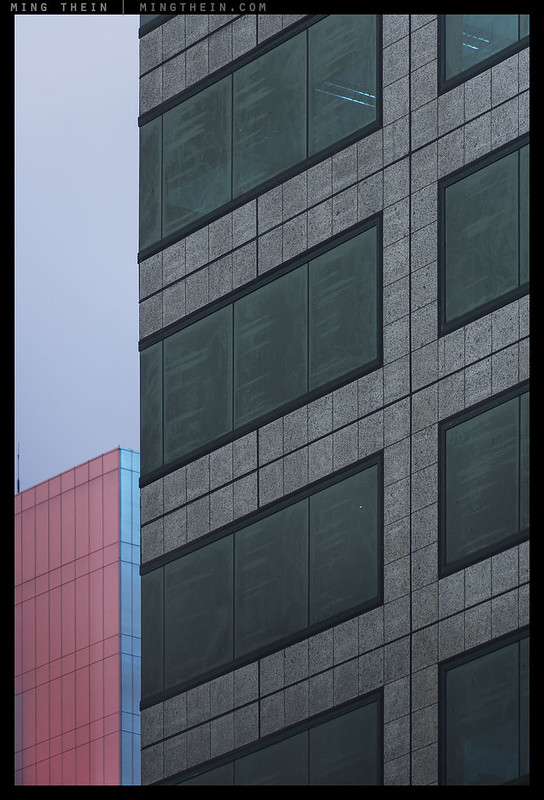
From the project “The disorientation of night”
One of the most impressive advances with the A7RII is on the video front – 4K (or consumer 3840px) internal recording with both full frame and S35 capture; the binning is nicely integer so the results are very, very clean indeed – to the point that the A7S is almost rendered irrelevant since we now get the benefit of IBIS, too. There is some rolling shutter, but overall video image quality leaves pretty much every other primarily-stills camera in the dust.
IBIS works. But it’s clear – as with the A7II – that it’s struggling with the increased sensor mass compared to something like the M4/3 cameras; it’s a bit less effective and selecting the correct focal length for adapted lenses appears to be more critical. (This is obviously a problem with zooms.) It unfortunately also complicates the matter of sensor cleaning greatly – though there’s a function which basically shakes the thing using brute force, I’ve already got stubborn dust spots on mine that cannot be dislodged with blower or shaker. It will have to be wet cleaned, but the sensor suspension mechanism is delicate and this makes me very nervous. Note: in four years of multiple Olympus bodies and over 100,000 images plus lens changes with no heed for ambient dust, I’ve never had to wet clean a sensor. Or even use a blower, for that matter.
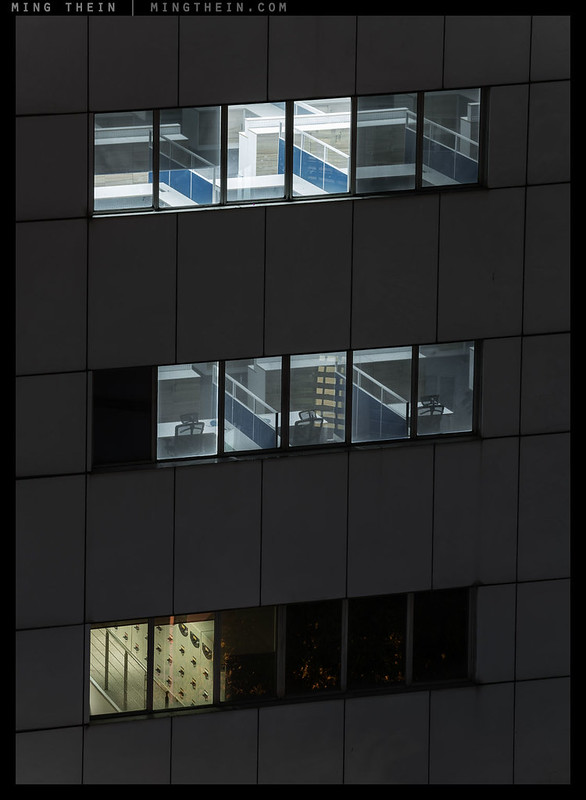
From the project “The disorientation of night”
Having said all of that, there are quite a few reasons one buys an A7RII (trumpeting its virtues on the internet for money or worshipping it as your messiah until the Mark III do not count).
- The most compelling one is because within limits, it extends the image quality envelope when handheld quite a bit: even with the shadow compression, IBIS realistically claws back 2-2.5 stops or so on the D810. You can also add another 0.5-1 stop since there’s an electronic front curtain shutter, too. (Don’t use the full e-shutter; it eats a stop of dynamic range because the readout time is accelerated.) It means ISO 400 or 280 instead of 1600 – the difference from that is much greater than the 11+7 compression. On top of that, you can also always obtain an ideal ETTR exposure because of the live zebra. Under marginal conditions, this is very significant.
- Zeiss AF lenses – in 25, 35, 55 and 85mm flavours; even if the 35 and 55 are not ‘full blown’ Zeiss, they still have similar rendering properties. As much as I love the Otuses, they are difficult to deploy under all conditions – hand held in low light, for instance. Practically, a Batis 85 at f2 will outperform an Otus 85 at f2 because you will a) have precise CDAF and IBIS and be at say 1/50s ISO 800, instead of 1/250s ISO3200 and manual focus. And there’s no Otus 25. Note that both cameras EVFs/LVs get laggy in low light though. And strengthening the case even further, older Contax/Yashica Zeiss lenses like the 2.8/35 PC Distagon and 100-300 Vario-Sonnar that I loved on the 5DSR (but won’t mount on the D810 due to flange distance issues) have now acquired stabilisation and don’t have to work quite as hard as on the 50MP sensor.
- What I think of as ‘run and gun missions’: your shoots are short enough that ergonomics and battery life are not issues. If you’re holding this thing all day with a grip and an Otus, it’s really not that different in weight to a D810 or 5DSR – except the latter two will be far more comfortable.
- You want to use specific old lenses with a consistent camera body, though those old lenses had better have the optics to hold up to a 42MP sensor and possibly also short flange distances/ high angles of incidence.
- You want a technical camera solution like the Cambo Actus without the cost or bulk of medium format (and wides are not so important).
- You are a videographer.
Sadly, the A7RII is not a camera that gives me any pleasure to shoot at the moment, and it bothers me that I cannot put my finger on exactly why. Logically, it ticks all the boxes. Yet it does not inspire goad you on, like the Leica Q, nor does it feel solidly dependable and razor sharp like the D810. It may well be unfamiliarity or a bad choice of custom key configuration on my part, but I suspect that isn’t entirely it. It just feels like a consumer electronic device in operation, something designed for anoraks by anoraks, not a camera. Maybe it is paradoxically too logical. It is honestly a purchase that I felt somewhat sick over – between our plummeting Malaysian currency and Sony’s history of eschewing firmware updates in favor of slightly improved models one year after release together with a slashing of price of the ‘old’ model.
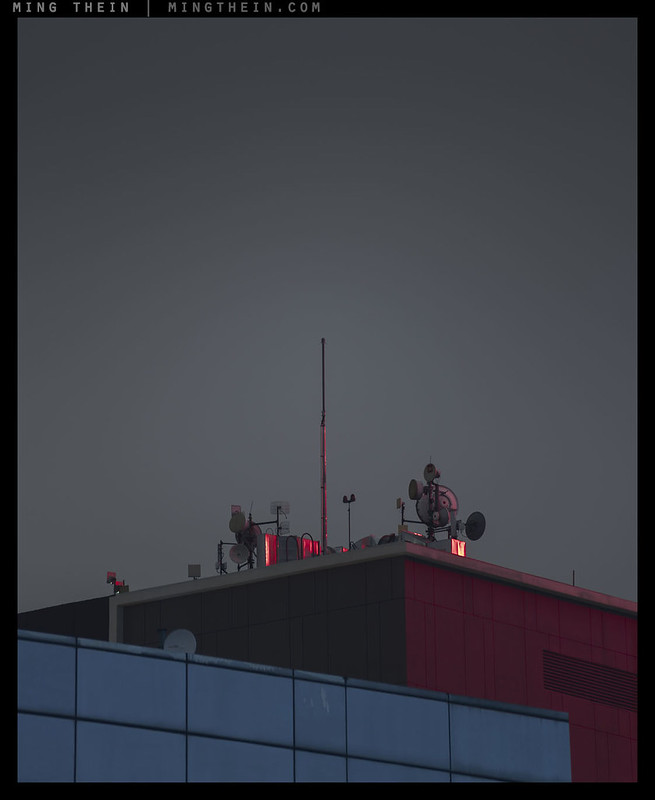
From the project “The disorientation of night” Some posterization is present in the original but not as bad as the web JPEG.
I put up with it because I realize that 1, 2, 3 and possibly 5 apply to me, and I routinely encounter the limitations of working handheld with high resolution systems in a way that almost defeats the point entirely. I shoot under conditions that are far enough outside the ‘ideal’ envelope to render the 5DSR too niche a tool to justify itself for my business (and the camera itself has a narrow envelope too), so it had to make way – as much as I love the color and ergonomics, there’s no way I can afford to switch entirely to Canon. But A7RII’s stabilizer opens up possibilities that I didn’t have previously.
On top of that, frequent fliers will also be familiar with the eternal problem of airlines and weight – the A7RII and six batteries might not be lighter than a D810 and one, but the Batis 85 is a third of the weight of the Otus 85, and weather sealed (even if the A7RII’s seals appear somewhat questionable). I could carry the 55 FE, 85 Batis and perhaps Voigtlander 180/4 APO together with a Q and have an extremely versatile and high quality travel kit without printing compromises. A D810-based system would require a Zacuto, two Otuses and perhaps a tripod – which raises weight by 2.5-7kg and is the difference between checking in and carrying on only.
I suspect that given sufficient time, I may come to respect this thing in a rational way – like the original D800E, which is still going strong after nearly 90,000 exposures and only ever used on assignment – again because it gives me no joy. Curiously, very small differences can change the feel of the thing – D810 vs D800E, for instance – maybe Sony will finally get it right with Mark III, along with some sort of serious professional support. In the meantime, it’s time to think more logically.
If after all of this you still want to buy one (and haven’t already) and use one of my links, they are below. Be sure to order extra batteries too; I’ve currently got ten and three chargers because I can shoot through six or more of them in a day; the rest are needed as a buffer in case I can’t charge all of them overnight. It does charge over micro USB, so you can actually hook it up to a mobile phone powerbank in your bag to top off the battery between sessions, too. Unfortunately you cannot shoot and charge over USB at the same time.
Sony A7RII B&H Amazon
Sony Zeiss FE 55/1.8 (beware sample variation) B&H Amazon
Zeiss 2/25 Batis B&H
Zeiss 1.8/85 Batis B&H
Sony NP-FW50 battery and compatible alternatives B&H Amazon
__________________
Ultraprints from this series are available on request here
__________________
Visit the Teaching Store to up your photographic game – including workshop and Photoshop Workflow videos and the customized Email School of Photography; or go mobile with the Photography Compendium for iPad. You can also get your gear from B&H and Amazon. Prices are the same as normal, however a small portion of your purchase value is referred back to me. Thanks!
Don’t forget to like us on Facebook and join the reader Flickr group!

Images and content copyright Ming Thein | mingthein.com 2012 onwards. All rights reserved





 Ming Thein | Photographer
Ming, if you truly with to make the most of the A7RII, I believe you need to get over your “mental block” regarding Sony menu’s and other perceived creative impairments and take some time to optimise the configuration of this camera. Lloyd Chambers seems to be doing so and, as a result, is thrilled with the end result:
http://diglloyd.com/blog/2015/20150830_1410-SonyA7R_II-Coastal60f4-examples-nightArtificialLighting.html
I suggest you read that article carefully again. It’s about how that specific lens performs. I know because Lloyd and I have been having an email discussion about it over the last couple of days. The Coastal Optics 60/4 Macro is a very exotic lens basically entirely made of fluorite, but also close to $6000 I think.
This article interests me and I’ve also read a number of comments thereafter. Awful.
Sir. I think you misunderstood the purpose of this camera and its predecessor the 7r, almost in its entiretity. Why?
You were talking about adding lenses of 50mm and upwards. This tells me unequivocably you have misunderstood the real strength that this camera brings to photography. Are you really going add lenses beyond 50mm to your Lieca M240? No.
TBH. I could explains the real joys of shooting in A mode ( never thought I’d shoot in other M with a rangefinder) compensating as I see the image in the viewfinder, of using one battery all day, using lenses manually, getting in close the subject matter with a 35mm lens, of the simple joy of shooting with a camera so discreet, so small, so proficient and so accomplished that after using one alongside my M240 for months, facilitated its sale with the accompanying Leica 35mm f1.4 – but I suspect you have your own agenda so I won’t preach to the already converted anti-a7R11.
Sadly, this review set out to address the fervour and excitement surrounding the a7R11 camera, sadly your words have backfired in your face as you describe this camera in every wrong tone possible, adding motor drives, extra batteries, long lenses. Ridiculous.
I will buy the new body and sell the older a7R on eBay in the coming week, along with the M240. Now that Leica camera too had as many plus points as negative ones, but shot alongside the Sony, on balance, the images coming out of the Sony and the shooting experience to date have taught me to ignore those who set out with an agenda and try things for ones self.
The Sony wins-out. After 20,000++ images, I know this for a fact.
Firstly, I don’t own an M240 because of cost and limitations.
Secondly, should I be changing how I photograph to accommodate a camera? That IS ridiculous. Are we photographers or gear worshippers? I know I’m the former. Gear is only a tool. But it seems most are unable to make the distinction because their artistic aims are so weak as to be nonexistent.
Thirdly, why should we be making excuses for something that has long lenses within its own claimed system, and whose claimed system is supposedly one of flexibility?
Change how you photograph to accommodate a camera? Yes, let’s all stop technology from moving forward so we don’t have to change our approach to anything. How did you ever move from film? Do you have assistants do the dirty work of MFA’s and clumsy live view focusing? Wake up!
Did people NOT photograph moving objects because there was only manual focus? I think you’re missing the point entirely.
Ming, your “Secondly” statement can be interpreted two ways.
One: I won’t let the limitations of a particular camera hamper my photography. This is how you intended it.
Two: I will not take advantage of technological progress in my photography. This is how you did not intend it,
LoL!
I’m glad it was obvious #1 was the intention…#2 wouldn’t make sense at all given I’m continually trying to push the envelope!
I’ve been scratching my head about a lot of the reviews about this camera. Steve Huff nearly had kittens when he tried it out, and to my eyes the thing looked the same as the last one and the photos he took were just like all the others he takes, barely changing between camera. And pretty underwhelming. Yet anyone would have thought he’d been touched by the Messiah. That’s not to say I dislike the guy or dislike his site. Anyway it was just interesting to see some of the fervour on the web and then read your piece. I sometimes think a lot of this gear worship has got a lot to do with some of us tying our sense of identity up with these products and what they represent, rather than seeming them as the tools they are. To me there’s no other way to explain the emotional outbursts, be they be positive or negative, that arise when certain new cameras are released.
Well, if you post process stuff that much, and only post web-size, then virtually much everything is adequate (and probably kitten-worthy 🙂
On the other hand, if it makes the difference between getting the shot (and payment) or not, and the print being better than the last camera, or not, then perhaps there’s a different point of view involved.
Oh sure, and most of the sites I’ve read the reviews for this camera are probably professional in the sense they make their living from their websites and only vicariously their photography. So it’s great to come here and read the point of view of a working pro.
Or, perhaps, it is just like our resident wedding shooter lab: it usually has to make shots that prints extremely well on a size of 19.7 x 27.6 inches maximum, and for that many current mirrorless are up to it…
Agreed, and one again has to look at the subject matter: more resolution for portraits isn’t always a good thing 😉
That is what she said! 😀
If you’re going into worship mode every time a new A7 iteration becomes available, you’ll achieve sainthood a lot sooner than most of us.
I think I’ll pass on that particular version of heaven 😛
You don’t know what you’re walking away from…
It is hardly fair to criticize SH or any other reviewers that take the time to post lots of images in their reviews to allow others to form their own views. This is far more helpful than posting lots of complaints without a single image to substantiate so called issues.
Lloyd Chamber is the ultimate pixel peeper and just posted these comments on AF and IQ from the A7RII:
“As it turns out, the image quality is stunning*. And the focusing experience on the Sony A7R II is second to none. It has been such a pain in the ass on Nikon and Canon that it had been a long time since I shot it, but the A7R II is so much more enjoyable and fast to use it that it it’s going back into the “always take it” bag. Moreover it is relatively small and light, albeit f/4. My main gripe is limited focus throw.”
“I found zero image quality issues with the Sony A7R II and came away very impressed.
* WARNING: do not view these images and then whine that I made you empty your bank account! This article is best left unread for those desiring something truly special, but being in a less than special financial situation.”
You may want to re-read that. Those comments were about a specific lens – the Coastal 60/4, I believe – not the camera. Note how a lot of the parameters are lens-specific (and we were discussing compact APO lenses offline yesterday).
“As it turns out, the image quality is stunning*. And the focusing experience on the Sony A7R II is second to none. It has been such a pain in the ass on Nikon and Canon that it had been a long time since I shot it, but the A7R II is so much more enjoyable and fast to use it that it it’s going back into the “always take it” bag. Moreover it is relatively small and light, albeit f/4. My main gripe is limited focus throw.”
“I found zero image quality issues with the Sony A7R II and came away very impressed.
* WARNING: do not view these images and then whine that I made you empty your bank account! This article is best left unread for those desiring something truly special, but being in a less than special financial situation.”
Sure, he was writing about a lens, but even so, finding Zero image quality issues with the A7RII must also refer to the camera’s performance in CONJUNCTION with the lens . As the song goes, you can’t have one without the other. Or can it be by some magic that the lens can overcome all the alleged deficiencies of the camera? From the other review, it is clear that the Sony must be very much up to the task as a lens can only ever be as good as the camera body it is used with.
I am only offering my interpretation based on the offline email exchanges I’ve had and am still having with Lloyd regarding the Coastal 60 and 7R2.
There seems to be many references (by other posters) to Steve Huff’s exuberance, but his review is very extensive and contains numerous images to show IQ at low to high ISO, dynamic range tests as well as comparisons to other cameras. He has also taken the time to test the A7RII with legacy glass. This is far more useful to potential buyers than an article which is mostly complaints about handling and menu design as well as some digs at Sony for their rapid product development cycle.
It’s misleading to buyers because his tests are neither scientific not fair. They are not carried out under controlled environments – not even indoors – so you have no idea if camera A or camera B had identical test conditions. They’re not even done on a tripod so the focal plane could move or camera shake could degrade resolution (both of which I’ve seen evidence of in almost every one of his ‘reviews’). Furthermore, the post processing is so over the top most of the original information is thrown away. It is the equivalent of comparing two cars with two different drivers on different roads on different days, then saying one is categorically better than the other – complete nonsense.
The comparisons in SH’s A7RII review were all made by the same driver on the same day. And his tests with legacy glass, for example, while not perfect are more helpful to potential buyers than complaints about handling, menus and Sony’s product development philosophy. It is a given, that with any camera, the handling and menus will not suit every body. And your experience with Sony support may fall short, relative to others. So what? Diglloyd has just posted the opposite experience from a subscriber that had a lousy experience with Leica support for a faulty Q, but a positive one with Sony. Gordon from Cameralabs has just posted his A7RII review and, once again, provides helpful, supporting images and videos. You’re a very capable photographer with a discerning eye and it would be great to see you up the ante and provide some images to show exactly where the A7RII falls short relative to the other cameras you discussed in this “review”.
What about the thousands of other images I’ve posted with the other cameras referenced? They all demonstrate precisely why I use them. I won’t use the 7R2 in situations which it is not suited to; that makes no sense and is a waste of my time because nothing results except a compromise which could have been avoided. Unlike SH and others I do not make money from reviews or advertising. In fact, the opposite: the more time I spend writing and shooting comparisons and tests and answering hundreds of comments means I’m unable to do any paid work.
But Steve has always said “I went out with this camera, and these are the shots” – and this is exactly what I want to see. I don’t care about scientific tests or photos done with a tripod or in “controlled” environment (exactly the opposite, in fact). But this is because I need to do photos in outdoors almost exclusively “on the fly”, and I need a camera with a good ratio of quality vs portability vs price. And exactly for this reasons I’ll never buy the new Sony, because IMHO the price is too steep for what it has to offer TO ME…
I think then my conclusions and methodology will be of little value to you.
Yes, but they are very through, well explained and with solid bases. It is for this that I read them with pleasure and I think they are very useful to the photographers that have needs similar to yours. So keep posting articles like this!
Ming, how does it help your readers to refer to images taken from other cameras when trying to understand the issues you raise in this review. Your assert that the A7RII compression gives rise to posterization or that there’s colour/muddiness issues with shadows or that the A7RII lacks DR relative to the D810, but you don’t post a single image or comparison to demonstrate such issues. Not one. And without any such evidence, who can we believe? You, or everybody else?
Will, you have done nothing but disagree with me and ignore any of the complimentary points I’ve made about the camera. I have provided enough evidence in thousands of images here that support everybody else’s findings that the D810 has superior DR to just about anything else. Even DXO puts the 7R2 at a stop behind the 810, which you’ll note agrees with my findings. Lloyd Chambers has said plenty and given plenty of examples on posterization. I’ve shown examples of posterization caused by the compression regime in the original 7II review. At this point, believe whoever you want, because they’re also reporting the same things I am.
Will – The Cameralabs reviewer prefers mirrorless cameras and unfortunately his bias comes through in this review.
Just one example: The size comparison image – Canon camera shown with a SIgma 1.4 attached. Sony with a 1.8 lens attached.
Yet the IQ images for the Sony were using the larger Sigma lens…
As soon as Pentax bring out their full frame DSLR I’m selling the Sony A7r and FE glass. I just don’t want to pick it up and shoot with it. With the K-3 I want to shoot. I felt confident with the K-3 and K-5 series before it. With the Sony A7 series I simply don’t. I supplemented the kit with an A6000 but still just don’t like the things. I haven’t actually enjoyed photography since I went down the A7 route. The difference in the quality of my work between the Pentax days and Sony days says it all.
If they manage to do sensor-shift stacking for a 42-true-RGB MP, that’ll be pretty impressive indeed…and probably leaving a most of the MF gear in the dust.
Glad I held on to my Pentax FA Limited primes and f1.2’s. Just need to see what the Pentax 70-200/2.8 is like. Hopefully they’ll do a 14-24, 24-70, 70-200 f/2.8 trinity like Nik.
You’re spot on about Sony’s stuff. It just doesn’t inspire confidence whilst shooting. It lacks that integrated all together natural operability and the thing’s respond so slowly. I bought the 35/1.4 Distagon, 55/1.8 Sonnar and 70-200 G lens too. Expensive mistake to be honest, although they are fine lenses albeit mounted to a ghastly camera.
Maybe Sony will crack it with the A7sII or at least by the A7rIII? Tired of being a beta testing bunny though.
Dear Ming, I strongly feel that I need to nuance some of your statements. You know that I value your work to the highest level: product reviews, educational articles and certainly your photography. But you know as well that I sometimes have a different opinion. I find that to be allright, since you’re quite another kind of photographer than I am: more professional, with a much higher production. But I regard myself as a serious enthusiast, that also has been needing photography in his profession for decades. And I know that there are more enthusiasts then professionals, even amongst your readers.
I have been waiting a long time before commenting on this article. But here I go.
How professional you may be, you’re still a human being, with imperfections. Let me explain myself. I don’t argue about much that you say, regarding content. But I sence an intonation that (to me) clearly shows you don’t like Sony (to say the least). By itself, there’s nothing wrong with that, I would probably speak in the same way about other brands, as everybody will do sometimes, even without realizing it. But in this case, because I so much like what Sony is doing for photographers like me, I want to nuance. I have been thinking whether or not I should sift the whole article for every statement where I found such a tendency, but that wouldn’t really serve any purpose or anybody. So I will give you only a few examples, that I remember (without rereading the article).
Rather in the beginning you said that all the Sony A7 series camera’s had serious shortcomings, but that the A7RII perhaps had the least. The use of “perhaps” struck me here. I can’t image why you feel the need to say “perhaps”. I know that you’re not in any doubt here. You’re far too professional to write a statement of general importance like that, without being sure about it. I know that you know for sure that for your use, the A7RII has the least “shortcomings”. So why using “perhaps”? My guess is that – perhaps without realizing it (I can use “perhaps” without a problem, since I’m not a professional photography journalist LOL) – it’s because you are stuck with the feeling that you can’t recommend a Sony product. Therefore you find yourself calling those products to be of “doubtfull” quality. (Of cours you base it on facts, but there are facts to be given about any product.) I guess it’s that general feeling that makes you use “perhaps”. I find it to be slightly unprofessional to write in this way. Please don’t be angry about me saying so, I still find you way more professional than the vast majority of publishers… But human…
Another thing. You write that the A7RII will be superseded by a new model in a year, and probably worth very little. Really? This is typically driven by emotion, IMO. The A7RII succeeded the A7R after more than 21 months. Now, I quote DPReview: “Some people might not have been entirely sure why Nikon released the D800 and D800E as separate models two years ago.” That was in an article concerning the D810. Two years ago, they say. That’s not really a big difference with Sony, isn’t it. I would be very reluctant to write this about Sony as being one year. It’s simply not true And concerning the resale value, I can tell you that I sold my A7R to my dealer today (where I bought my A7RII a month ago) and was payed $1068 for it, that is 50,4% of what I payed for it, when I bought it on the first day that it was available in Belgium (so that was at the highest price of its history). I believe that’s not too bad as a resale value, don’t you think. Regarding the fact that I can easily find a used Nikon D800E for around $1500, I believe that the value of my A7R has not dropped too much. Not at all! So I honestly think this statement is wrong and not in its place.
Regarding the qualities of the Sony, you cite the most remarkable quality of some of its competitors, telling us that the Sony doesn’t have that particular quality (“It does not have the ergonomics of a 5DSR or the endless highlights of a D810 or the firmware updates of a Fuji or Ricoh nor the charm of a Hasselblad V.”) When phrasing it in that way, you give the impression that the Sony has no remarkable qualities at all. I know, that this is not what you are stricktly saying, but the writing style evokes that feeling in the reader. After been in publishing for almost four decades and having done a lot of commercial copywriting as well, I recognize this as a trick to manipulate the feelings of the reader towards a certain product that you want (your client) to sell. In the case of this article, it’s more manipulating away from a product you don’t want the reader to buy. Now, I’m not saying that this was your intention, that you were trying to manipulate. I absolutely believe that it was not! But I do believe that it was done unintentially, spontaneously out of your feelings towards Sony, feelings that you’re absolutely entitled to have, regarding the bad experiences you had in the past with Sony. I must say, I only have had excellent experiences with Sony, also regards warrenty cases, repairs etc. Exceptional service. But I deald with Sony Belgium, so I can’t speak for the rest of the world. Can you?
Let’s not create any confusion here. You’re not atall saying that Sony has no qualities, you’re even mentioning some of its unique features. But you’re evoking an emotion away from Sony, that is not completely fair, IMO. As a matter of fact, what I understand from what you’re saying is, that Nikon doesn’t have the ergonomics of Canon neither (personally, I prefer the Sony ergonomics of all camera’s I ever had – I shot with Canon for 30 years, the last ten being tired of the size and weight – thàt’s why I changed towards Sony), and Canon doesn’t have the endless highlights of the Nikon. And that both of them don’t have the firmware updates of the Fuji or Ricoh. (BTW I had some great updates with my NEX-7). And that the Hasselblad V has a particular charm. (Now thàt is absolutely subjective. I was charmed my whole life by the Leica M and now I’m absolutely charmed by the A7 Series – even more!) But you didn’t mention in that same paragraph, wherein you stated that the Sony doesn’t have those special values of the other brands, that none of them has the IS of the Sony, nor all its other unique features. You only mentioned those in another paragraph, writing this with a completely different mindset, creating a much less dramatic impact, a feeling as if those qualities don’t really matter. I understand why you write in that way, out of your emotion, but I don’t think it’s correct.
I’d like to give you a few Sony facts. 1) The Sony CAN offer the most compact full frame system available, if it’s combined with compact lenses. That’s not a restriction. That’s an opportunity. 2) Almost every photographer will be fine carrying two or three batteries for a day’s shoot. I carry four, which I don’t feel. They’re in my pocket, not in my hands (three of them, one in the camera of course). I always have a number of extra batteries at home. So when I forget charging after coming home late, checking pictures and going to sleep (it’s human to forget from time to time, isn’t it, one forgets more and more by aging, unfortunately), the next day, I’m still not without battery power. And I can charge at home, as well as while driving. This means, whenever I think about charging (when not shooting), I can do it. That’s why I’m never without power. It’s another point of view, another way of thinking, but it works perfectly, without having to hold the weight of a heavey battery in a heavey body in my hands. IMO that’s not a restriction. It’s an advantage. 3) Probably more people than ever regard the Sony as a very versatile camera in a very compact format. We can argue about this, but we really don’t need to, it’s simply how so many experience it. And one can’t argue a feeling. When you feel it, it’s real for you. Moreover, and I want to state this very clearly, whenever I want a compact camera, I can have it with the Sony – not when mounting my Otus of course, but for sure when mounting my Loxia’s! I can make it large ànd small. OK, when you want a big body, you’d better take a DSLR. It will perform (a bit) better. But I don’t want to buy a second body, a second system. I’m an enthusiast. When I want to mount legacy lenses, I can do it. Of course sometimes loosing the compact size in the process. But at least I CAN do it. Which you can’t with a DSLR, at no matter what size. So again, it’s an opportunity. And for many a very unique opportunity. Legacy glass with image stabilization. Please don’t make believe that it’s not a compact camera, because when mounting a big lens, it’s not really compact anymore. Of course that’s because of the lens, not because of the body. Most of the time, I absolutely shoot with a compact system: A7R(II) with three lenses in a small bag, that I easily can carry the whole day. No way I could do that with a DSLR system. Opportunity again.
4) The Sony gives more shooting joy to MANY then any other camera did before. That’s a fact. I’m one of those many. Not to a super pro like you, it soesn’t. But there are not too many at your level. To so many it offers the opportunity to produce wonderful images with a pretty compact system, like Leica has done so many years (but at more then the double of the price). As a matter of fact the Sony makes so many people produce better images, because it creates opportunities. It’s not evident for a non-pro to always carry a camera. With the A7 Series, this is possible. With a heavey DSLR, it isn’t, for me and most enthusiasts. And the A7RII for sure is a camera that moves people in a very exceptional way. At the time that I write this comment, there were already 360 comments at this article in only 5 days. That’s against 175 (less then half) to the LONG TERM REPORT of the Canon 5DSR and 223 to that of the Nikon D800E. Obvious, isn’t it?
OK, I guess I’ve given enough facts and nuances now. Still, again, this doesn’t change how I esteem what you are doing, not in the least. It only proves to me that there is more than one thruth. Yours is for you. Mine is for me. But I think, in this case, your thruth counts for only a minority, since I hear from quite some pro’s that they like the Sony A7 series a lot, even pro’s that have NO professional link with Sony at all. Indeed, for some jobs, the Sony is not to be preferred, I absolutely agree. But that can be said of ALL camera’s. So in the end, I guess it depends on what you wanna do with your camera.
I am with you,Dirk! I consider Sony one of the best companies in the world and love Sony cameras.Of course I am not as professional as Ming,but have used many cameras and lenses and still own a few. I found Sony A series very comfortable to use with my small hands,DR is lovely,ergonomics are wonderful,etc.
Regards,
Sergey
Dirk, thank you for your feedback. But I have to point out you’re applying the opposite bias to look at what I wrote equally one-sidedly. Firstly, I gave multiple GOOD REASONS why the 7R2 was a useful tool. I even stated that I bought one despite my personal – and illogical – misgivings about it. How is that biased?
You’re lucky where you live. The dealers here give barely $600 or so trade in for an A7R, but $1200 for a D800E. Given they also cost the same here new, that’s lousy economics.
1) I never argued it couldn’t be compact – that was one of the reasons I gave, coupled with some very specific lenses. But it’s also true that for adapted legacy lenses, which are required to give it the same capabilities as other systems, ergonomics are not ideal.
2) I don’t know what everybody else is doing, but I’m needing 6 batteries or more to get through a day. Charging in a car is not an option if you’re not driving.
3) I didn’t argue this either, but a Loxia is not an Otus.
4) It’s great that it works for you and gives you joy. It doesn’t do that for meek, and it’s all the more frustrating because I’ve paid a lot of money for the privilege.
There were that many comments because that’s the nature of reviews. People will pick at the things they disagree with. You never get anywhere near as much interest on non-gear posts. You should probably look at the first review of both cameras instead of the long term report for a fair comparison, though – but the D800 review may not be fair either since that was in the month after I started and site traffic was obviously a lot lower than it is now.
Lastly: I have never, ever presented my opinion as anything other than that. I have always stated my own objectives and criteria very clearly, and that each person’s is different (which I would have thought is obvious). Interpreting that any other way is not really very useful for the reader. There is no reason why we have to agree (or can’t agree to disagree 🙂
I believe we both agree to disagree. But luckily, in the vast majority of matters, I’m absolutely with you and your articles mean a tremendous lot to me. Otherwise I wouldn’t be a faithfully reader.
BTW the main thing about what I said was not so much about the content, but about the tone. Out of my professional activities, I’m very aware of the power of “the way” things are said. This can really make the whole difference regarding the effect on the reader. And again, I’m convinced that in this article, this was not done on purpose. It’s clear that your experiences differ a lot from mine – with the trade, but also with the product, which is not surprising, since we are very different photographers and probably we also differ in how we experience tactile systems. So indeed, let’s agree to both keep our truth.
If I were to make public all of my experiences in this industry, there’d be a lot of disbelief. If I were to let it cloud my judgement, I wouldn’t be using any cameras, period. 😉
Now THAT would make for a great (and controversial) article!
Let’s not even go there. 🙂
And if you intend to be fully honest, Dirk, you should also note the tone of voice that the Steve Huff’s of this world are using to praise this camera. Because your arguments could be equally applied to the boundless worshiping and uncritical adoration exhibited by them.
I think that everybody is entitled to write in the way that he feels, as long as he has honest intentions. I believe Ming is absolutely honest, but I also believe that he doesn’t own the truth for everybody. An I’m also absolutely convinced that Steve Huff writes what he honestly feels about this camera, because I share so much of his opinion. And still, about several things, I disagree with Steve. But again, none of what he or anybody writes is everybody’s truth! Ming writes for a more professional usage that Steve does. In Ming’s usage the size and weight factor is not of the same importance, it’s more related to airport transportation than to what you feel hanging around your neck. (That my perception at least.) So the bottom line is: everybody should read different reviews, and distile his own truth out of it. When disagreeing, there’s never harm done in going into an exchange of views, as long as we stay respectfull, without personal attacks or insults. We should all realise that we learn the most from people that have a different opinion. As a matter of fact, I believe you don’t learn at all from anybody who shares your exact opinion as. So I like to stay respectfull towards Ming as well as towards Steve, having learned a lot from both of them!
Oh yeah, of course Loxia doesn’t equal Otus. But it’s still very fine lenses at par with the very best behind Otus. And I don’t need Otus quality as much as you do. That’s already a difference. And It’s fair to say IMO that the vast majority of photographers don’t need Otus. Otherwise everybody would have one or at least want one. So to me Loxia is the perfect line to give me the best available compact compact system, regarding IQ (in almost all of my circumstances, better than most DSLRs the we encounter in the streets).
True. Any thoughts on Loxia vis a vis Batis? Interesting they’ve chosen deliberately not to have any FL overlaps, but I’d think the 55FE and 2/50 Loxia are pretty darn close. The 55FE is very impressive if you can find a good copy…
As far as now I personally only tried and own the Loxia’s. No 55FE and no Batis. So I can only speak from what I see being published by others. My guess is, that they are really of about the same level and that it’s a matter of personal taste or mood to prefer the one or the other. Besides that, of course, there’s the matter of MF versus AF. I have always been a MF shooter. I absolutely love the MF process and that specific way of controlling the image. So to me it was clear that Loxia was the way to go, the more since it’s the most compact solution, and the all metal construction is build to last a lifetime. Nevertheless, I ordered the Batis 85. Not the 25, because in WA I will almost always perform zone focusing, which makes an AF lens pretty rediculous. The more since it has a mechanical part that takes place and weight and that eventually can become defective. But since the focusing gets the more subtle with tele, and since I read that the AF of the Batis really works excellent, I like to try the Batis 85. Who knows, maybe I’ll like an AF lens shortly for the first time in my life! Only downside, I ordered it really early, but I heard that it will still take another 6 to 8 weeks to arrive in Belgium. Rumor has it that both the Belgian and Dutch importers, have been bereft of their Batis lenses. Somebody stole them and sold them abroad. That would explain why I still have to wait, whereas I got the Loxia’s on the first day, worldwide (same with the Sony’s), and whereas I see Batis pictures being publsihed all over the world. 😦
Concerning the FL overlaps, I expect Zeiss to further expand both lines, Loxia and Batis, the more since Sony will continue improving their E-mount cameras and since it’s clear that they are here to stay. But Zeiss is very wise IMO to start with non overlapping FLs, which eventually wìll occur of course. Zeiss announced the next Loxia (for second half of this year) to be a WA, so I expected a 25mm. But that was before Batis appeared. So now I wouldn’t be surprised if, since we got the Batis 25 in the meanwhile, the next Loxia will turn out to be a Biogon 2,8/21, derived from the ZM, with improved optics (like both actual Loxia’s are). I would very much welcome that.
The Loxias look like really good video solutions – stepless aperture, hard stops etc. Any fly-by-wire lens is a bit tricky to use for focus pulls unless it has hard stops so you know where you are distance-wise.
The Batis 25 is actually perfect for zone focusing because the display tells you exactly what your near/far distance is as you adjust the aperture and focus ring 🙂
I wouldn’t mind a normal-ish pancake of some sort, MF or AF doesn’t matter. Something along the lines of the Canon 40 STM. That would be a very interesting compact powerhouse…
Yes indeed, the display is a very clever feature. But what I meant was, since I perform zone focusing in WA, I don’t need the AF system, weight, size and possible technical future failure. So I’ll wait for Loxia. In the meanwhile, to your surprise (and probably unintrest), I use my old Canon FD’s (!!) in 24 and 20mm. And 85. Even on the A7RII they perform surprisingly well. Not to your standards, but they hold up better than I expected, even in the corners. Not at all perfect, but better than quite some lenses that are still being sold today. I prefer them to the modern Canon lenses, since they are MF, a lot more compact, all metal build, and with pretty much comparable optics. The 20mm and 85/1.2 aspherical are my favorits. But I’m sure once I’ll own those FLs from Zeiss, they will be out of service. Enjoying a well deserved retirement in my closet at last… 🙂 (I went into the FD system in 1977. Time flies! Enjoy every day!!)
A 43mm indeed!! Why do so many manufacturers simply forget this absolutely natural FL? My very first camera ever (my father’s) was a Zeiss Ikon Ikonta 524/2 with 90x60mm film. I rebought one of those a few years back for pure sentimental reasons, but it still produces wonderful images – – and… it is pretty compact, when folded! LOL) It has 105mm Tessar optics which correspond with this “natural” FL in full frame (in those days we didn’t call this full frame, but “small image” instead – translated from Dutch). I only shot it a few times, because of the time needed for developping. I went out first with my NEX with 28mm Zeiss ZM to make the “study images” (same FOV) and then performed what I wanted with the Ikon. Nice for when I’m retired (if I ever will be…). Anyway, I feel very good with that FL and would like more people to ask for it at the manufacturers. Please, Ming DO ASK ZEISS! You know them and they know you. Start a petition, or whatever… (Though I don’t expect them to respond to this, since I guess it would mean a completely new design. Not enough profit to be made. Understandable. But still a pitty.)
Actually, some of this stuff already exists – and is surprisingly good. You might want to take a look at some of the old Zeiss C/Y or G stuff – there might be something useful in there. And on that note, I’m going to see if I can find 2/45 Planar…
As a matter of fact, I bought the Zeiss Planar 2/45 in G mount for that reason some time ago, with a Techart adapter for my A7r. But it performormed really weared. Not like a 45mm, more like a 75mm. I simply don’t get that. And the focusing was terribly slow and thus very energy consuming. So I lost my intrest. But if anybody can tell me what I do wrong, who knows I can put it back into service.
***
In the meanwhile (during the ***), I mounted it on my A7RII and did a few shots. It still gives the FOV close to a 75mm, which is not why I bought this lens! The AF is faster, but I’d prefer it to be MF. The MF is to be performed by a small wheel on the adapter. It works by wire in small increments. But stil in increments. So very critical focusing at 100% view is not absolutely correct, although pretty close. Conclusion: I have no intrest in this lens. So if anybody would like to buy it, I’m selling (together with the adapter). Pitty. But yes, maybe Zeiss can make a Loxia version of it in the (longer) future! … 🙂
Could it be the adaptor telling the camera to run in crop mode or something?
Ming, for whatever reason, I feel sure this is the explanation, however it happened.
That one is easy: lots of messages and fingers not keeping up with brain 🙂
That’s it! The file size is only 19MB instead of 43. (Why didn’t I come up with the idea to check this before?) So the question is: how to put out the crop mode! Anybody any ideas?
I’ve found it! I need to put “APSC-C/Super 35mm” to Off (it was on Auto). I didn’t pay any attention to this function because I though it only apllied to filming. Isn’t this wonderful, this site?! I provides solutions! Now I wil really try this lens and see how it works in MF mode.
And from somebody who doesn’t even like sony! 😛
Ming! I would like to ask:have you tried Zeiss Distagon 35mm 1.4 ZM on the new Sony? If yes,what do you think?! My hands are itching to buy one….
Cheers,
Sergey
Very briefly yesterday. Edges are not perfect but the centre is impressive, even wide open. And being a (mostly) telecentric Distagon, it’s free from a lot of the edge effects of Biogons etc…
Thank you!
Various postings from Matt Grum on fredmiranda.com pertaining to your comments on the sensor sony processing that may be of interest
http://www.fredmiranda.com/forum/topic/1379163/0
“The first part of the lossy compression algorithm curves the linear data from the sensor into a non-linear 11-bit space. What this means is that the resulting data is effectively 13-bit for the shadows, 12-bit for the bottom of the midtones, 11-bit for the middle of the midtones, 10-bit for the top of the midtones and 9-bit for the highlights.
The reason for this is that the human eye works on a logarithmic scale and is much much less sensitive to small changes in brightness in the highlights than it is to a similar change in the shadows.
What this also means is that there will only ever be a difference between the 14-bit and 12-bit modes in the shadows, and even then you’ll really be seeing 12-bit vs 13-bit. The difference will be detectable and measurable but I’m not convinced it will have a real visual impact on image quality, noise or DR, after all 1 bit it’s smaller than the difference between 12-bit and 14-bit DSLRs.
The star trail problems are associated with the second part of the compression scheme which reduces those 11-bit values down to 7-bits per pixel by delta encoding. This only really impacts areas of the image with large local brightness variations, such as edges
Because people still aren’t getting this subtle point, there’s a huge difference between a linear 12-bit encoding and a non-linear 11-bit encoding (used in Sony’s RAW compression) which is actually preferable. The non-linear encoding uses a greater bit depth where it’s needed most i.e. the shadows, and fewer bits where it makes no difference, i.e the highlights. A linear 12-bit encoding just throws away 2 bits everywhere.
The 11-bit encoding varies from 13-bit in the shadows to 9-bit in the extreme highlights, the question is whether that degree of posterisation in the highlights would ever be visible in the image. Potentially, yes, if you had a very low DR scene and stretched it out. But in general I’d much rather have more resolution in the shadows.
goto_dengo wrote:
it almost seems as if you’d invented the algorithm yourself
If I had I would have done a better job of it. For example using non-linear delta values, and increasing the bit depth of deltas when a large brightness variation was detected. That would be sufficient to completely banish 99.9% of the artifacts (though sadly not the discussions about the fact that it’s still technically lossy).
gdanmitchell wrote:
Conceptually, if you move from a 14 bit representation, there are a few more or less hard facts about the data result. Either you decrease the dynamic range and keep the increment of difference represented by each step the same or you cover the same dynamic range and make the steps larger. There really is no other alternative.
Far too much is being made of the difference in bit depth, the differences we’re seeing in the images (increased shadow noise, reduced dynamic range) are greater than you would expect from what is in reality (due to later lossy compression) a truncation of 1 bit in the source data.
There is clearly something else going on in the ADC in these modes.”
Power query on dpr Ming Thein’s review of the A7rii
“AYOH
You need to have a USB power source with >= 1Amp and then the camera will run while charging. Otherwise it will not work
http://www.dpreview.com/forums/thread/3893910?page=4“
Thanks for the info. Seems mine is 0.9A (!) so that would explain the problem…
Nick, thank you for explaining in a way a layman can understand.
The 11+7 apologists in that thread (many of the same ones who will still tell you that these cameras can get 900 shots on a charge and that the A7r v1 had no shutter vibration issues) were working off theory. Here’s the cold, hard reality:
http://diglloyd.com/blog/2015/20150819_1136-SonyA7R_II-posterization-BlueLake.html
There are a few people with the raw file I have chatted with and they say you wouldn’t be able to see the posterisation in a web jpeg. The effect is so subtle that it wouldn’t even be visible in a 100% jpeg. What people actually think is posterisation in Lloyd’s photographs is a combination of colour management and the subject matter (an 11,000ft elevation shot of a pure blue lake with the addition of a polariser). If Ming would like to release a raw file from his posterised shot we can take a look and work out if it’s the same. In order to assess correctly you need to look at the individual colour layers using software such as Raw Photo Professional (in half/raw tiff output mode) or Rawdigger.
I don’t release raw files. There is no point having your name stuck to ‘test shots’ especially given the nature of the Internet, and I’m definitely not releasing a ‘good’ image. It’s hard enough to maintain control over your IP as it is.
Bottom line: I see it, and have to consciously work around it. You may not, depending on how you shoot and process. It doesn’t mean I don’t use the camera if it has other redeeming qualities (which it does).
You may also want to look at the analysis DPR published today.
The analysis published in DPR today looked at the artefacts affecting areas where 100% and 0% luminosity appear together in a 16 pixel block. This isn’t the posterisation that Lloyd is talking about and I presume it’s not the posterisation you’re talking about as it wouldn’t appear in an image reduced for web. If the problem is so pervasive, take a test shot and post the raw online. So far the number of confirmed posterised shots (of the sort you indicate) is zero as far as I can see.
I’m still waiting for a response about the ‘no fix will ever happen for the 11+7’ remark. Don’t you think the statement is so damning of Sony that it’s important to provide a source for? And if you can’t find a source, isn’t it good journalistic practise to be open about withdrawing the comment?
You’re right, it isn’t (but can create odd effects in areas of very small luminance changes).
I posted an example of the posterization at 100% with crops in the original A7II review.
Right: a brief bit of searching has lead to this, which was NOT the original source I read but appears to contradict itself somewhat:
http://www.imaging-resource.com/news/2015/06/16/sony-qa-the-must-have-sensor-tech-of-the-future
Sony chap says a) they are aware of customer requests but cannot say if they will fix compression or not, and b) it is a software limit BUT the verbatim translation isn’t as explicit as one would hope.
However: he then goes on to discuss chip architecture in some depth and say that the memory-processor bandwidth is already a limitation with compressed raw, so it is unclear if uncompressed is even possible.
Again: I may be wrong but distinctly remember reading that there were hardware limitations involved to keep processing speeds reasonable, which ties in with this interview. I’ll look further when I have time. This isn’t billable work, and you seem to be the only person bothered by it, so unless you’re paying…
Thank you Ming for the honest review. I felt there needs to be balance from all the gushing reviews out there that regurgitate the same information that we all read from Sony’s website.
The argument about ergonomics and weight is an interesting one because the nature of this camera being full-frame means it will almost always be plagued with large and heavy lenses due to it’s sensor size.
The Nikon D750 has a very lightweight body for full fram DSLR standards, and with a fast 50mm 1.8 can feel just as light because of how comfortable it is to hold.
The D750 is a rare beast that is light and balanced with a large range of lenses. The 7R2 ‘works’ with the smaller native FE glass, but the minute you start going fast or long or both, you’re going to have to augment the grip for balance/ergonomics and we’re back to square one.
Honesty is a rare commodity in today’s world. Saying commodity because it can be marketed. Your review is honest. And doesn’t look like you are selling it here. I am more interested in a review which tells me negatives. Or, i discover them after spending $$$$s. So great job.
Having said that:
KR and SH find that every newer camera is awesome. You find that every new camera is, well, not upto ‘D810+Otus 55’ 🙂
That’s fair, because you shoot with them and naturally, you must compare every new camera with what you shoot. And because you buy them for your own usage, it will be unfair if you praise a camera for something that doesn’t work for you.
However, you shoot a DSLR like a medium format camera, you do make it cumbersome with Otuses and Zukato, obviously to extract the ultimate quality as you are shooting for highest quality prints. Therefore, your shooting envelope seems narrow, rather, specific. It may not apply to every shooter. Infact, most of them. So yes, you have been a bit 🙂 harsh here. You should accept that Sony has not been nice to you 🙂
Even Sony said it’s not up there with the speed of DSLR’s, not even A6000, so why do we want to prove its faster or slower?
It’s not completely fair to compare this to a DSLR. They have different ergonomics. Form factor and the very concept are different so why compare a chair with a table, though of course i can sit on a table.
Also, bringing in innovation and new technology is not a crime, and definitely needs encouragement. DSLR form factor has been perfected in terms of what they can do and where can they go from here (not too far), having a history of many decades behind them. Again unfair to expect a7R II to beat them in things which are their forte.
This is an alternative. Mirrorless. EVF based shooting exoerience and brimming with all the tech that’s possible because of that. Smaller if i want it to. And bigger for Ming if he wants to mount his Otus on it. Almost everyone can see the future of this tech, and some of positive reviews are just that, words of approval to what’s beeing possible and will be possible.
Normally, you can’t be a good reviewer if you don’t click lousy pictures. But surprise, your pictures are nice. I find you more credible for this reason. Keep up the good work.
To people reading this:
90.293% people will buy this (or that) and shoot cats. Then they will see those cat pictures on a laptop screen. They will not print a single image. So please understand this is not about photography. This is about gear. Technical image quality is not about photography. Its about the theoratical capabilities of gear. Go to 500px home page and take a look at those awesome pictures. They are being made with cameras from DXO hell. Those magnum shots also…they have deep shadows. Open them up and the magic disappears.
Its an age when pictures have replaced words. Every dog has a DSLR. Billions of pictures are being shot. What will i do with a 42 meg camera? Sometimes I feel iphone/RX100 is all i need. Like always, and more so today, where you stand is the best camera. Great light is the best camera. Coming fron this perspective, an iphone shot will beat an a7R II shot everytime.
Amen.
Thank you, and hear hear. Actually, the reason I’m evaluating the Sony is precisely because I’m not happy with the D810/Otus solution either: it’s far too large and cumbersome and the shooting envelope is really tiny. It might win on the image quality-price ratio, but that’s all.
Sony is marketing it as a replacement for a DSLR. It’s priced that way, too. It even trumpets compatibility and PDAF ability – which some sites claim is faster than DSLRs – yet this is simply not the case in the real world. There is no reason for it to be slower when other brands can manage, and moreover, no reason for it to be slower when a lot of the slowdown is due to simple programming choices: buttons that need multiple presses to change things, for starters. It’s therefore disappointing when you’re paying significant money with significant expectations created/reinforced by other ‘reviewers’ and sites and find…that reality is quite different.
I am probably one of the few, if not the only, reviewer, who a) makes no money from reviews – if anything, they cost me money both in buying gear and opportunity cost of time; b) only reviews stuff they want to shoot with which might be an interesting tool that gives a photographer new capabilities compared to what’s currently on the market; c) definitely isn’t beholden to any manufacturer. Most importantly: I have to sell my images because that’s how I earn my living. And if a tool impedes that, it simply doesn’t work. If it enables it, great – even if it’s very specialised and costs a fortune like the Cube. 🙂
You might find the cat-shooter ratio is higher 😉
Photography, and the making of some images, does actually have to do with the capabilities of gear – only if you can use them and know how they enhance an image. It’s difficult to create the impression of transparency in print if you have insufficient resolution, poor color, or dynamic range. Or don’t print at all, for that matter. Some subjects need long lenses; wild lions are probably best not approached with wides unless you are Nick Brandt. Not all photography falls into this category, of course. There’s nothing wrong with a iPhone or a 7R2 or a Otus as a tool, but there are times when a) it doesn’t matter and b) it does. I certainly don’t carry all this stuff if I’m just going out for a walk but want a camera ‘in case’, even if I can deploy all of it. For most people and situations, it’s very much a) – but how many realise that?
The new Leica might change some aspects to the Sony vs DSLR discussion!
Until something actually gets announced and used, I think it’s rather meaningless to speculate…it could be The Unicorn, or it could be a new t-shirt. 😛
Hardly.
I applaud you for your honesty Ming.
I was on the preorder list for the A7R II from the first 5 minutes.
I had previously sold the A7 II to help fund it because :
(a) I really didn’t like it compared to the A7s. Too heavy, bad finish that wore off. The camera locked up and had to be sent in for repair and then there was the color and IQ which I really didn’t like at all. I ended up converting 90% of my A7 II shots to B&W.
(b) The weight + size of the A7 II + grip + 2 batteries is no better than a DSLR (950g and almost as bulky). With the 70-200 F4, it is actually bulkier than a Canon or Nikon equivalent.
(c) The batter life. 5 chargers and 10 batteries for 2 bodies on a 3 week trip around Myanmar last March.
(d) The atrocious support. I sent my new A7s in for evaluation and it ended up in CT getting trashed by the repair company. They eventually replaced it after weeks or constant calls and having to threaten legal action.
(e) Fit and finish. I too got spots on the sensor that were hard to clean. I feel the IBIS mechanism is a mechanical problem waiting to happen and will probably wear and go out of alignment over time. I had paint strip from the 24-70 zoom so that it looked awful after one day of shooting. The paint wore off the corner of the A7 II after the body rubbing on my jeans when mounted on a sling for 3 weeks.
(f) Then there is the posterization and compression artifacts. Very noticeable in low light shots, which mitigates the use of the A7s.
I cancelled my order, sold the A7s and all the lenses and bought a D810 and some F4 zooms.
I’m safe in the knowledge that Nikon support is there when I need it and they have a history of creating solidly engineered products.
Maybe I’m a rare case in jumping from Sony A7 series, but I think once the hype dies down there will be a lot more issues surface, just like the A7 II.
I think you’re able to look at it objectively, and have the same conclusions I do. There are times when it’s useful, and times when it’s a liability – it’s the times when it’s useful that make me persevere. That said, if there the three 25/55/85 Zeisses did not exist, I’d be passing this one over, too.
Hi Ming, thank you for this great review. I appreciate your honest comments and enjoyed your sense of humor. For me it is the most valuable report of this camera yet.
I’m just an amateur shooting mainly landscapes. I use at the moment the Canon 5DII because the 5DIII is in IMO no improvement in image quality. But I’m looking for a new camera. All in all I have 18 lenses with EF mount but use 90% of time just the following: EF 24-70L II, TS-E 17mm, TS-E 24mm L II, TS-E 45mm, TS-E 90mm & EF 70-300L (my travel kit). The 5Ds R could not really convince me yet. In the beginning it seemed like the same old Canon sensor just scaled up from APS-C to FF. Hopefully that’s not true. Your review indicated that the improved the shadow noise, which is my main concern with the 5DII. Of course more DR could also be useful.
On the other hand the Sony A7rII got me really exicted for a while. Now I’m simply confused. Your comments about the 5ds R color rendition and the terrible sensor cleaning of the Sony A7rII mean a lot for me. I change lenses pretty often and I love to shoot panoramas, so I need to clean the sensor often. In a pano stitched from 30 shots you find A LOT of dust marks…. The use of SD cards and the lack of capacity of the Sony battery made me finally favour the 5Ds R.
I still have a few more weeks to decide. In November I’m going again to the Caribbean on a pretty expensive journy to shoot in cloud- & rainforests as well as on some of the most beautiful islands of the world. Location scouting was already done last year with the 5DII. It was very reliable even when it was not stuffed into a Eva Marine bag (a useful addition in the rainforest). All the humidity and even heavy downpours couldn’t affect it (my TS-E 17mm was attached once douring a heavy downpour because this combo doesn’t fit into the Eva Marine bag, fortunately camera & lens survived). I’m not sure if beaches and rainforests are the best places to test the weather sealing of the Sony…. But still its better DR interests me. At the moment I work with a kit of LEE & Hitech Format grad ND filters worth about US$ 1500. I also started to learn blending exposures. Do you have any recommendation? Thank you.
Having not extensively used the 5D2 or 5D3, I can’t say how much of an improvement (or not) the 5DSR is over those cameras. Color and resolution are excellent, but not all of the lenses are going to hold up. DR is a clear step backwards from the D810, but it may be slightly better or on par with the previous 5D generations.
Short answer: If I was going on your trip, I’d be packing my Nikons. I’d have to take a second body and a full range of lenses, which I’m not willing to invest in for the Sony.
I remember a similar feeling of joylessness when I bought the original A7. On paper it had everything I wanted at the time, and I sold my Micro 4/3 gear to fund it. But I couldn’t get along with the awkward ergonomics (ended up working the shutter button with my thumb), the very poor battery life and the almost unusable AF in low light. It didn’t seem to bother many, but to me it took away from the experience and the desire to shoot.
The second generation of A7 cameras look like huge improvements over the first gen in many ways and I think Sony deserves a lot of credit for that. It’s unfortunate that they got this one so tantalizingly close, but chose to keep the old NP-FW50 battery (from back in the NEX days), did not offer uncompressed RAW, and low-light AF still struggles.
I’m reminded of another consumer electronics giant who packs the latest and greatest specs on their new products, but seemingly ignores battery life and overall performance (given the amount of bloatware on their products). I used one of these devices for a couple of minutes only to feel no desire to upgrade my lowly Moto G.
Hopefully, Sony will break from tradition of quick product cycles and release firmware updates to improve the user experience for the A7r II rather than save them for v.3. If they’re serious about becoming no. 2 as was reported, they need to take product support more seriously.
I think it’s not just support: it’s really customer feedback. Inviting a bunch of bloggers on a junket, asking them for feedback knowing they cannot be objective at risk of income or ability is not the way to develop a product.
This sounds an awful lot like sour grapes to me. Steve Huff has often been critical of products from companies that invite him to “junkets”.
What made you specify huff? I was referring to the huge number of positive ‘reviews’ which show amateurish snapshots from the same location and completely miss serious operational deficiencies any pro would pick up in an hour or two of using the camera.
Huff was one of the bloggers that attended the A7RII “junket”.
So were about a dozen others, and none of them were objective. I was referring to the group as a whole.
Not that I disagree with your review (or indeed have any relevant experience, but generally when you review a camera I do know I find it thorough, perceptive and fair), but are you seriously implying that Michael Reichman is not objective? That’s a pretty major statement… He doesn’t need to be “bought” by any manufacturer.
The problem is, I’m left wondering how he can be gushing about how nothing but Phase One is good enough, then later on make matching claims about a Fuji with 1/4 the sensor size and pixel count. He also insinuated I knew nothing about MF after publishing my initial 645Z review, only to change his mind and start enthusing about it afterwards. He doesn’t need to be bought, but he does have a large number of sponsorships…which I certainly do not.
And now, all canon/nikon fanboys have a new God.
It’s stupid to worship a camera to begin with.
So true. However, some companies rely on “brand worship” and even use to their advantage. Leica sell huge numbers of cameras to “brand conscious” Asian buyers.
And American. And European. And anybody brand conscious full stop. It isn’t just Asians.
Fair call. I haven’t seen any stats on Leica sales in Asia v Europe or US. However, Asia accounts for almost two thirds of the luxury watch market and Leica seem to be vying for this buyer with their Herme’s edition cameras and binoculars.
It isn’t Asia: it’s China. And even that has collapsed since recent government anti-graft rules. The rest of Asia doesn’t have money after the currency collapse of the last few months, me included. Life just got 30% more difficult.
Exciting night photography. And from a toy Sony. If you remember a few months ago I suggested you give night another shot. Very fine work. But once again you’re up against the no fun factor when shooting digital dogs. Is the Leica Q the best so far?
Coming from the old film days, the ergonomic and intuitive finely crafted mechanical machines still can’t be beat for fun and wow this is great. Since cinematic wide and deep is a natural for you, why not a dedicated double wide 135 or 70mm in a futuristic Leica-like rangefinder with 3 primes in your jacket pockets? Well Fuji made one back around 2000, the XPan Hasselblad and under their marque too. Get the model II with full viewfinder info.
Specs are a dream, the camera is small and the lenses are Fuji. Even colour film won’t disappoint if you use the built-in auto-bracketing for more HDR.
You can find a user review of the XPan on Luminous Landscape including work flow for digital printing. I know this is hobbiest territory post capture but it’s a great vacation from clinical digital. In any case have fun.
Thanks. Just because I don’t show something doesn’t mean I don’t shoot it…or it isn’t being held back for a project or something else.
The Q is enjoyable. Why that is and the 7R2 isn’t I think is really down to speed and control simplification.
I don’t think an Xpan is going to beat the results out of any of the digital gear now. It may be more fun to use, but that’s not a consideration on assignment. Losing images due to the vagaries of film is, though. And I’ve already got a very mature film/digital print workflow. 🙂
I mean no disrespect to say that not liking the camera should be no hit against the camera. Subjective individuality is a wonderful thing! Such was my experience with the K5iis–which was a very good (even perfect) camera body in a great number of ways but had such appalling colors to my eyes that I pretty much stopped taking pictures for a while. The A7Rii fixes many drawbacks you found in the A7r but still doesn’t feel the part to you, so you don’t prefer Sony’s design ethos and probably won’t in future models either. There is nothing wrong with this, but again it is no hit against the camera as much as it simply reveals your individuality. For me, the A7 (which I did purchase for $1100 thanks to new models), has been the most freeing photographic tool I’ve used yet: possibly because I’m using nearly all legacy glass, and maybe because it just fits my subjective tastes. So I’m glad that the A7Rii will lose value and may even be affordable to me in a year or two. I think it speaks rather well to the pace of mirrorless development imo rather than Sony’s desire to push people to new models (not like they are mutually exclusive I suppose). For those who can wait until the initial depreciation phase, I look forward to trying the A7Rii. I suspect it will be a huge upgrade to my A7 and I will like it very much. I do still pine for dual card slots and better battery performance, but hey, nothings perfect. 😉
All these high end megapixel (MP) camera bodies are just creating more headaches on what to get for a system camera. I still lean slightly towards the 5SDR for its small format industry-leading MP count, but I would prefer a new Nikon camera body that equals or trumps it MP-wise.
I honestly don’t think more MP is the way to go at this point. We have very real limitations with lenses, resolving power, diffraction, focus, stability etc. The only way we’re going to see a real step in IQ and usability is if more information is captured per pixel – Sigma are on to something, but Foveon still isn’t quite a universal solution yet.
I have followed Sigma’s Foveon technology loosely of the years. I am hoping it will mature into something truly useful.
At this point in time, imho, considering all that is required to make full use of the mp count in question, I think 36 is very adequate. In five years time that will be different of course, but not now.
Hi Ming – Can you elucidate on this statement
“Even though Sony has promised 14 bit raw, it isn’t going to fix the hardware compression that’s occurring before recording – we’re just going to have a larger container (i.e. bigger files) for the same amount of information.”
Has that come directly from Sony? (the absolute “isn’t” suggests so)
Tim
One of the recent DPR interviews said that 14 bit files were possible but there was upstream compression happening to keep data rates/processing demands manageable; I read this as ‘not necessarily fixing compression’. It will probably improve things but not remove the problem entirely.
Can you send me a link as I’ve looked through the interviews I’ve seen on DPReview (and elsewhere) and can only find the following quote on DPReview
“[re: a7rii compression> Right now it is the same, yes. We’re still working on it. In the future we may change the software but that’s not completed yet. We have consumers who require 14-bit etc., and we’re considering [how to deal with it].”
and the following on Imaging Resource
“Interviewer: Would you be able to provide uncompressed raw as a firmware update, or would it require new hardware?
Sony: … actually we are working on it … [and] Right, yes. So… not hardware.”
Will do once I get a chance to do some searching. I’m still triaging email from yesterday, and I’ve got a full shoot schedule for the next few days.
Thanks Ming!
Any progress on finding this quote? It’s pretty damning of Sony’s attitude if true..
It’s on my very long to do list. I have a lot of other more urgent, important and revenue-generating things that take priority…
Whoa, I decide to check your blog today and see a new review in, and its already 288 comments in. You must have stirred quite a bit of fanboys with this… 🙂
Thanks to this review, I have now learnt 3 new things — a new word (anorak), that you’re working on an interesting new project (The disorientation of night), and the wonders of Sugru — ironically all not related to the camera at all! 😀
I think I just did the web equivalent of wearing a tutu to a biker convention… 🙂
Actually, they are related: I can use some lenses I couldn’t previous, shoot handheld at night/lower light, and the 7R2 needs Sugru…
“This is a disposable consumer tool […] It just feels like a consumer electronic device in operation, something designed for anoraks by anoraks, not a camera.”
Arguably, Sony has this particular syndrome down to an art form. Try to win market share by packing every high tech innovation into the product as possible, without stopping to think about what photographers really need—and what photographers typically need is a “whole that is greater than the sum of its parts” … no matter how great those “parts” may be.
IMO, Sony is a consumer electronics company, not a camera company, and it shows. It doesn’t have multiple decades of experience making photographic instruments the way Canon, Nikon, Leica, Fujifilm, Olympus, et al have. It doesn’t truly grasp the word “system”.
Now, all of that being said, a 42.5mp full frame camera with good ISO performance at 12800 and IBIS still merits serious attention, particularly for certain applications, as you note. But perhaps its real impact will be in how it forces the other manufacturers to sit up and [hopefully] take notice.
Competition, ultimately, is good for consumers.
No arguments from me. And listening to consumers is good for business… 🙂
I think you will find that Sony owns large parts, or has incorporated these, Minolta,Pentax and in part Olympus that at that time was heading down the drain. Knowledge has been pooled from all 3 companies to all of their mutual benefits.
That said it would seem that Sony is listening or we would not have the improvements we are talking about here including the possibility of having lossless compression. PLEASE.
I am very far from a Sony fanboy (Betamax et-al) but lets give them a chance to see the light.
Imagine that Sony, after integrating Konica and Minolta, would have launched A-mount under the Minolta name and E-mount under the Konica name. Just imagine. I think a lot less people would say that there is no camera tradition within this company. Personally I would have found it more sexy as well to own a Konica A7RII at this moment. But I have no problem with the Sony name by itself. On the contrary, since it’s one of the boldest companies in electronic devices, which a camera body is, a company that has lauched a lot of revolutionary inventions. Let’s not forget, without Sony, there would be nothing left of the Konica Minolta legacy.
Well, if we tape over all of the brand names and just evaluate them as tools, would you still want one? This is pretty much what I do with every camera. And the results aren’t always what you’d expect.
Sony also provides most of the sensors these days – certainly the top grade ones…
Good Grief Charlie Brown, lots to read in these comments. I am NOT in the market for an A7rii or iii or iv, not in the market for a 5DxMx but night be for a D850x or Q-50mm. Right now, I have my personal photography travel kit set. A lowly a6000 with the Sigma trio, the 3.5/30M, 55-210 and a few ND and CPOL filters. My new best friend is a Sirui N1204X CF tripod.
So, why am I commenting on this article you ask? Well, because every time people with various brand loyalties start dissing their brother and sister photographers it raises an interesting principle for me, and I would like to hear if anyone else agrees. I base my theory on having used every single major brand of camera over the last 40 years. My theory is also based on a basic understanding of instruments. I have further considered some of the highly theoretical ideas about pilot error in major airliner crashes.
Peoples brains work differently. Left handed surgeons cannot use right handed instruments, they can’t manipulate the tools with the correct offsets of pulling and shearing whilst the right handed folks push and shear … This basic principle affects every aspect of the human interaction with tools. There are fundamental differences in the Airbus vs. Boeing cockpits leading some pilots to act in a way that seems perfectly natural to them, but counter intuitive to the way the interface was designed. Software, no different. I ask myself daily why on earth something was designed this way the the goal is to go that way… It’s not that any one design is wrong, of if you read through millions of internet posts, no one can design anything right. No one can design anything the way you think it should be done would be a better position, but no one acknowledges their part in the equation. No one is wrong. So how come everyone else in the world is wrong, stupid, and then explicative’s usually follow.
My theory is that we all need to look at the tool and see our part in the problem. I am a perfect example. I want to know why there are no rangefinders , or EVFs designed for people with dominant left eyes. I think it’s stupid to have to adjust the EVF on an a6000 (insert XE2 or whatever here) for my non dominant, weaker eye. If I want to use my left eye, my nose just get’s mushed into the LCD. What idiot designed this, oh wait, every single RF type body on the planet is this way, what’s wrong with everyone else? Clearly the Mark 7 version must offer left hand drive. What you mean there are people who have right hand drive, well, that’s just silly, they must be French. Oh, Japanese too? Why can’t we all drive on the same side of the road and who said the XT1 EVF needs to be in the middle. Why can’t it be off to the right?
Every single person has a unique brain. They will have different brain-body-instrument interface issues, and I think people gravitate to Nikon or Canon for no more complex reason that that. It feels right for them, or they have no experience with anything else. I find the Canon configuration not correct, the Nikon suits me a bit better, but then I am not making any of these decisions logically. All these decisions have an emotional background which you or I cannot escape.
I have been burned by the compressed RAW files of the SONY a6000, but only because what I used to do is always shoot 3 exposures on a tripod for all landscapes. Someone, probably on the internet then said, hey, Sony’s DR is so much better you can just shoot one exposure and well, who cares about the black and white end of the spectrum… Well, had I learned from my own experience, I should have been taking at least 2 exposures, heck, why did I ever stop taking 3 ??? I don’t blame Sony, I don’t blame the RAW file format, I blame myself for listening to the internet experts…well, the pseudo ones anyway, not you Ming.
I think you can train yourself to get used to anything, though some setups may be more intuitive than others. That isn’t the issue. You can’t train yourself to bracket three shots for a documentary situation where the scene moves…but you can use a camera that can hold the whole dynamic range in a single shot.
Thanks for the review!
I enjoy reading your reviews, they are very logical/practical but 2 things
to consider to better evaluate Sony A7rII RAW image quality:
1- Do not use ACR/LR, Capture One is way better…
2- Avoid 12-bit RAW http://www.fredmiranda.com/forum/topic/1379163
Except C1 workflow if you need to do any local adjustment is completely impractical, especially if you process any quantity of images.
And you avoid 12 bit to get 11+7 instead.
crikey, lots of comments, took me longerrrrr to scroll down than it did to focus in low light. Anyway, wonderful blog, I dip in now and then as a treat. Q. having trouble with smooth tones transitions in pp, sony a7, sky mostly but also studio lit backgrounds, most esp in BW. Am taking a bunch of precautions but maybe you can add something. Many thanks and congrats from another emerging market where the currency is falling faster than a A7r:)
Unfortunately not. That’s the 11+7 raw compression that everybody is either in denial or up in arms about – if you don’t shoot anything with large areas of smooth tonal transition that are very bright or very dark, you won’t see it. If you do, you’ll be screaming. The only solution I can see is not to use the full dynamic range of the camera so you can crush either the shadows or highlights a bit to effectively oversample the transition and mask the posterisation somewhat.
Hi Ming,
I am pleased that you are honest in assessing the a7RII. It takes a lot of courage to “swim” against the a7-hype!
I had toyed with the a7rII. But I discarded.
Only 11bit + 7 and worse AF! AF is not up to par with Panasonic and Olympus! The Zeiss lenses are too big in proportion to the body !!!
And what’s the worst, the support of Sony is bad. And Sony bring no firmware update, even for a7, a7s or a7r !!
The customer is obliged to buy the newest body !!!
And the price is exaggerated.
Thanks you for your openness Ming.
Well, all I can say is get your facts right. Sony HAS issued firmware updates to even its earliest A7. And, please, no one make be a Sony fanboy just because I’ve corrected an error of fact.
Exactly my words…. just much more eloquently put by Ming and Lloyd…. I said this after the first batch of A7 already which is now long gone to somebody else….
It’s almost that they need to start again…
They will – MkIII…
I kept the lenses coz eventually they will bring out something that’s right. 55mm and 35mm. They seemed OK!
Hi Ming, thanks for your honest opinions. Two questions; is the posterization you are noticing on properly exposed images? All other reports of it that I have read they are underexposing by a lot like they don’t know how to photograph. I doubt that is the case with you, just wanted to know. Secondly, I have read that you can use the camera while it is being charged with an usb battery, have you tried that? I think I would rather use that on tripod work seeing as you could mount it to a leg and not have to move the camera to change batteries. Sorry if I’m repeating questions, thanks for all you’ve done on this website.
It’s there if you’re trying to use the full dynamic range of the camera – you’ll see it at the extreme highlights and extreme shadows if there are large areas of smooth tonal transition.
I have tried it, but I think there must be something wrong with my USB power pack or cable; it keeps trying to connect to it in mass storage mode.
That’s a surprizing but interesting feedback. I remember your A7r review, and when the A7rII was announced, I nocticed that they had sorted most of the points you disliked about the A7r: mechanical shutter vibration, viewfinder optics (any comment about this new one?), lack of e-first curtain and IBIS, small grip.
Finally, it sounds like the A7r was a camera you wouldn’t need or use because it can’t really do anything you need, and the A7rII is a camera you don’t like but will use because it can do stuff you need better than any other. Interesting, as I said… 🙂
About the laggy, difficult selection of AF point, I think mirrorless are not designed to work as DSLR, choosing with a dial/joystick the AF point you want. The fast way to focus where you want with those cameras is to use the lock-ON AF in AF-C mode. Providing this lock-on AF is good enough… but the A7rII seems pretty god at this (is he?).
And also, I kind of disagree when you say that Sony releases new cameras instead of firmware updates: on the A7 series, there are very significant hardware change for each new cameras (A7s sensor, A7II body and IBIS, A7rII sensor, AF, EVF optics, IBIS, etc… .). Many of the A7, A7r flaws wouldn’t be fixed by firmware updates. Some would and we can indeed blame Sony for that.
The E-M5II and Q have direct AF point selection. It really isn’t that hard. And tracking using lock-on is hugely unreliable. The 7R2 isn’t that accurate even in single point/pinpoint mode…
There’s no point in putting more bells and whistles on without fixing fundamental flaws. It’s like turbocharging a car to 500bhp but not doing anything about the drum brakes. Extracting all performance really has to take into account every aspect of the hardware.
“The E-M5II and Q have direct AF point selection.”
Exactly, just as the Mk1 and the E-M1. The E-M10Mk2 can even select AF ponts using the rear lcd display as a touchpad while you are looking into the evf…
Is not so hard to do WELL…
That’s a good example of a FW update that would greatly improve usability – have the option to put direct AF selection on the touchpad, and have the box move in jumps so you can quickly navigate to the required point. Centre button to reset or zoom. Focus and recompose is just not practical on a camera with this kind of resolution; focus shift, field curvature etc. all rob you of resolution and defeat the point of 42MP. Right now though, it’s move the point and miss the shot now, or centre focus and possibly bin it later…actually, with the IS gyros, there’s no reason they could’t implement a Hasselblad True Focus style automatic shift.
shooting with nikon d750 ,was planning buy d810 but definitely gonna wait for d850 or d900 from nikon with this sensor . I will buy that even if it lack IBIS. love the nikon colors ,IQ and clean NEF raw files.
its gonna take a long time to match the AF consistency of Pro DSLRs .
Definitely a great and First afordable ILC FF 4KVideo camera
Sony’s 11+7 bit marketing fraud is being challenged by a class action suit in America. Maybe Sony and Oprah will be saying “you get a free camera! You get a free camera!” soon. If Nikon can be held accountable for oiling on the D600 then it’s a slam dunk against Sony.
Won’t be upheld here, if you look at the news with the current state of politics, you’ll see Malaysia doesn’t actually have such a thing as a real judicial process 😛
Typical of the weird lawsuits one sometimes reads about emanating from the US.* One would need to know more, clearly, but why is selling a camera with 11+7 RAW actually committing a fraud? And with respect, the Nikon debacle is somewhat different as this involved a manufacturing defect causing actual physical harm to the product to the detriment of the user.
I suppose one could go out on a limb and claim misrepresentation/fraud, but they never said it was lossless. And the file is 14 bit, but doesn’t contain 14 bits of information.
This is the sort of discussion lawyers love.
Ming,
Re. your comments on the Sony A7RII electronic shutter, do you know whether it is better to use the electronic or manual shutter on the Sony Cyber-Shot RX100 Mark IV?
Ron
No idea, sorry. Haven’t used that camera but I would imagine you’ll likely face the same limitations of DR and possible rolling shutter artefacts and color banding under fluro light, so I’d just use the leaf shutter.
So Ming will you be keeping the A7R2? It looks to me that you are looking for a light weight kit for your assignments as well as a body that can support your other legacy lenses. Does it also mean that you are prepared to tolerate the nuances of the A7R2?
For now, yes. Until I can’t tolerate it. Anyway, I bought it so if I don’t keep it I’ll be taking a bloodbath on it.
Quite true. I bought my A7R last Xmas in Australia and paid effectively A$1100 for it. (got it for $1550 and sold the bundled 28-70 and Canon adaptor for $450.) while their RRP is still > $2.5k
I’m really concerned if I get the A7R2 now, in 1-2 year’s time it will be 35-40% of $4k.
I have the perfect solution. Get it in a year 🙂
I was going to sell the A7R first and wait for the A7R2 in the meantime while I keep shooting with my Nikon. After seeing all these disappointing issues i’m not sure now. Probably still get it in Xmas sales and see if Sony does a firmware update.
I’m not crazy! I seriously thought I was the only person that saw this product as a Walkman with a lens mount! Half kidding aside I remember buying a Nex 7 (the A7 of its day) and being disappointed from the very first shot. All those megapixels jammed on a APS sensor, I saw noise at ISO 100 in broad daylight. On top of that the look of the files could not look more digital. And for me that’s the real crux of the problem. While it seems like they’ve gotten the noise under control (except for shadows) the image handling is still terrible. The photos look even more digital then before! If you don’t know what I’m talking about then you’ve never shot film. This is where Leica shines above all other cameras. While not perfect by any stretch, Leica knows how to thread the the gap between digital and film so that the final image has a distinct analog feel to it despite it being just as digi as a Sony image. Leica knows film better then anyone other then maybe Fuji (another company that gets it in this regard), but Sony only knows electronics and how to cram as much needless crap into one handheld computer. Shutter speed, aperture and film speed: that’s all you need. Everything else might as well be a seat warmer. Can you take a great image with the A7R? Of course. The “eye” is the most important feature so yeah any modern camera that isnt a toy can be used to get The Shot. What photographers need is the same thing a wood worker needs to plane wood. Simpler the better.
I quite liked the NEX5, actually. But I agree that generation of 24MP APSC sensor was not Sony’s finest hour.
I’m not sure about Leica or Fuji looking filmic though…much of that is down to the post processing these days.
And I didn’t mean you personally never shot film but in general I think we are at a point where many photographers never shot a roll of fun in their life so they have nothing to compare it to.
I’m not sure post processing can make digital cameras look like film. In a studio with ‘simple colour spectrum’ objects (like a colour checker target) it’s true but I’ve done my own direct comparisons in the field where chlorophyll’s spiky spectrum and uv haze etc introduce complex colour spectra. In those conditions, the frequency response of the sensor (and the transmission spectra of the colour filters in the bayer array) work with these complex spectra to cause some things to colour shift and others not to.
Have a look here where we compared Portra, Velvia, P45, IQ180 and a Sony A900.
http://static.timparkin.co.uk/static/tmp/cameratest-2/800px.html
There is no way of making these images look alike with global colour processing (and I’d say it would be pretty difficult to make the P45+ look like the A900 or Velvia even with local colour processing)
Tim,
Were you aware of this?
http://www.bankofengland.co.uk/banknotes/Pages/reproducing_banknotes.aspx
Well every camera has its starting point and individual algorithms and to my eyes and many others Leica has the more desirable film look. I’m not talking about fake film grain or color shifts. I think even you would have to admit an M240 and A7 both mounted with a summicron come out of the camera looking nothing alike. We’re all different though and part of it might be psychosomatic so it’s not a definitive opinion.
The starting point presented by raw files is different, I agree, but it’s very easy to get close in post. Some of us have to do that if we need to employ multiple tools on a shoot – you can’t make excuses to a client of the kind ‘sorry, the images look different because I used a different camera…’
I have an original Walkman, mint and boxed, and can assure you it doesn’t have a lens mount. :D)
But what you say about the Nex 7 is true. Elsewhere I posted the four Sony’s I presently own. My Nex 5 was quickly superseded by the 5N as it could take the add-on EVF, and a good one it is. This was a definite decision against the Nex 7 at the time, but it was only recently and a little earlier this year that I bought a used mint Nex 7 at a bargain price that I couldn’t overlook. It was only now that I realised how fortunate I had been in NOT buying the 7 on its release at its much higher price than the 5N. The IQ of the 5N is superb, and the 7 is not a patch on it.
Dear Ming,
thank you again for your working photographer’s review. I earn my living with shooting corporate events (with a pair of two Canon 5D3 cameras) I was intrigued with the idea of having a completely silent and stabilised camera that also doubles as a video-cameras without the need for a Zacuto. 46MP, obviously, is overkill for event photography. But then, I could get by by just having a 16-35, a 50 and a 70-200 and generously crop the images to have an effective 16-300 range with about 16MP images to deliver.
I wouldn’t even mind having some restrictions in terms of having just 11+7RAW files or carrying 10 batteries to get through a day of shooting, but here come my big buts:
1) I would not be happy with having just a single SD-slot. I did have three faulty cards in the last 5 years. My “bacon” was saved by having a duplicate of every file on the other card. So: it’s to risky, especially, since alternatives are out there.
2) Fast and reliable auto focus, and fast shooting after having acquired focus is also very high on my list of priorities. The 5D3 is better with that. At least in the 16-70 run and gun area. With the 70-200 and the Metabones IV is a bit of a different story. That combo worked pretty well and resulted in more keepers (meaning critical focus) that on my 5D3.
3) I’m not really convinced of the Sony A7R2 high ISO images (maybe I should not have used high-ISO AND silent shooting, but that combination often makes a lot of sense). Once I downscale the 41MP to my Canon’s 21 MP, the images are about the same. So: it’s OK, but not really better.
4) Paired with Pro lenses, the camera is simply not any smaller than a typical 5D set-up.
5) Their flash line-up is worse than Canon’s. They don’t have wireless triggering. One might have to resort to Nissin flashlights. Well, well.
6) I have no experience with Sony’s PRO support which they do offer over here. But: Canon’s CPS is top notch.
7) I have no experience with the long term reliabilitiy of Sony cameras. My 5D3 cameras have been working for me almost flawlessly for over 4 years (about 350.000 clicks altogether). All the buttons, all the wheels still work quite well. A bit rubber coming off here and there but nothing serious.
So, altogether: I doesn’t look like a great investment for my particular needs. Granted, if I did film-stills for a living a decent camera tat happens to be completely silent might be worth considering. But that market doesn’t seem to be that big.
Thanks again for your review!
Frakn
1) Agreed, but perhaps I’ve been lucky
2) Agreed again: speed and accuracy are not there. There’s a surprising amount of tolerance for ‘in focus’ which I can’t figure out.
3) Silent shooting reduces bit depth and does introduce some noise at higher ISOs. I would class it as acceptable but not super clean; downsampling to 21MP does significantly improve things though, and you’re no worse off than with the 5D3.
4) That’s the biggest gotcha: the body is small, but the ergonomics are bad when used with top-class FF lenses (which you need to make full use of the camera’s resolution). An 85 Otus handles better on a DSLR, but is easier to focus on the 7R2.
5) Defintiely NOT for flash work unless you’re using studio strobes and radio triggers, but that’s hardly portable…
6) There is no pro support in a lot of the world. At least both CPS and NPS are international.
7) Jury is still out on that one. A new generation is out every year or less, so I think they don’t intend for you to even keep them that long, which I admit is rather concerning for something of this price…
“Agreed again: speed and accuracy are not there.”
That’s a strange one, because it seems dpreview disagrees with you, especially with regards to accuracy (the advantage of having PDAF on-sensor). You should check out their recent video testing low light AF with the FE 35/1.4, then comparing with a D810 at the end.
I’ve had enough focus misses with several copies of the 55FE to suspect something odd is happening, and to a lesser extent with the 85 Batis. The camera is clearly picking different focus points in S-AF pinpoint focus if you refocus between shots, and is very obviously out in backlit and dim situations. Or maybe you need new lenses to benefit from the speed and PDAF…
A very well know test lab has often highlighted a strange trend in dpreview tests, regarding new models offered from one of the “big two” camera companies: mft and other test score results that simply were not there…
I bought my Sony R1 as a 2005 Christmas present to myself (well, that’s how I justified buying it :D) and it is still going. It hasn’t put a foot wrong, bits haven’t fallen off, the lens still zooms smoothly, the screen and evf still work, AF is spot on every time. Admittedly, it hasn’t been subjected to heavy use as have your cameras, but even so 10 years isn’t bad.
Agreed; but we’re not buying these things for 10 years of light use. Probably more like two or three of heavy abuse, then move on when the business justifies it…
I agree, Ming. It is not a pro camera and has not been treated as such. The point is it is still used and is still going after all these years, which I think is a credit to Sony.
Yes, but I would expect anything of that price to keep working assuming it wasn’t damaged or abused…
Correct on all three counts. :D)
“… I probably should have titled this post as “why I won’t be ‘reviewing’ the A7RII”. This is not a review … it’s both a series of observations from a working pro after two weeks of use, and a rational analysis of whether it merits a place in the bag or not – and more importantly, why…” Well said, Ming. Up-front, transparent, and without fear nor favour. Your words are well chosen and come across with a high degree of personal integrity. I can just hear some, in response, with a finger wedged in each ear, loudly responding “I can’t hear you!”.
Actually, they’re shouting “YOU’RE WRONG! YOU CAN’T SHOOT AND YOU’RE UGLY TO BOOT!” Welcome to fourth grade. 🙂
It’s another quality review by you Thing. I have been shooting Sony since the a900 days–they always do things half ass. And people get mad when serious shooters are mad about Sony’s odd practices! Can’t wait to read this doozy quoted on sonyalpharumors…hehehe. But really, Sony hasn’t truly grasped the heart of the photographer. The reason the experience with their gear is the frustrating is the promise is so close it’s nearly realized, but there’s always goofy set backs (raw compression, lens line up, dropping a-mount, too video centric, inferior iq as Nikon uses same sensors, fly by wire MF stinks, no viewfinder on the rx1, awful pro support, inconsistentcy in lens iq 24-70 fe and across copies, batteries, etc.) on both e-mount and a-mount. I just use the a7 bodies as ff backs because they really aren’t serious reliable tools yet, those the A7rii seems to make good strides.
What do you think of the 85 1.8g versus the Batis 85, especially given the substantial price disparity?
Thanks and keep shooting straight Ming!
The Batis 85 is significantly better than the 85/1.8G.
As for the fireworks…sonyalpharumors has already started.
This is good to hear! How is the Batis much better?
Contrast/microcontrast, flare performance, CA…
I’ll be curious to see it reviewed if you do–seems like the fingerprint of the lens is closer to a Contax n 85 or Biotar in some ways than the other planars Zeiss has put out–aside from the bokeh, the amount of dimension and overall smoothness and slight lack of luminosity makes this pretty appealing to me. I heard it also has higher distortion. Very curious about this lens. Colors look good too.
I haven’t yet had a chance to shoot with it under a sufficiently wide variety of situations, but the word that comes to mind is ‘neutral’: it doesn’t really have a distinctive look of its own; my initial impression is it’s like the Nikon 85/1.4G with much less CA and slightly better micro contrast.
I currently own a A7R having moved over from a Canon 5DII.
I have found the IQ of the Sony RAWs to be superb with great colour, wide dynamic range and in particular smooth detailed shadows.
I’ve achieved results way beyond the quality of my old 5DII. All this talk of compressed RAW and posterisation I find bemusing since I have only experienced it maybe once or twice under the most extreme high ISOs. I certainly do not have to live with the sort of fundamental compromises of Canon RAWs with their poor shadow performance and higher noise levels.
There are opinions on this site that border on the ridiculous, almost as if they damn Sony loud enough then Sony are crap in every way.
The A series of cameras are a risky departure for Sony and they are not perfect by a long shot. But I say full marks to them because they’ve got the balls to try to shake the market up and build a lighter alternative to the bricks from Canon and Nikon (and if you suffer from chronic back problems like I do, then DSLR’s are bloody heavy).
With the A7RII, Sony have made great strides forward and are bringing out regular firmware updates (uncompressed RAW will be offered in future I’m sure). They are listening to customer feedback. I will definitely be buying the A7RII in the new year.
Yes, the file quality is better than the 5DII, but then again a lot of cameras are. But, it isn’t better than the Nikon D800E or D810 – which you haven’t used – and in ways that are both visible and compromising to MY images because I do use the full latitude of those cameras. And there are operational compromises in the 7R2 that aren’t made in cameras costing less.
I have used the D800E and the IQ was excellent. But it was simply too heavy for my requirements.
I would also recommend using Capture One and their dedicated Sony RAW module, as it does a much better job at present than either Lightroom or ACR.
Gary, you raise a very relevant point. Rarely does one see comment about the impact on an image the various converter modules can have. For any given camera RAW file there will be one converter that does the best job. In the past I’ve come across such comparisons and was surprised at the differences readily visible to the naked eye, with often ACR not being the best.
There are other considerations, of course, in choosing a particular converter over any other and these won’t necessarily be based on ultimate image quality. Whether one is a Canon, Nikon, Olympus, Sony or other make, surely it would be incumbent on them to use the converter that provides the best image from their camera’s RAW files?
“he A series of cameras are a risky departure for Sony and they are not perfect by a long shot. But I say full marks to them because they’ve got the balls to try to shake the market up and build a lighter alternative to the bricks from Canon and Nikon (and if you suffer from chronic back problems like I do, then DSLR’s are bloody heavy).”
Sony made the A series cameras because they were getting their ass handed to them trying to go head to head with Canon and Nikon with a DSLR. They had to make something different and cheaper to build. They largely have succeeded, I suppose. I won’t own one, I am vested enough in Nikon and greatly prefer my D750 ergonomically, and hand a 70-200 off the Sony and you lose all size advantage. I really see nothing the 750 can’t do except perhaps rez.Still, kudos to Sony for clawing their way into a product that is at least profitable. At least until Canon and Nikon get serious about mirrorless.
Whilst a good optical finder system is very expensive, I’m not sure the 7RII is any cheaper to build – I would imagine the retail price at least partially reflects that, but the IBIS system and EVF panel cannot be cheap, either. That said, there probably are some cost savings in the construction quality, plastics, processors, battery etc. – in short, the things that we don’t really see until they are put to the test. My camera is basically new but has wear marks in strange places which I’ve not seen on my Nikons, even under heavy use.
“At least until Canon and Nikon get serious about mirrorless.”
Exactly. Until that day, Sony has the field to itself with interchangeable lens FF mirrorless and why they are at the butt end of all the complaints.
I think it will be only a matter of time when, not if, we see Canon and Nikon enter Sony’s playground. However, what about lenses? Sony took a gamble with the new E mount, no doubt dictated in view of their Nex range, but Canon and Nikon have a different problem: their dslr lenses, whether APS-C or FF, all have the same lens flange distance, one based on their old film cameras. This means there is little leeway for making a mirrorless body smaller. And if they do reduce the flange distance with a smaller body and for a new range of lenses, then their loyal customer base may get up in arms about having to use an adapter for their current dslr lenses. So no saving in overall size/weight.
And whatever one may think about Sony’s present Alpha line-up, one thing is for sure: they have a march on Canon and Nikon in FF mirrorless and they will continue to improve.
The funny thing is, if N or C released properly sorted (but no smaller) EVF/mirrorless versions of their flagships…I suspect they would do pretty well, actually.
For Nikon especially, how can F-mount adapt on a mirrorless with such a long flange focal distance? I don’t see a smooth transition for them without some real heartache imposed on their users in the form of new lenses. It’s rather clear to me why Nikon and Canon are taking so long to seriously enter the mirrorless market.
Easy. Remove viewfinder and mirror. Put in EVF. Sony did it with the AXX series.
Right. But… the FFD became that long because of the space needed for the mirror. Without it, there’s a lot of “empty space”, or if you prefer, unnecessary extra bulk.
Well, at least air doesn’t add weight. But I do really think there’s a lower limit to how small the body can be and still be ergonomic for larger lenses; the lenses can’t get smaller if you want the same optical parameters because the area of coverage is fixed.
No, they simply don’t want a REAL mirrorless to destroy their “rebel” line from the inside.
That’s also quite possible. Given the number of iterations on the same basic Rebel architecture (which must have been depreciated fully a long time ago), it’s a much a short term business decisions as anything.
“At least until Canon and Nikon get serious about mirrorless.”
It will be a LONG, LONG time I think…
No need for CaNikon to enter a new playground when they are still selling to the unwashed masses the mantra “Mirror+Pentaprism=Pro camera”…
Do you remember Leica and the slr? They stubbornly stuck with the rangefinder, then when they realised the slr was the way to go, it was too little too late, and despite some excellently crafted slr’s they never recovered their former glory at the pinnacle of film camera design and quality. The Japanese stole their thunder and have never looked back.
In terms of technology, the dslr is going nowhere except in sensor design. How does one improve the mirror box/pentaprism? It is old technology, just a better version today. But the potential for improvement in csc mirroless is far greater and it is this that, IMO, will lead to Canon and Nikon having to rethink their strategy and product line. The FF Axx series is only coming up for three years old, but look how it has developed in the interim. It is not perfect, but there is great potential.
They did make a lot of money from the RF again. I suppose one day the DSLR will go the same way.
Here’s the rub, though: the AXX series makes a lot of logical sense for many reasons, but isn’t selling as well as the mirrorless line, or conventional DSLRs. I wonder why?
The “why” is in the here and now, but you haven’t really addressed the points I make in my second paragraph which should be read as the future.
Sorry, I didn’t explicitly state it because I agree with you: there aren’t really any improvements that haven’t already been done (better focusing screens etc.) We could do VF overlays, but that comes at the expense of clarity and is really the worst of both worlds.
Understood.
Three main reasons Ming bought the A7RII:
1.) 42MP
2.) Zeiss Batis Lenses
3.) Video with IBIS – Super 35
Did I miss anything? 🙂
Yes. It is and isn’t any of the above – it’s about having an extended shooting envelope with high quality results which I can’t get with any of the other cameras. The results make up for the other shortcomings…just.
Ah yes, how could I have left that one off?!? Hand held low lights are da bomb! What’s been lost in all the fanboi hub bub is that you, for the first time, own a Sony for work! WOW! Maybe know that your on board, we can look forward to a video series showing us how to tweak the raws for best results?
Beauty auto retouch mode 😉 No need raw processing!
Hi Ming
I am a happy owner of the first a7r. I like it much more than the d800, even with all its problems.
Can you relate to the shadow issue compare to the a7r?
Do the new a7r2 shadows perform worse than the first model?
Thanks,
Ady
Sorry, I don’t have access to a first generation model to compare.
The first of the “disorientation of night” pictures was beautiful – worth the whole read. Hope you will show more of this project.
About the Sony: the decision to compress the raw files is bizarre. What’s the point of all those Zeiss lenses (I’ve tried the 55/1,8) and 42 MP if you compress the raw files?
Thank you. I will, as I complete it – much like Verticality and Dreamscape.
Compression: ask Sony…
I have to say you’re bang on correct. Having read all of the positive reviews, they’re clearly by people who don’t actually take photos for a living. I admit I gave into the hype and tried an A7RII and it was probably the worst camera I’ve ever used. Sony photos look so much worse than Canon it’s not funny – and I mean ANY Canon. I would rank the images somewhere quite significantly below a 650D.
It felt feeble and fragile in my hands as if it would break at any moment, and it quite probably would. I asked what lens option they had in the 300-800mm range and there was no reply – just a bunch of slack jaws and a stammering salesman desperately trying to change the topic to 4k video. It appears Sony don’t know how to make a camera (or even the much lauded sensor for that matter – how insanely over-rated are they!!) or lenses, or anything that any actual photographer might want to use. Just low quality consumer garbage that will be of more value as a novelty doorstop than a camera.
To be honest it”s insulting that people even compare this to a proper Canon, and I can’t see any reason why they would, other than idiocy or having been paid off.
Well, there’s the 300/2.8 for Alpha mount, and lots of Canon stuff on a Metabones adaptor?
I’ve seen what the AF with adapted lenses look like. I can’t really get away with interrupting a game and asking the athletes to hold that pose for the next 5 seconds. I know that’s not an issue you generally face with landscapes, but for anything that moves faster than a snail, Sony’s are just beyond awful, even with native lenses (what few of them there are).
Terrible raw compression with more posterization than an average poster factory, ergonomics of a potato, and a small number of mediocre overpriced lenses. The only saving grace of the Sony cameras is that the battery dies long before the hideous user interface drives you insane. Give the choice between the A7RII and my iphone – it’s a clear choice.
Sadly the internet fan boys that actually think this is a Canon-class camera have believed the lies of those on Sony’s payroll. Thankfully we have people like Diglloyd who tell it like it is instead of joining in on the cash for praise bandwagon.
Agreed on AF; I would’t use this on anything fast moving.
Potatoes are more ergonomic 🙂
Or, save some pennies and buy a Viltrox MkII. (Not the original as the baffle is restricted to APS-C format.) You may have to check compatibility with Canon lenses, not all are fully compatible, (I don’t know if this is even an issue with the Metabones units) but I have no problem with lens registration and with the two Canon lenses I use on my A7 (28-105 and 50mm f1.8 MkII) there is edge to edge sharpness even at full aperture, so it looks like the manufacturing tolerances are quite tight, but you won’t be impressed with the slow AF. The nice thing about these adaptors, though, is they control the diaphragm of EOS lenses (as you may know there is no way to set the aperture of an EOS lens when it is off the camera as it is electronically set via contacts from the body) so you can use them in A mode with open aperture metering and with manual focus, and even the IS on some lenses. The 50mm MkII doesn’t AF at all.
I’m struggling to think what C lenses I’d actually want to use on the Sony – the only one that comes to mind is the 17 TSE, and that doesn’t really need an AF adaptor 🙂
Some people are fixed in the past, unflexibel and tend to be injust. I moved from Canon 5DIII to Sony a7RII and got so far the best pictures I ever had – no hype just reality!
Udo Kellner, Germany
Quality below 650D? WTF is this idiot talking about?
I think it is the opposite of being a Sony fanboy.
Dear Ming Thein,
How are you doing? I am an admirer of your works. I am an amateur/hobbyist photographer. I bought your video series, I think it was E1,2,3 and 1 more. It was great and I still want and need to re watch it for a lot of time in the future.
BE WARNED, A LONG AND BORING PARAGRAPHS INCOMING
As the usual amateur photographer cliche, I got G.A.S. I have owned and used Fuji XT1, Sony A7, Panasonic GX7, Fuji X100, Nikon D600, Nikon D750, Oly EM5 Mark II, all in the past 2-3 years. I couldn’t be satisfied with any of them as I always found a shortcomings (without me knowing that it’s me that’s not good enough) and sold them after. I came to a point where I have to grow up (I am planning to get married in 2017) and try to settle for 1 brand/system. My current system is EM5 Mark II, and when I wanted to take that step, I got cold feet. I am so not ready to spend around $2000 on a lens on a MFT system! I made an excuse that if it were a FF format, I think I will be more comfortable. So I decided to sell the EM5 Mark II with 12-40 PRO+45mm f/1.8 (still haven’t, still looking for a buyer) and this time, decide one brand/system and try to stay with it for at least 2 years!
I never print. So, I also have a new resolution for later when I get a new camera. I want to take a picture of my family more and I want to print them and make an album for it. All of the pictures are all inside my HDD and no one ever saw it again after I took it. The reason why I love photography is because I want to make some memories everlasting, using my camera.
As with everyone (maybe), my dream camera is Leica. It was a long time dream and now I may have enough money to get one. I was very close to my decision on getting one. M9+50summilux or M240+50summicron/Zeiss ZM 35mm distagon. Until my gf object and told me whether I am sure spending that much money one a body+1 lens. I hesitated and start to look for another option. Then I came across A7RII. It has been a marked improvement from the A7 I tried 2 years back, namely the more robust body and lens choices. Moreover, I saw a bundle in here (I’m in Indonesia btw, I also feel the impact of my currency vs USD, not as bad as your country though! wow..) that can give me a lot of bonuses. For anyone thats curious it’s:
a. A7RII
b. 24-70 Zeiss (I want to trade this right away for 35mm f1.4 or 16-35 Zeiss)
c. Limited Ed. ONA bag for Sony a7rii
d. Limited Ed. Leather ONA strap
e. Limited Ed. Wrist strap from Voyej
f. Nikon and Canon adaptor
g. 64GB SD card UHS 3 class 10 (sufficient for 4k recording)
Anyway, continuing, after looking at that bundle, and the cost ($3640 ish), the reality of Leica’s costs started to hit me in the head. M240 second hand+50 summicron second hand will set me back around $7000. Which is fine until I realize that many people always said in their blog/forums that at least they had sent their Leica back to the mothership in Germany for sensor/RF adjustment fixes. I adore Leica but I don’t think I’m ready to spend around $400 in shipping plus fixing cost with wait time for at least a month for my camera. My schedule is unpredictable, I could have an important overseas guest coming next week, I don’t know, and I think I will be worried not having my trusty camera around when it happens. The real kicker came from the features set. M240 can give me focus peaking and RF style shooting, screen has been upgraded from abomination on M9, it got a (crappy) video, strong body, BUT that’s about it. I get the argument of the joy shooting RF is different and namely I won’t need those extra features anyway. However, I don’t have a confidence in trying on Leica at this moment because with the amount of the money spent, I will be devastated if the result isn’t like what I hoped it would be. I don’t think I have a good shooting technique and discipline YET. So.. with regret, maybe one day, Leica..
So, I have decided to take the plunge. No, I don’t need the 46MP, I don’t need the 4k recording (more like don’t have any technique and knowledge to use it well enough) but I need a robust and solid body that I can realy for couple of years and most importantly, sets of features that WON’T GIVE ME AN EXCUSE to upgrade, any longer. With getting this camera, I know that if I still take a bad picture or video, it means that its 100% my fault and that should slap me back to reality. Haha..
Ming, I got a question for you. I dislike carrying a heavy gear. With the a7rII, I’m planning of getting Voigtlander 50mm f1.5+Zeiss ZM Distagon 35mm F1.4+Zeiss 16-35 (for travelling). I understand that 2 of the 3 lenses I mentioned are for Leica Mount, so it means shooting manually. What do you think of this set up? Should I go for 50mm Summicron instead? (Summilux is too expensive for my blood). I know that you own Leica lenses, do you think the 46MP sensor will outresolving the lenses? Am I being dumb getting Leica M lenses?
If you ask me what I want, I want to have a set of lenses that is small enough to carry without sacrificing quality, and I’m willing to pay for the price. I want to have a unique lens characteristic and signature that can allow me to distinguish it from my old other cameras. I want to learn PHOTOGRAPHY using this set of lenses. What do I shoot? People. Mainly family, family events, my gf, travel (big one).
Ming can you spare just a little of your time to comment on my too-long-and-boring-essay? Maybe even recommend me a good lenses to go with the soon to be my new camera?
Also, please give me a recommendation on your other classes, which to take. I think I want to learn how to process images. I have been very lazy and just shooting JPEG, but I understand that to get the best possible IQ I need to shoot and edit RAW file. I also want to learn more like HOW TO SPOT A MOMENT and WHEN to take a picture to create a great image.
Thank you in advance, and I’m sorry for the very long comments. I hope it won’t ruin anyone’s reading enjoyment.
Best Regards,
Tora
Dear Ming Thein,
How are you doing? I am an admirer of your works. I am an amateur/hobbyist photographer. I bought your video series, I think it was E1,2,3 and 1 more. It was great and I still want and need to re watch it for a lot of time in the future.
BE WARNED, A LONG AND BORING PARAGRAPHS INCOMING
As the usual amateur photographer cliche, I got G.A.S. I have owned and used Fuji XT1, Sony A7, Panasonic GX7, Fuji X100, Nikon D600, Nikon D750, Oly EM5 Mark II, all in the past 2-3 years. I couldn’t be satisfied with any of them as I always found a shortcomings (without me knowing that it’s me that’s not good enough) and sold them after. I came to a point where I have to grow up (I am planning to get married in 2017) and try to settle for 1 brand/system. My current system is EM5 Mark II, and when I wanted to take that step, I got cold feet. I am so not ready to spend around $2000 on a lens on a MFT system! I made an excuse that if it were a FF format, I think I will be more comfortable. So I decided to sell the EM5 Mark II with 12-40 PRO+45mm f/1.8 (still haven’t, still looking for a buyer) and this time, decide one brand/system and try to stay with it for at least 2 years!
I never print. So, I also have a new resolution for later when I get a new camera. I want to take a picture of my family more and I want to print them and make an album for it. All of the pictures are all inside my HDD and no one ever saw it again after I took it. The reason why I love photography is because I want to make some memories everlasting, using my camera.
As with everyone (maybe), my dream camera is Leica. It was a long time dream and now I may have enough money to get one. I was very close to my decision on getting one. M9+50summilux or M240+50summicron/Zeiss ZM 35mm distagon. Until my gf object and told me whether I am sure spending that much money one a body+1 lens. I hesitated and start to look for another option. Then I came across A7RII. It has been a marked improvement from the A7 I tried 2 years back, namely the more robust body and lens choices. Moreover, I saw a bundle in here (I’m in Indonesia btw, I also feel the impact of my currency vs USD, not as bad as your country though! wow..) that can give me a lot of bonuses. For anyone thats curious it’s:
a. A7RII
b. 24-70 Zeiss (I want to trade this right away for 35mm f1.4 or 16-35 Zeiss)
c. Limited Ed. ONA bag for Sony a7rii
d. Limited Ed. Leather ONA strap
e. Limited Ed. Wrist strap from Voyej
f. Nikon and Canon adaptor
g. 64GB SD card UHS 3 class 10 (sufficient for 4k recording)
Anyway, continuing, after looking at that bundle, and the cost ($3640 ish), the reality of Leica’s costs started to hit me in the head. M240 second hand+50 summicron second hand will set me back around $7000. Which is fine until I realize that many people always said in their blog/forums that at least they had sent their Leica back to the mothership in Germany for sensor/RF adjustment fixes. I adore Leica but I don’t think I’m ready to spend around $400 in shipping plus fixing cost with wait time for at least a month for my camera. My schedule is unpredictable, I could have an important overseas guest coming next week, I don’t know, and I think I will be worried not having my trusty camera around when it happens. The real kicker came from the features set. M240 can give me focus peaking and RF style shooting, screen has been upgraded from abomination on M9, it got a (crappy) video, strong body, BUT that’s about it. I get the argument of the joy shooting RF is different and namely I won’t need those extra features anyway. However, I don’t have a confidence in trying on Leica at this moment because with the amount of the money spent, I will be devastated if the result isn’t like what I hoped it would be. I don’t think I have a good shooting technique and discipline YET. So.. with regret, maybe one day, Leica..
So, I have decided to take the plunge. No, I don’t need the 46MP, I don’t need the 4k recording (more like don’t have any technique and knowledge to use it well enough) but I need a robust and solid body that I can realy for couple of years and most importantly, sets of features that WON’T GIVE ME AN EXCUSE to upgrade, any longer. With getting this camera, I know that if I still take a bad picture or video, it means that its 100% my fault and that should slap me back to reality. Haha..
Ming, I got a question for you. I dislike carrying a heavy gear. With the a7rII, I’m planning of getting Voigtlander 50mm f1.5+Zeiss ZM Distagon 35mm F1.4+Zeiss 16-35 (for travelling). I understand that 2 of the 3 lenses I mentioned are for Leica Mount, so it means shooting manually. What do you think of this set up? Should I go for 50mm Summicron instead? (Summilux is too expensive for my blood). I know that you own Leica lenses, do you think the 46MP sensor will outresolving the lenses? Am I being dumb getting Leica M lenses?
If you ask me what I want, I want to have a set of lenses that is small enough to carry without sacrificing quality, and I’m willing to pay for the price. I want to have a unique lens characteristic and signature that can allow me to distinguish it from my old other cameras. I want to learn PHOTOGRAPHY using this set of lenses. What do I shoot? People. Mainly family, family events, my gf, travel (big one).
Ming can you spare just a little of your time to comment on my too-long-and-boring-essay? Maybe even recommend me a good lenses to go with the soon to be my new camera?
Also, please give me a recommendation on your other classes, which to take. I think I want to learn how to process images. I have been very lazy and just shooting JPEG, but I understand that to get the best possible IQ I need to shoot and edit RAW file. I also want to learn more like HOW TO SPOT A MOMENT and WHEN to take a picture to create a great image.
Thank you in advance, and I’m sorry for the very long comments. I hope it won’t ruin anyone’s reading enjoyment.
Best Regards,
Tora
I think you’d be better off with the native Zeiss FE 55/1.8. It’s been said many times before here and elsewhere that most M wides (<50mm) do not do well with mirrorless bodies because they require offset micro lenses to correct for non-telecentric designs. The Zeiss Loxia 35 is a good native choice (MF but designed for the A7) or Batis 25 (AF).
As for classes – sounds like you need Intro to Photoshop, Photoshop Workflow II and the How To See series…
Sorry for the double comment in here.
Thank you for the reply! I see.. That’s sad why it won’t work. I adore the size and quality of their lenses. Loxia I heard is bad wide open, and Batis, I heard nothing but glowing review on this one (the 25mm). I think I will get it, only afraid on the focal lenght, I wonder if I can get a good composition on 24mm lens. Do you still have your leica lenses, Ming? If yes, are you not at all interested at the possibility of mounting your M lenses into your A7RII, maybe just to try it out? (maybe a7rii can do better than the older series?) or you had tried and I just missed the post. If it’s the latter, can you please link me your post? Thank you.
How to see series and Photoshop both sounds so tempting! I can’t choose which one.. sigh.. I think I have to dwell on each choices first. I can only spend money on 1 or 2 videos first, so I want to choose wisely which one will benefit me in the sooner.
Appreciate your reply.
Regards,
Tora
I sold the Leica lenses because they were a poor use of capital. I am running a business, not a camera collection.
‘It’s been said many times before here and elsewhere that most M wides (<50mm) do not do well with mirrorless bodies because they require offset micro lenses to correct for non-telecentric designs.'
I know you are evidently not so technical about photography, but you say the above weasel phrasing despite recent news to contrary argument. You could just say you have no interest in using such lenses, or on digital bodies, or perhaps honestly personally dismiss outright, Sony cameras as a tool to consider for the purpose, on the very factor upon which they can in fact be considered most superior to Leica’s own models: and further, perhaps you can even contrary enlighten us as to your still owning one of those for it to hold such favour for you despite the facts recently made so objectively evident from provisional lens testings, or BECAUSE OF THEM, similar to the actual effect of hypocritical protestations from Lloyd!
Saying that such lenses don't do well on mirrorless- presumably digital cameras, because they require micro lenses, is in fact a false assumption, because the Leica made digital cameras may have those with a greater offset perhaps and yet certainly require a greater degree of correction in body for vignetting while (sensor glass thickness matched) the new BSI sensor has inherently particularly low vignetting from the acute angles, and in fact produces the best digital imaging response in relation to film which didn't have such problems: and better than Leica's digital cameras for the purpose, which rely solely on micro lenses and in camera correction and otherwise an ill equipped sensor for that purpose (clearly the real defining factor along with thin sensor glass, achievable by adaption on Sony A7 cams too).
Actually, I’m keeping the explanations simple.
1. Leica sensors have offset microlenses to correct for non-telecentric lenses, in addition to software profiling. Even then, the effects cannot be eliminated completely. Sony A7 series cameras do not – how is this better?
2. I’ve tried RF lenses under 50mm on mirrorless bodies, including a new ZM 1.4/35 on the 7R2 and they just don’t work as well as dedicated telecentric designs. There is always color shift and anything off centre is just not sharp.
3. Whether the A7 series is superior to a Leica or not is another argument entirely. They are both flawed but work well for certain purposes.
Thanks for the clarification, and that the Leica bodies are not to be considered to have the same dilemma, supposedly due to inclusion of special micro lenses. However, all they are doing is addressing the problem of digital sensor and acute angles from such problematic lenses, where in fact, the new BSI sensor need not have matched proprietary in camera correction as evidenced by comparison to Leica’s sensor response to even match the Sony with significantly higher resolution and dynamic range etc, with it’s purportedly important micro lenses, which only improve the reception of acute angles on the limited digital sensor (and such micro lenses are surely included anyway with the short flange arrangement of E mount that is even shorter than the M mount, for Sony’s native lenses!), and in this sense the BSI achieves the same effect far better due to far less inherent digital sensor related problems compared to the common digital sensor in the Leica’s and with NO proprietary correction ‘fixing’ in software to obscure the results. What it does with clear visible improvement, it does with actual light received with less vignetting in the first place. To achieve not only as good results but better on sensor, because of the new sensor structure and not even anything to do with micro lenses. I’m not particularly technical but the distinction between the new BSI sensor and any combination of other digital sensors for such lenses proves itself objectively and quite simply in the improved results with such lenses (assuming thin sensor glass adaption for safety of course) with no correction even applied, following the logic of that fact to a very safe conclusion.
I’m not disagreeing the results aren’t better than its predecessor: I’m saying they’re still not acceptable compared to native lenses, and certainly not what I’d consider good. With digital, the sensor itself is part of the optical formula. You can see much better results all round when we see fixed lens-sensor combinations – the A, GR, Sigmas etc. demonstrate that. Legacy lens design – including mount spec and back flange distance – did not take that into account (nor did it have to). It’s one of the many reasons native, or at least modern lenses tend to be better…
The formula as it were, for Leica M mount lenses, which is fantastic, can only live on interchangeable (ultimately versatile) digital cameras of the future, unless you use as you say, some kind of one lens-one body equivalent, or lose many of the factors which make those lenses extremely desirable despite limitation of digital sensors- for the foreseeable future as part of any camera system: unless telecentric design lenses such as the 55mm 1.8 could be made as small: physically impossible surely, and in the case of that lens demonstrated by the length, losing thus most all M mount lenses which are so super compact/ if expensive, great handling manual focus lenses with exceptional sharpness, in the case of the ZM 35mm 1.4 for instance rendering also! AND from widest apertures available even into the wide angle end of the range (short flange distance benefit) no matter some long flange distance inexpensive options existing otherwise which are made bulkier, if superior optically sometimes in result too!
The fact that the ZM 35mm 1.4 will work BEST in image results with the Sony cam with adapted sensor glass now and until Leica uses similar BSI or equivalent technology, supports my argument that the micro lenses have nothing to do with it, and you wouldn’t want the literal digital manifestation of such a lens over other alternatives anyway, where I would love it and would know it is yet still the best it can be rendered, used that way. Its not as expensive a system as the Leica alternative and is superior in many ways, not least regards having that ultimate image quality from those already expensive lenses or indeed less expensive and in this case even superior glass from Zeiss in that format, so the argument for it rests now on a false forgone conclusion- opposite in actual fact to the truth of the matter regards Sony camera systems now and future, and Leica’s methods and potential, or any other manufacturer you care to mention, and a camera you can have with it, with all your other system lenses for it (AF/Manual Zeiss?), that renders spectacular 42MP images, surely about right- despite digital aberrations accrued in continued use of the M mount formula into digital era of massively improved image quality otherwise overall, and even if the images are to be reduced down to actual colour accuracy etc (yet still greater and of course superior to Leica’s lower quality ones) 🙂 I’m somehow yet extremely pragmatic in my lens desires thus and Sony camera’s clearly suit optimal image quality with adaption potential for ultimate choice in this precise way!
Dear Ming! I like your honest review,but would like to disagree with you.I used to own all three Sony A7 cameras and did like them.
I bought A7r2 and regardless all of the small issues I think that Sony is going to the right direction,btw last week I had a chance to try all of the Leica M lenses on the new Sony. They all have no issues whatsoever and worked better than Sony FE lenses. I think you just dislike Sony as a company and it’s ok. I, for example don’t like Fuji cameras…
Cheers,
Sergey
I wouldn’t have bought one if I disliked the company as a whole. I dislike the local principal because there is zero service here, but that is entirely different. Why would I give my hard earned money to people I don’t think deserve it? I’m frustrated because they come so close to making a great product but fall just short for reasons that could have easily been avoided.
“I will be devastated if the result isn’t like what I hoped it would be. I don’t think I have a good shooting technique and discipline YET.”
If you have good shooting technique and discipline, you don’t need a Leica to make great photos 😉
This pseudo review was much more valuable to me than all the other reviews with the exception of Lloyd’s.
Thanks so much, I really need to donate some money to you, this website deserves it!
Thanks Jeffrey. Lloyd spends a lot more time testing than I do: that’s his job. I’m one of those fools who tries to sell pictures for a living…so I just care if the hardware works or not 🙂
Ming what are your thoughts regarding the XT1 and the a7rII? I realize that the Fuji is one third the price and megapixel but is the Sony that much better?
Not much contest, though depends somewhat if you shoot in situations with glass and discipline if you’ll get the full 42MP or not. The 7R2 is superior at the pixel level, too.
Ok….I have yet to see Sony fanboi trashing other brands (I don’t really read many reviews so there may be some trollers) but certainly seen many Canon fanboi trashing Sony or Nikon 🙂 That’s an indication of how loyal the Canon users are 🙂
On the neutral side, I have to say can the reviewers stop trashing other brands? It’s all about the joy of photography not the tools. We can give the best of Canon or Nikon or Sony, and if that person does not know how to use the tools, the result will still be the same.
Ming, we know you love Canon and you speak highly of Canon in your own review https://blog.mingthein.com/2015/08/19/long-term-canon-5dsr/#more-11560. Your mind is already set Canon was good without even going to a second part of the review. Canon is good but is not necessarily made to be loved for every photographers out there.
I’m pretty sure one of the negative is that Canon is bulky. To those who said size don’t matter, that’s a complete rubbish. Every product has a place in the market. Canon DSLR is a pro camera, so is Nikon. I knew people that shoot with Nikon who rubbish Canon. So what, in the end we just want to enjoy photography. Sony is made for people who wants lightweight, travel and maybe a replacement for DSLR if they can live with the shortcomings. After all, not all of us WANT a DSLR size camera.
Take it easy guys and don’t let this type of review destroy the joy of photography.
“It does not have the ergonomics of a 5DSR or the endless highlights of a D810 or the firmware updates of a Fuji or Ricoh nor the charm of a Hasselblad V. It will be superseded by a new model in a year, and probably worth very little. This is a disposable consumer tool, nothing more, nothing less.”
I like to touch on your summary on your opinion above:
1) Ergonomics, not everyone is born with big hands, DSLR suited well for people with big hand and CSC for people with smaller hands, and ultimately weight was one of their major purchasing consideration
2) Firmware, Sony has had 3 – 4 firmware updates since it’s release to continually improve the camera. Nikon has high frequency.
3) Charm, that’s subjective like bokeh
4) Superseded, disposable consumer tool – you DON’T have to buy new one every time a company release a new product. The same like whitegoods and other products. And yes we all agree all camera is just a tool. It all depends on the operator to get the results.
Once again, you’re wrong. If you’d bothered reading anything else I’d written, you’ll find that I’ve used and owned just about everything so long as it does the job I need it to do. I have only owned a Canon for three months, which I recently sold to buy the 7R2. Note there isn’t even a Canons section in the archives. I am not biased towards ANY of the brands, I am biased towards good product and critical of bad product especially when it is that way because of marketing choices or engineering shortcuts, especially at the prices they expect us to pay.
And you agreed no camera is perfect. Sony A7RII is a bad product? It’s not a perfect product but not by any mean a bad product 🙂
Biased towards a good product? A Sony fanboi will say A7RII is a good product while Canon fanboi will say Canon 5DS is a good product but both are made for the different target market. Also a Sony fanboi are saying Canon 5DS is a bad product. So please stop trashing each other and start appreciating the tools and photography regardless of the brand.
I do agree that though A7RII is overprice because not everyone wants a 4K video on their still camera.
Ming does not ‘thrash’ products or people. He offers objective opinions from the perspective of a working professional.
If he says it is bad, then it is bad for him from a business standpoint. There is no need to defend a product just because Ming says it’s bad.
And for the record, Ming didn’t say it’s bad outright, it meets some needs and falls short in some, and he is actually keeping it. For Ming to actually buy a camera? That’s praise enough already; it means he sees some potential in it. And if Ming were to keep it for longer than a few months, then that’s pretty much the best ‘score’ it can get: it lived up to it’s potential.
Thank you, Jon. I leave the thrashing to less professional people like certain GetDPI moderators…there are better and more productive things to do than argue over a tool. 🙂
Spot–on comment. Ming has never tried to pass his reviews as absolute thruths, a mature reader will take in account HIS pros and cons and decide IF they apply to him, THEN make a buying choice. Me, for one, doesn’t find some camera “shortcomings” are relevant, more so, and on this base I have decided that the price is too step for what has to offer TO ME.
Another photographer could find in this camera all he wants/needs, and for this the price could be fair.
It so simple… 🙂
Absolutely. But…it requires a rational, objective, sensible mind to see that. I suppose if you have significant $$ invested, that’s not so easy. 🙂
Ming, great review, thanks again for an impartial perspective. I actually have an A7II that I came very close to selling as it wasn’t inspiring to shoot but as a last resort I tried a Zeiss Loxia lens (the 35) which completely changed my experience with the camera. To me, the combo feels a little bit like a rangefinder setup but with a more precise focusing mechanism (magnification) which was natural to engage with the Loxia. The Loxia also presents a different experience from shooting legacy glass on an A7. It’s hard to describe but it feels like the lens is well integrated with the camera as opposed to something you have to “jury-rig”. If you decide to keep the A7RII around for a while I would suggest that you try out a Loxia lens if you haven’t done so already. I don’t know if the optical performance will meet your expectations (I can’t imagine that it’s on par with a Batis) but your overall shooting experience will likely be very different.
You’re probably right, but neither of the Loxia FLs are of much interest at the moment. Perhaps if they do something that isn’t already covered by a Batis or other glass…
Ming, thank you for coming out and saying it Sony’s “RAW” files are horrible. I Completely agree re the poor colour and unpleasant grain/grit baked into Sony “RAW” files and yet it never really seems to be mentioned.
Lloyd Chambers found the same thing too, and there are other people on other sites who are in denial and denounce those of us who do see it affecting our work…
Thank you Ming. I was on the fence but you just saved me several thousand euros…
You have mastered the art of cutting through the bull shit and getting to the relevant detail.
Beautiful work to illustrate the ‘review’ also.
🙂
“It will be superseded by a new model in a year, and probably worth very little.”
This comment is an interesting one, and one that I have also considered. When I sold my D800 and purchased the A7r, I was concerned the camera’s successor would be released within a year. That proved not to be true. The A7r II was released 22 months after the original A7r—nearly two years. Although not as infrequent of an update cycle as Nikon’s D800 line or Canon’s 5D line, it’s a long enough update cycle, I think, especially considering Sony is the only manufacturer of full-frame cameras that is pushing the envelope. The D810 wasn’t that significant of an improvement over the D800E, for example, and like the A7r II, the D810 was released two years after the D800E.
As for firmware updates, don’t despair. Sony has released a healthy amount of firmware updates for the original A7 line (ver. 1.01, 1.02, 1.10, 1.20, and 2.00). I expect they will frequently update the firmware of the A7r II as well.
The difference is the original D800E still fetches 40-50% of new value after three years. An A7R is barely 30% after half the time in this part of the world.
Can’t argue with that. Anyway, thanks, as always, for a wonderfully-written and unbiased review!
Thanks for the review. Once again it seems we are blessed with a wide range of high quality cameras and discover that some work better for some purposes; others for different purposes. Since you couldn’t help bringing in the new Leica Q for some comparison, this is a good opportunity to ask you something that’s been on my mind for some time (across several of your recent threads). How useful do you think the new Leica Q will be for your own approach to cinematic images? Presumably, the 28mm lens would help, if indeed that is the perspective often employed for movies themselves. What about color and light, shadows/highlights (chiaroscuro)? Secondly, you’ve commented that the Ricoh GR makes unusually good black and white images (versus the Nikon A): How well do Leica Q color images translate into monochrome? I suppose these two questions readily turn into a request for you to do an essay on “creating cinematic images with the Leica Q.” Any chance we might get to see that anytime soon? Given this review of the new Sony camera, a final question might be, in general, do some cameras and lens combinations lend themselves to the cinematic style of photography better than others?
Short answer – useful. I prefer longer FLs for cinematic work, so probably no article.
There are definitely lenses which work better for cinematic images than others, and you need quite a bit of dynamic range in the camera itself – notwithstanding ease of focus/capture/exposure etc. of course.
Thanks for the review, I was already expecting that after all the negative posts you got earlier you would now go fully for the parody route 🙂 But it’s a serious review and raises a couple of interesting points. I’m very interested in the A7R2 because of the smaller form factor than my Nikon and the good video (Nikon’s video is passable, but hardly exciting) and I skipped the A7-2 because of not enough benefits over my Nikon. So basically the A7R2 is pretty exciting and it’s a unique product with its video quality and big sensor. The fixes also mean that it’s a sensible product, unlike its predecessor, which suffered from immature design.
Nevertheless, the compressed raw and power usage (and LCD always staying on! good you mentioned) are letdowns and all seem to point to the same direction: inability to deliver software. I don’t think Nikon or Canon are really better in that department, they’ve just been able to mature their software during a longer timespan. But it’s very annoying that neither the power usage nor the raw compression are still fixed, nor is there any indication on when they might be.
Given the software issues, it’s an expensive proposition (unless one is buying primarily for video). Still, they seem to sell very well around here. I’m joking that I’ll snap up a barely used one for a good discount, but we’ll see 🙂
Parody would be one line: “it’s the best ever! Forget systems, I’m switching religion!”
Software/firmware: given Sony have more SW experience than the other two within the family, it’s inexplicable.
And no joke: in a year, you’ll be getting one cheap compared to today. Just make sure you don’t want the MkIII…
Great opinion Ming.
Will you review RX100 IV/RX10 II?
No, sorry. The meaningful changes – video – are not in an area I have enough experience in to comment meaningfully.
Hi Ming. I’m a relatively newcomer to your site and find it excellent. I’ve owned many high-end digital cameras from the flagship Nikon and Canon DSLRs to the Hasselblad and PhaseOne medium format ones and am always searching for the ultimate. My current favorite is the Pentax 645Z which, to my eye, creates the sharpest and best overall images yet (assuming one uses the best Pentax lenses such as the 90mm Macro f/2.8 ED AW SR, the 28-45mm f/4.5 ED AW SR, the 55mm f/2.8 AL (IF) SDM AW, and the 300mm f/4 ED (IF). In direct comparison with my former favorite, the PhaseOne IQ180, the Pentax is clearly superior regardless of the megapixel disparity. I was hoping that the new Sony Alpha a7rII would provide image quality nearly equal to the Pentax in a smaller body but heating and other problems with the Sony, including those you mention render it a questionable choice. Anyway, I will keep an eye on your site and thank you for its unbiased honesty and technical expertise.
Thanks Scott. You know I’ve shot both – the Sony is not even close to the Pentax, sorry. No substitute for big pixels 🙂
I really liked the images in this article and thanks for the review.
Thanks!
Ming I’m waiting for the successor to the Nikon D810!!
I think we all are. Oddly I don’t feel that to be that much of a priority though, because the 810 seems to be holding its own just fine still…
I don’t disagree but even if its marginally better I’m all in!!
My sentiments exactly re the new r2. Oversized, overpriced, overpixeled, and overhyped, I’m over it 😉 But I like to see the shots from my friends who love it 🙂 Nevertheless, Sony’s ambition is good for the industry, and their choices, like the cover glass, pushed me to digital Leicas, and for that I’m grateful. 🙂
It has its uses, but it costs too much to be an early adopter – you’d better have a good reason.
Excellent review, as always and interesting project under way by what you’ve presented when it comes to images. I didn’t like the first A7r and didn’t like A7II – I guess they’re not cameras for me, somehow always in my way – not transparent tools.
On the other note, planning to try new S from Leica?
Thanks.
S: nope, unless they send me one. Far too rich for my blood and I doubt again it’ll be much of a difference over the D810/Otus combination.
Ha, you taught me a new word! After some consideration.. I think I may be an anorak. Although, a very sad one. Someone designed a camera for me and I can’t bring myself to buy it! I even sold my motorcycle in anticipation of this camera.. I know I’ll regret it in 6 months when sony releases something else or that canon will finally create something for us anoraks!
Ah, I should stop reading photography blogs. I’d probably be happier. I don’t think I can though..
Thanks for the review. Please, don’t ever fall in love with this camera. That would kill me..
Imagine you made the purchase, and be happy. Buyers’ remorse doesn’t have a cure. Nor is any Sony in the current lineup going to replace a good ride/drive.
Ming:
I wonder if your issue is that the conditions where you need bit depth the most, base ISO long exposures at night, is when they give you only 12 bits. Perhaps 13, the same that it delivers under ordinary conditions, would be sufficient to alleviate the posterization, given that they’ll include more of the noise that gets rounded off at 12 bits.
Jim Kasson’s experimentation has shown that bulb and continuous drive cause the camera to drop down to 12-bit sampling.
Quite possibly – it’s also possible that those 12 bits are further compressed 😦
Solid review as always, Ming. I can really emphasize with you on this point: “It just feels like a consumer electronic device in operation, something designed for anoraks by anoraks, not a camera.” I have made this same point before about Sony cameras, but you said it better! Some may like them, but for me, they just don’t seem like cameras.
They must do, because they make so many iterations so quickly! 🙂
What’s that little contoured gel gizmo on the bottom of the grip? Do tell 🙂
Sugru! It solves the ergonomics of just about everything. But it’s a silicone adhesive so you’ll have to be prepared for some work – and a few nervous moments 🙂
Thank you for the review. I’m always pleased to read your reviews because you do not sugarcoat anything and address the article’s pros and cons.
I’m just waiting for Nikon to (hopefully soon, but I doubt it) put an evf in a d810 or successor camera. That’s all I want. I’d be more than happy with that.
Thanks. I think we too are all waiting for the D810 with EVF…it doesn’t even have to be smaller. There comes a point where ergonomics do not improve with shrinkage.
I was wondering if you would give the Sony A7rII a go. Why?
On paper it looked like it could replace the Olympus E-M5 Mark II for your purposes (of which I am no expert!). That is, primarily for stabilised videography AND some utility as a smallish camera capable of making ultra prints – albeit in its specific, optimal envelope. Given that you now have the A7rII, are you going to hold onto the Oly?
For amateurs I can see why Sony have created a stir. For professionals I can see why there is frustration. The cameras come tantalisingly close yet fall short, hence the polarisation. I don’t get the cultish nature of these things? After all, it is just a tool. Haven’t you heard? Phillips-head screwdrivers are way better than flat-heads. Duh! :-p
As an amateur using *manual* lenses, I find issues with the A7 series easier to swallow for the following reasons:
1) AF performance is obviously a non-issue.
2) Manual focusing with the EVF, peaking, zebras and 100% magnification has made OVFs cumbersome by comparison.
3) The idiosyncratic Sony menu system can be largely be avoided. Aperture, shutter speed, ISO and focus all have physical interfaces. Other common settings can be assigned to physical buttons. Diving into the menu labyrinth becomes a rare event.
Of course I would prefer better battery life and for the image pipeline to be true 14bit with lossless compression. I see these cameras more as a ‘poor mans Leica’ than a compact D810/5DSR. If Sony want to engage the professional DSLR market they need to fix their product support services. Then there is the routine wish-list of features that aught to be there. Maybe they should kill off the A99 and replace it with a FE version and all the pro bells and whistles instead?
On the Leica note, don’t forget the Loxia line. Apart from communicating EXIF data, the focusing ring can engage magnification. I would be pretty happy if Zeiss used Loxia as a platform for modernising the ZM range of lenses. It would be even more amazing if they used it to make smaller f/2.8 Otii but that is a pipe dream.
If the A7rII is a tool you find does one thing well, or several things decently, I am sure you will come to respect it in a rational way. I wish you all the best with it!
(Looking forward to more from “The disorientation of night”)
I sold the Oly because the Sony is clearly superior in every way. No contest, but one would expect that to be the case for the money they’re charging. I also sold the Canon because there’s too much overlap and weight involved in running both N and C, but it doesn’t make business sense to switch completely either. The Sony can do some of the things the C can (run old Contax Zeiss glass, for instance) and some things neither N nor C can (stabilise all lenses, for starters) but loses out much in the same way the C does (mainly to do with tonality). It’s smaller which I suppose is a plus.
Not all MF lenses are good – some will have edge issues because of non-telecentric designs etc.
Pro support? Zero in this part of the world. Zero support full stop; consumer repairs take months.
Loxias: too much duplication of what already works for me (50mm-e) or not of interest (35mm-e) for now. Definitely good for video though. Maybe if there are other FLs in the pipeline.
I have to say… I always figured your Canon purchase would tip you one way or the other. Either to all Canon or all Nikon. Not due to one being superior but due to the expense of running two systems – in particular maintaining overlapping lenses. I must say, it happened quicker than I would have guessed!
Apple throw a lot of money at their marketing but I am positive a great deal of their success is due to support. They have a very tangible customer presence in many parts of the world and have clearly learnt that a happy customer comes back. Other tech companies should take note. Surely that level of responsiveness and brand engagement with professionals would not carry a prohibitive cost for camera companies. On the other hand, in Sonys case they appear to be chasing the wealthy amateur. Revenue from professionals probably constitutes a tiny portion of their CSC-Alpha series revenue.
Had to do it before secondary value dropped too much on the 5DSR as back orders got filled.
As for apple…I am NOT a happy customer after the recent experience (still unresolved after three weeks) with my overheating 13″ retina.
Actually that was pretty wise. Good decision.
On the Apple front. I would have to place an emphasis on “many parts of the world”. Compared to the competition they are superlative – though I acknowledge that is not global (or wide-spread) and regret your recent experience!
(For disclosure I am absolutely not an Apple user. Despite enviable service, other considerations keep from buying their products.)
I think Ming is being pretty hard on Sony. “It will be superseded by a new model in a year, and probably worth very little. This is a disposable consumer tool, nothing more, nothing less” smells of prejudice to me against a brand essentially associated with consumer electronics..
All cameras are disposable. The only difference about Sony is that the fact that they are learning fast and adapting fast – reacting to consumer feedback and tech development and bringing it to market quickly. Granted, this makes their cameras out of date faster – but this is preferable IMO to the established Canikon duopoly, which is generally sitting on its laurels and not adapting fast enough…
BSI sensor and 5 axis stabilisation is a Good Thing. We have no sense of any of this coming from Canon, where the pace of development is disappointing. The 5DSR is, I believe, a pretty lazy effort from the industry Number 1.
Sony can fix the shortcoming of the 7 range. And they will. I think we should be encouraging them to do so, against a background where making cameras is looking like a very tough business to be in..
I don’t know about you, but I feel rather cheated when I buy a $3200 product that has some pretty big flaws only to find them fixed a year later – even those which could be solved in firmware – by a new model, to have my model discounted to $2000 or less and resale value at 40% of launch. Other cameras still hold 40% after three years, or better. And they get firmware updates. It’s not asking for the impossible if there are already companies doing it.
Sony are learning fast but they are doing it with customers being the test bed not testing the cameras fully before launch. I bought an A7R at launch and sent it back it just wasn’t the finished item and I knew it would be “worthless” very soon and I am glad I did return it given what happened to this line up since then. I am an un-biased Pro and I have owned and shot some of the best film and digital cameras ever made (opting for Nikon over Canon but that doesn’t mean I believe they are always better) the A7 range just is not there yet for me. Having said that I own a Sony RX1R which I love and I think is awesome at what it does. The Leica Q is interesting to me as I actually prefer 28mm over the Sony’s 35mm but I knew and accepted that when I bought the Sony. I also shot Leica M and I would love the A7RII to be the answer as another body that can use Leica glass and live up to the hype but I have tried the A7R and it was so far off the mark I am reluctant to try the A7RII quiet yet. They are getting better and I realise and accept that some cameras allow you to create wonderful images without them making you feel the way another camera can and the Sony A7 range are for me lacking in this department, whilst I accept its a tool to do a job it doesn’t have the same feel in the hand as some other cameras, even the little RX1R.
I hadn’t seen this review coming at all, but as usual I am glad to read a ‘warts and all’ review of such a divisive but interesting camera.
The budget is way off for me at present, but I’d say reasons 1 & 2 on your list are why I’d look past the compromises and see this as a stabilised Zeiss(ish) system of primes. That would be my investment and I hope that Sony continue to invest in this line.
I would like to know how the files hold up on long exposures, the last but one image at 30s in particular. Have you printed any from “The disorientation of night” series?
No, not printed anything from the Sony yet. I think they should be acceptable so long as we’re not working with predominantly very low or very high key images. No issues with long exposures (other than requiring a separate remote for T/B exposures) that I can see, but I haven’t done enough to really tell.
Best review of A7RII I’ve read so far, which doesn’t surprise me at all. Reading unbiased review is so refreshing and rare experience on internet at the moment. Thanks Ming.
No problem. I suspect it’s rare because there is no money to be made for honest reviews…
No huge and instant money maybe but I will donate to your page now, maybe other folks will follow and on top of that you earn respect legitimateness which can not be underestimated 🙂
I’ve hit that donate button a few times and strongly recommend it. If each of MT’s 34,000+ followers would kick in $10 by the end of this month he could take a day off once in a while. And why not? He’s earned it.
That would be awesome. $5 would do. Heck, with Malaysia’s current economy, $2. 🙂
Thank you 🙂
Ming I too liked your review but just because other photographers and reviewers use their cameras differently and have different opinions doesn’t mean they aren’t honest. Let’s keep this real. You did make several mistakes in your review. Does that make you dishonest? No. You had several experiences that don’t match up with my own (battery life being the biggest, I’ve never gotten only 200 shots her battery). Does that make you dishonest? No. That’s your experience with the camera thus far. Ad hominem attacks don’t lead to discourse. They lead to the polarizing silliness that I come to your site to avoid.
Sorry, but this doesn’t jive. People running ads paid for by the company, getting free cameras in advance of everybody else and going on launch junkets helps them to be more objective than somebody who had to pay full retail and still can find both fault and merit? Hmmm.
Hello, Ming.
Excellent overview from a working professional’s perspective. It should be obvious to any thinking photographer that what a professional photographer demands from his kit, and especially upon which his livelihood depends, will be more exacting than your average photographer requires. The vast majority of us are never likely to be able to experience using much of the kit we would like or read about, due either to cost or availability. Despite some of your negative comments, you ended up buying it, so one assumes the + points outweigh the negatives. Interestingly, it looks as if Sony is going back to its roots in video as this camera would appear to be a far better video camera than a stills camera.
If we make a poor choice in the beginning, it will hit us in our pockets. This is why reviews of either persuasion, gushing or anti, each have merit in pointing out a camera’s strengths and weaknesses so, on balance, we make our choice depending upon our own priorities. But we must learn to sort the wheat from the chaff.
I own four Sony evf cameras (R1, 5N, 7, A7) but I am by no means a Sony fanboy, unless one believes that the sole criterium for membership of the Fanboy Club is the number one owns. I’m not blind to any of my cameras’ deficiencies, and they have them, but for my more sedate style of photography they suit me fine.
Bingo: the plus points for now outweigh the negatives for what I want to use it for. I also get the impression it’s a much better video camera than a stills camera, but then again I may well be in a reversed position – I know far less and demand far less from my video than I suppose my ‘video doppleganger’.
By a similar token, I own many Nikons but I am not a Nikon fanboy either – they just happen to do the job. If something else comes along that does it better, I’ll switch or add as required.
Hi Ming,
I respect your review and do agree on some points. However, can you point out a perfect camera with no negative?
My point is every camera has their strong and weak points. The reason I brought this up is because many reviewers about Sony focused on the negatives and yet they failed to acknowledge that no camera is perfect. Not defending Sony either because coming from a Canon. Sony A7 is not perfect I admit but I’m much happier with the results.
Also what many reviewers failed to acknowledge when they criticised Sony A7 series that the A7 ecosystem was only introduced 2 years ago. Now, as an unbiased reviewer, he/she must acknowledge that Canon/Nikon ecosystem had been developed over 2 decades, including their lenses. The least one should appreciate how innovative and quick Sony bring their new products to the market. The later can be a disadvantage to the consumers.
Sony A7 series may not be a replacement for DSLR yet, give them a few more years and I like to see what those reviewers will write. In addition, Sony A7 is the only Full Frame CSC currently available and there is no competition to that. Until such time there is a direct competition to Sony A7 FF CSC, then all comparisons are just unjust.
The perfect camera does not exist, and I’ve always pointed out the shortcomings in every review I’ve written – and usually been trolled by the fanboys for it. It is the reason I have no choice but to have multiple systems and switch as creative objectives dictate.
NOT acknowledging shortcomings is only encouragement to manufacturers that they can get away with poor design or lazy engineering and still make a product that will sell. It does nobody any favours except perhaps stroking the egos of some.
The A7 is NOT the only full frame CSC – there is also the Leica M.
Now isn’t it better to do that comparison? Despite Leia cost at least twice that of A7, both cameras have their own + and – too. Or why didn’t you make comparison between DSLR and Leica? I’m curious.
As to your comment on “NOT acknowledging shortcomings is only encouragement to manufacturers that they can get away with poor design or lazy engineering”, I think that’s really unrealistic. The fact Sony improved their camera quickly that showed Sony actually listens to their customers. After all Sony tried to squeeze many technologies into the CSC.
Leia very tempting, I need to find review for the Leia you mentioned.
They left in most of the major problems people complained about too, and made other easily solved ones worse – like battery life. They like selling us new accessories, so why not increase the battery capacity?
You many want to try adding a ‘c’ into your search.
Yeah…the autocorrect features remove the ‘c’ LOL
That’s the autocorrect function leaving out the ‘c’ 😛
Go apple! 😛
Well, never mind the camera, for me it was a photographic delight to see your “The disorientation of night” pictures! Thanks.
Thanks – the start of a new project 🙂
“Sadly, the A7RII is not a camera that gives me any pleasure to shoot at the moment, and it bothers me that I cannot put my finger on exactly why. Logically, it ticks all the boxes. Yet it does not inspire goad you on…”
I’ve had this feeling at times with one camera or another. For a pro, I imagine that there are cameras which bring enough practical value/function to be worthwhile even when the connection isn’t there. For an enthusiast like me, that just isn’t the case. No connection, no purchase. Luckily, I feel very connected to my A7RII. It definitely goads me on to get out and shoot.
My only real complaint is the battery life, but I can make do with two chargers and 3 batteries.
Well, if they do the job and don’t get in the way, it’s possible to fall in love with them in a sort of rational way eventually…like Stockholm syndrome. The D800E doesn’t inspire me or give me any joy, but it’s still around and used regularly three years on. 😉
What a seriously original review. None of the pap I have come to expect from the internet.
Hey Ming! I liked your review. Obviously you haven’t received any perks to do this review, so you do the review from your heart. Thanks so much for your honesty.
Thanks – but the same goes for ALL of my reviews…
I just have one question and I respectfully ask that you answer with either “yes” or “no” only please. If aliens came to Earth and absconded with all of your gear and I mean ALL of it, except your Sony A7RII, your Batis lenses and PC with Photoshop; could you make a really nice photograph?
Sure – I wouldn’t have bought it otherwise. Besides, there’s always the iPhone if it all goes to hell.
All is good, except the Iphone part. Time to move on! haha.
At the rate I’m going with apple, that might well happen sooner rather than later…
Hey Ming, very important question to me (at least) – what lens did you shoot the “Disorientation of Night” series with? Were they all shot with the Contax 100-300 except the first image? 🙂
They were; funny you should mention that…
Easy. You don’t crop so the focal lengths told all as the longest Zeiss is 85mm unless you pair it with the APO 135 ZF.2, and I don’t believe you showed that lens here anyway, then I checked the exif in flickr and no info. Q.E.D.
Excellent shots as usual. I look forward to seeing the PC 35 shots 😉
Ah, but I could have used a Nikon lens, or the Voigt 90 or 180 APOs…
But you didn’t mention the Voigtlanders so I assume you didn’t use them 🙂
Can the Contax do 42Mpixels justice?
Also were those shots handheld or on tripod?
I did – they work quite well, actually.
Yes, the Contaxes are just fine on 42 – not surprising given they were fine on 50, to.
Tripod.
Dear Ming, thank you for your review.
Coming from Canon and shooting day in and out with the a7r2 now for two weeks professionally, i could not be happier.
Shooting low light Opera’s, making Portraits with the 85mm 1.2 via Metabones, finally sharpness at 1.2!! and making Reportages under various light circumstances in dimly lit concert halls make this camera my first allround instrument in many years,,,,
Most of my canon L lenses work more then fine via Metabones and having a totally silent camera made already a big difference in my field of work.
Do not mean to defend the camera but just would like to share some other real life experience from the field.
Marco Borggreve
I actually think the biggest improvement on the Canons is going to be the exposure zebra: you can really use every last bit of dynamic range because your exposure can be spot on, and there’s more DR to begin with…
Note though that the fully silent shutter eats another stop of DR because the readout speed of the sensor has to be increased.
… but if you’re already several stops above base ISO the loss in DR is a wash. To me the bigger issue is no continuous in silent shutter like the A7S. I avoid spray-and-pray but sometimes in live events it can really help.
I agree with Ming that the A7 series of cameras cannot replace the versatility of DSLRs for professional work. I find this especially true when it comes to studio work under tight schedules. The main issues with the A7x system are:
1. The EVF slows down considerably in dim lighting
2. The lack of tethering support in LR (and capture one???) significantly slows down your workflow
3. You’ll have to go through 2-3x Batteries compared to DSLR batteries.
The appeal of the Sony A7x cameras has always been it’s size and the ability to adapt old lenses to it. I replaced my old A7r with the A7s when it came out simply because of it’s amazing lowlight capabilities and the fact that 36mp is not necessary for family/street/travel photos.
I don’t think it’s fair to classify them as “toys” as they are pretty suitable tools for reportage photography and would be fairer to compare them against the Leica M/Q rather than pro DSLRs.
They’re too slow for reportage unless you’re using MF lenses only and zone focusing. AF isn’t accurate enough or fast enough. Nor are they even close to the speed of the Q, let alone a DSLR.
As for tethering, you could always use the wireless functionality to send files over? Or an eyefi card? I’ve never needed to tether personally though so I can’t honestly say. Being stuck with a big cable coming out of the camera is completely opposite to working fluidly.
You say that the Sony can be used like a technical view camera. But how? Nikon and Canon have tilt shift lenses, theCanon lenses can be used on Sony but what would be the point?
Did you see the Cambo Actus in the link? You are using lenses for other formats that cannot be used on the Nikon/Canon because the mirror box gets in the way.
Thanks Ming. The temptation for me – especially after Hanoi Cinematics – is the prospect of a small form camera with print-potential files, EVF for narrow DOF, and the 85 Batis (plus IBIS for legacy glass). I would be interested to know how you found the 85 Batis using AF and narrow DOF in dim light.
For the time being I think I shall wait.
The 7R2 seems to be somewhat hit and miss in low light with every lens I’ve tried. It reports near misses as false positives, and it’s really hard to tell if it’s nailed it or not (magnification to check is not possible in AF mode; only MF – another firmware fail). I think you’d have a good hit rate with the Otuses; it’s a bit like the EM5II on steroids (but with much shorter battery life, and less responsiveness).
I’ve set all my A7-series cameras to use back-button AF (camera in MF mode and AF/MF switch setup to “AF/MF toggle hold”). This way I get instant peaking after releasing AF button and magnification check also works. If I have center button on the back as “Standard” I can even move AF point while in MF mode.
I’d love to test an Otus on my A7R, but it kind of comes to diminishing return and size as I already got the FE 55 and Batis 85. My Smart-adapted Apo ZE Sonnar 135/2 is absolutely blast to focus with the stabilized EVF. Precision is in surgical level.
I’ll try that first setting, thanks. ‘Standard’ is rather cryptic and took me a while to figure out, but at least it’s better than a submenu selection for moving the AF point.
Agreed re. Otuses. I’m using the 55FE and 85 Batis a lot more simply because of size and AF.
That’s what the DMF mode is for. It allows magnification (manual override) in autofocus (AF single).
I eventually found that, but again, the labelling is counterintuitive. What’s wrong with AF+MF?
Perhaps Sony should have labeled it as “D” for dual focus mode instead of illogical DMF (direct manual focus).
AF+MF. DMF implies MF only…
I do not like DMF. Half-pressing shutter consumes brain-bandwidth unnecessarily and I do not want to turn focus ring to *check* focus, turn a bit too much and you are changing focus. Back-button AF gives me all the time in the world to fine tune focus without holding anything and I get to check focus with magnification without risk of changing focus if it is perfectly nailed.
Really dig your reviews/articles and photos. The reviews clearly are unbiased and I like the way you personalize them to your needs. I wonder if you’d compare the Leica Q IQ-wise, and otherwise, with the Sony a7rII specifically with the Sony fitted with a good 28mm lens? By the way, I’d bought the Sony a7r and gave up trying to use the 85 Otus on it. Found a more suitable – to me – niche with the Canon 5dsr and – thanks to your article on manual focusing – a Zacuto finder. Regards.
Thank you. There is no other meaningful way to do a review – I can’t guess what other users might need, but I’m very clear about what my objectives are (and I hope make that clear, too). So, something that works for me might not work for somebody else and vice versa.
Q vs 7R2/FE28: not compared, but my guess is the 7R2 would win on image quality, but the Leica is unquestionably more responsive and much more pleasant to shoot with. Since I’ve already got it and can shoot two-body with the Q/7R2/85 Batis, there’s no sense in buying the 28FE and fumbling lenses (and possibly missing a shot).
If you’ve already got the 5DSR and work within the limits of its envelope, it’ll leave both the Q and the 7R2 in the dust.
Excellent review. I tried the A7R with the Metabones adapter and my Canon L lenses. It just didn’t pan out, but I loved what the sensor could do for my landscapes, (and couldn’t go back to the Canon sensor). I too found muddiness though in the shadows, and some strange “plasticity” that must have something to do with the Sony RAW compression. So, I sold my complete Canon set-up and switched to Nikon so I could use the D810 with the Exmor sensor. A pleasant bonus was being able to buy and use the excellent, if venerable, Nikkor 14-24mm.
The muddiness is shadow noise and probably not as much a consequence of the compression as the ‘plasticity’ you’re seeing – it’s a case of not being able to perfectly preserve subtle tonal transitions and rendering them somewhat posterised.
That said, this is a big enough step up from the original A7R (which shared a sensor with the D800/D810) that I wonder just how much better the inevitable Nikon version will be…
The problem you’re seeing in the shadows and with transitions appears to be an issue with Lightroom (and to some extent with Capture One). I’ve had a real problem with what looks like posterisation but that disappeared when I used Iridient to convert the images. It appears to be mostly caused by colour noise reduction in Lightroom but is an issue regardless of that
Good to know, but Iridient is not really a practical solution because it introduces all sorts of workflow issues and hiccups…
I can understand that but it should be pointed out that the problem doesn’t appear to be the camera but is the post processing.
I’d love to know why you think the Canon has better colour once calibrated? I made some tests with colour checker targets and various real world comparisons and the 5DSr had a problem accurately showing tints of red (things that are near neutral red had more red in them than they should have). The Sony and Nikon files were almost indistinguishable. Out of interest, the Canon 5Dmk2 and to some extent the Phase One P45+ were the worst offenders and looked way off even when calibrated.
‘Better’ is subjective: I should have been clearer and said ‘more pleasing’, as I did in other articles. It isn’t more accurate (for product I still prefer the Nikon).
Agreed on the Phase One. The IQ250 is also way off.
Wow, I like the images a lot. Interesting project Ming.
About that Sony thingy, well I was very close to buy it and had a bad attack of GAS. But the more RAW files I downloaded along the way, the more disappointed I became with the IQ. I do not find the images to be pleasing to look at in any way and I don’t like the gritty dusty black charcoal noise that seems baked in. Furthermore I have reservations about the tonal transitions which is not nearly as pleasent as the in 810 files. I am glad I recovered from my GAS attrack which was a serious one of the kind. There’s so much to like about the camera, but a unicorn it certainly isn’t.
May I suggest you stop reading my site? That way you can buy one and then be convinced that 11+7 is not a problem by everybody else, nor will you get bored with my modern flat urban ghetto pictures 😉
In all seriousness, the 7R2 is like the 5DSR in that way: you must take a lot of care to keep the exposure in the known ‘good zone’ to avoid the noise/posterization/crunching and bring it back down afterwards if that is the desired artistic intention. It’s perfectly usable and a better tool than the DSLRs in some situations, but isn’t the unicorn. It’s more like a mountain goat, I suppose.
Haha .. I am not ready yet to stop reading your site. I still have a need to look at your boring urban ghetto images 😉
I don’t blame you for having killed my GAS, that all came by itself the more I studied the files. Everything turned into a big disappointment because I ‘wanted’ that camera to deliver on all frontiers and it didn’t.
Ah, expectations being the cause of suffering and all that…
Yeah, was the cause of my suffering. The good thing is that I am left with nothing less than I already have 🙂
And what you have is more than capable!
Exactly 🙂
A mountain goat that eats batteries! Haha.
Easier to get through customs than grass…
Great article Ming, well done for being honest, thank you. In my experience and opinion this camera is over marketed junk. It’s a toy and an unreliable one at that.
I wouldn’t say unreliable – I haven’t experienced any failures yet out of the 4-5 bodies of various generations I’ve used – but yes, it does feel like a toy.
Ming, as we know from your other thoughts before, you must have an somewhat disturbed behaviour with the Sony company! So, therefore, no one can expect an fair an objective report from an guy, who is married very close with his Nikon gear, and a little bit now with new 50MP Canon . But, the peak of your report images of the new Sony camera is, that you have taped the name Sony over with black tape! Are you permitted legally to publish it this way? Ming, sorry to say that, this is only sick, you must have objective, an real mental problem with Sony brand cameras!
But good for NIKON and CANON, because they need some help at these days, because of the worldwide hurting “smartphone effects”!
O.K. the new A7RII might not be 100% perfect, but tell me, which camera is better an technical more up-to-date at these days! On the other hand, the man/woman behind the camera, is still more important as his camera brand!
And another matter, I like to address to you, all of your images are no doubt, close to be perfect! But permanent showing images of these so called modern flat urban ghetto architecture, you are showing very often, are meanwhile very boring to me! There are so many other possibilities available, as always showing this boring city high rise images!
Let’s get a few things clear, Rainer.
1. I sold the Canon, which I made clear in the previous post. Perhaps a little less selective interpretation is required on your part.
2. I bought the Sony and it is my camera to do whatever I please with, including taping up the logo. I don’t give two hoots about what your ego or Sony thinks but I do give a hoot about retouching out SONY from every reflective object I shoot. I also tape the logo on every other camera and piece of equipment I use for that reason, including the Canon and Nikon.
3. Thank you for your opinion of my images. If you are bored, might I suggest entertainment elsewhere?
I’m surprised that you still waste your time with answering trolls like him. 😉
Sigh…this is the problem with doing something you are passionate about: you care, enough to take it personally even though you probably shouldn’t. The paradox is the day I don’t care is probably the day I should find another job. 🙂
Of course you care and rightly so. But may I suggest leaving comments to trolls to no more than one line? Reduces the negative energy one would hope.
Interesting review of a camera I haven’t had in my hands yet, and as I see it honestly objective from your experience, which is all one could wish.
Good advice 🙂
😉
Michiel, this is an example of one other good reason I left the other site.
Thank you Terry!
Interested by the seemingly insignificant, but unusual issue of dust and dirt on the sensor. As you say, you never had these issues with your Olympus. Can you theorize any reason behind this? Are there other cameras that you have used that are either dust-prone, or seemingly dust-proof?
Thanks!
Yes: the Oly has an ultrasonic shaker that activates at every power cycle. Sony does not appear to do so, but instead uses the IBIS system to violently shake it to clean it only when manually selected. It’s quite disconcerting in action (feels like your phone ringing) and makes me concerned something may eventually break from overuse. So you have the dilemma: clean often and risk breakage, or clean not at all and suffer dust?
Why the shutter doesn’t close on power off to cover the sensor is beyond me. If Leica can do it, surely it can’t be that hard, Sony? And surely the buyers aren’t stupid enough to touch the sensor – covered or not.
The M4/3 cameras have a much thicker cover glass over the sensor, so the dirt is out of focus.
That’s quite possible, actually – it would certainly render it more out of focus. However I didn’t see any during the f16 tests either, which should negate focus distance entirely…
But Ming, what are your thoughts on the EM-10 Mk.II? 😛 (Please don’t hurt me!)
Anyhow, the A7rII is a very alluring camera in terms of specs but you are right. The obsolescence factor is huge compares to say a Fuji camera. The X-E2 is still getting firmware updates with new features.
The X-Pro1 is still getting updates, and that’s even older! There is really no excuse…especially considering Sony are probably selling a lot more cameras than Fuji. Or perhaps that is the excuse: we don’t need to, because the
idiotsloyal customers will buy them anyway.That´s why I want to switch to either Fuji or a m4/3 system. Fuji for the excellent glass, firmware support and larger sensor or m4/3 for excellent glass(but not as good DOF-control), size and better video.
M4/3 video is adequate but not great unless you go Panasonic or Blackmagic and lose the benefit of Oly IBIS; then you need a full rig for stability and weight/size gains over the A7x become somewhat moot. There is no question though the 7R2 replaces the Oly cameras for run and gun and B camera video for me…
The GX8 does have IBIS, but I´ve read that it´s disabled during video. I guess that´s something that Panasonic can dress in a firmware update(it´s stupid that it´s not enabled from the get go)
Panasonic does rely on OIS instead – almost all of their lenses have it, I believe? Perhaps they haven’t managed to get it working as effectively as the moving lens element yet.
Perhaps. It´s just strange that the GX8 has 3-axis IBIS + OIS in stills but only OIS in video. I guess it´s a bit hard to do in video mode.
Still, the GX8 looks like a really “complete package” even though it´s a bit large.
Pretty much agree on every point. Every video review I’ve seen has gushed about how the AF performance is now just as good as a DSLR, yet they all show inconsistent focus point placement, and focus point drift with subject movement… it really made me wonder about the incongruity between what I was seeing, what I knew of the A7II and what I was reading. The A7II is okay for some applications but it isn’t a camera I would ever rely on for event photography; the A7rII hasn’t changed my mind. There is something there…. it’s more like a smart consumer-grade AF system than pro one…but the AF UI is horrid and lacks a sensible way to arrange AF points from spot -> group -> large area like how Nikon/Canon do. That battery though… if Leica woke up and resized the battery for the M240, why is the A7rII… a M240 analogue… using a M8/M9-ish sized battery?
There’s a simple explanation: what you’re seeing is reality; what you’re reading is probably not entirely objective. HOWEVER: DSLRs also experience the same kind of drift and inaccuracy; the Nikons will give you a different focus distance using the PDAF system depending on whether you approach the focus distance from near limit or infinity. It’s not very different, but under some situations you can see a slight degradation of critical focus with the D810’s resolving power. Quite simply, we have more resolution than we have focusing ability.
I have no answer to your battery question. The bigger mystery is why they designed the grip so badly: there’s space for three batteries in there (in the camera, two in the grip) if attached like the Oly/Nikon grips. Or one massive special battery for the grip itself. Instead…we get two, and some really expensive plastic.
Sony (and it’s customers) doesn’t want their A7 cameras to look like humdrum blob shaped dslr’s. It would rob their customers of the opportunity to look down on dlsr owners.
Ahh, too bad. Some rounded corners might do wonders for ergonomics. In the meantime…there’s always Sugru.
Ha ha. Every time I grab one of my “compact F’s” I wonder where the grip is. Not that the grips of the FA and the F3 (sold both of them as, in the end, I didn’t get along with them) were so good.
There must be a reason for the blob melting bar of soap shape… ;-). Function over form maybe.
Interesting to read of your preference tor the Canon grip over the Nikon D8xx one. I’ve had the 810 for three weeks now, 500+ clicks, and holding it for shooting is (slightly) better than the E (and the well published rest is also a marked improvement), but letting the E dangle from one or two fingertips was a lot more secure than with the 810…
That’s really nitpicking.
The Fs have the rewind lever/thumb hook, which makes a huge difference as it takes about half the weight of the body off your front fingers. No such thing on modern DSLRs, so we feel the stress in our little fingers instead.
It isn’t nitpicking if you’re holding the thing for 12-14 hours a day; all the little ergonomic niggles become big ones. And then blisters. 😦
You might want to check as Ive read you CAN now shoot while charging the A7R2. It was one of the new features added.
Only if you are providing power via the dummy battery adaptor. If you power it on while connected to USB – even a power brick – it will attempt to connect to the device; at least mine does.
actually no. you can really shoot with the a7r2 attached to a power bank. mine does.
the below is also inaccurate as you can now completely turn off the monitor. it doesn’t stay on with a black screen anymore.
” At least if you could completely turn off the monitor when not in use some power could be saved, but no – it stays on, just showing a black screen that will still draw attention to you and ruin your night vision.”
You must have a different camera.
Just wanted to let you know that image links to the Flickr photographs are broken (I get 404).
Also, even though (not being a pro) I love my A7, I’m glad you’ve taken your time to review this one – Sony have gotten a lot of praise for A7rII already, it’s good to have a remainded from a respected pro that there’s a lot to be done still.
Aargh. Checked the code but it’s Flickr doing it’s usual thing again probably – dump the caches, hit refresh and chances are it’ll be okay 🙂
I can’t help but feel they should actually involve photographers in the testing before the product is released, not after. I suppose they make less money that way, but at least a lot of the firmware niggles could be easily fixed and usability significantly improved.
Ming,
Thank you for doing what you do best — giving truly honest and fearless feedback.
I currently use an OMD with some good Olympus lenses, and am quite happy with that that gear. But someday I might be tempted to try a “full frame” camera. I was eyeing the Sony A7’s, but I’m starting to think I’d be better off getting a Nikon D750 and a good f1.8 prime or two instead. Would probably be a lot cheaper as well. You make a really good case when you start adding up battery weight or a battery grip, and compare to a Nikon — that gave me pause.
Unless you need something very specific only the Sony can offer, you’re probably right.
Ming,
I really like “The disorientation of night”. Wonderful images! Thanks for the review as well!
Thanks – the beginning of a new project for me…
Food for thought!
( Although I would have to wait for a more affordable, say aps-c, mirrorless IBIS solution…)
But I’ll certainly come back to this review … for the photos!
… looking forward to your next Project selection!
😉 Projects run for a long time…sometimes for want of material, sometimes because of a change of focus.
Never mind the camera, what’s the Disorientation of Night project about? It looks intriguing!
Also, I know you got a good portrait out of the A7R2 as well of a far more interesting subject. 🙂
False color impression brought on by dim light and strange sources. It’s a work in progress… 🙂
That portrait subject’s interview will be in the next post.
Wondering what the portrait subject was wearing – a IWC Portuguese or it’s a Patek or something else?
Something else.
Excellent: looking forward especially to that one. My bank account is also glad you did not have a Cambo Actus to use with the Sony. Had you found it to be usable, I might have been in big trouble. I find myself missing technical movements whenever I have to use a normal lens now.
I want to try to get hold of one to test, but it’d have to come from the US and that means very painful import tax if I can get a loan, or an even more painful credit card if I can’t. I’ll just use my 35PC Distagon for now…
I just returned mine. I strongly agree with your general assessment of the ergonomics, battery life and color. But I would add that I didn’t feel pleased at all with the pixel level quality. I only shoot portraits and for the most part in a studio; along the a7RII I tried the Sony Sonnar 55mm f/1.8; and I was more than a tiny bit disappointed. I shot it for the most part between f/1.8 and f/5.6, handheld in studio, with probably 99% of my exposure being done by a very short duration strobe (Einstein E640 at no more than 1/64 power with the modeling light two stops down from full power), the image felt blurry (I made sure to disable IBIS to no avail) and I could see considerable chromatic aberration, specially a green outline in the hair, eyelashes and eyebrows of my subject right after the focus plane. I compared with the Sigma 50 Art, adapter via Metabones, and I was surprised to see it perform way better than the Sony/Zeiss lens. Crisp at 100% magnification and almost no trace of CA at the same apertures. Moreover, the EVF and the white balance get really confused when the strobe goes off and the modeling light briefly turns off.
But for me the experience end up in the worst possible way! I should have the worst luck in the world, because when I tried to use the my Apo Sonnar 2/135 and my Otus 1.4/85 on the a7RII via the $400 Metabones adapter, not only the aperture control did not work, but when I reattached to my Canon 6D body I discovered in horror the adapter fried the electronics of both lenses. I contacted Zeiss immediately and they confirmed that a plausible explanation could be a faulty adapter (although, quite remarkably the 50 Art survived).
I think you got a bad sample of the 55FE. I tried six before finding one that was both sharp and symmetric – that was a nasty surprise. There’s also some focus shift with that lens and some inaccuracies with the camera’s focusing under backlit situations; I can’t figure out why since the thing is focusing at the sensor plane using CDAF anyway. I’ve had some inexplicable results like you, and some that have matched the D810 in acuity. Now if only there was a way to make it consistent…
Did you try cleaning the contacts of the Zeisses?
Yes, I will probably give the camera another try on the next iteration, with native lenses only, specially those beautiful Zeiss Batis.
And sure, of course I cleaned the contacts =) But I confirmed the electronics were gone because with the Apo Sonnar, which seemed to have suffered the greater damage, the camera won’t even turn on if the lens remain attached (With the Otus the camera would turn on, but the aperture would read F00 and it would give a “Err 01: The communication between the camera and lens is faulty” message). Also, it seems to me it was short circuited because after leaving the lens attached to the Canon body overnight, it drained both batteries in the grip.
That happened on Friday; today I sent the lenses to the NY Zeiss Service Center for repair.
Ouch. Sorry to hear that – it really does sound permanent. ZF2s here on a ‘dumb’ adaptor so I’m relatively safe, if fully manual on aperture…
FWIW, the electronic chip in my 2/35 ZF.2 also died, and it’s only ever been attached to Nikon bodies (F3 and D810), but I got it used, so perhaps someone used it on something else. Anecdotally, from posts on the web, this doesn’t seem to be an uncommon failure.
The service from Zeiss US was excellent though a bit slow (about 4 weeks), as they had to send it back to Germany, but they also cleaned the internal dust and generally went over the lens without my asking. Good luck with your repair!
Ming, out of curiosity, did you encounter similar sample variation with the Batis ? And what about your experience with primes on the 5DS(r) ? Did you also have to exchange, for example, your 40mm pancake multiple times before getting a decent copy ?
Otherwise, thanks for your reviews.
Yes, I did – with the 25, not the 85. I believe Lloyd Chambers might have encountered the same thing.
5DSR – 24-70/4L showed some notable variation; the 70-300L did not; the 40 pancake did not either.
Thanks for the answer !
Other than my very, very first digital camera (which was a 4 or 5mp cybershot and which I almost certainly remember for nostalgic reasons) and the RX100 (which I like a lot) I’ve never handled a Sony camera which inspired me one bit. I think your point about them feeling like computers is pretty on the ball. My Sigma DP3 has bitten the dust (still usable, but the main dial is dodgy and at least 50 per cent of the time doesn’t do what you want) and, in the search for a totally different shooting experience I handled the RX10 at the weekend and didn’t like it at all. It just felt wrong (ended up with a used EM5 and the 45 1.8 – which you wrote a great article on some time back – for a nice compact solution with good quality).
You might catch heat from the faithful for this, but you’re the one using it in real situations. I imagine there will be some quite annoyed brick-wall shooters heading your way 🙂
I should put a wall up in the meantime. Then they’ll get distracted by it 😛
You make some good points but as an adopter of the first a7, this camera finally feels right to me. I agree that with a battery grip and large lens, you’re pretty much right up there with a dslr, but what I love is I can slap on my 28mm FE and explore without feeling like I’m lugging around a huge system and feeling that way during my travels has probably been the best part of investing into this system.
Add IBIS and I can take short video clips and leave the rx100m3 at home.
One thing I’ve also noticed is that I shoot much less on assignments because I’m more confident I got the shot and focus locked down. I review less because of the WYSIWYG EVF. I come home with 150-300 images in a 2 hour client shoot versus the 500 or so I was taking with Canon because the keeper rate wasn’t as good. Maybe it just suits my style better but not quite sure why that is.
Anyway, I do appreciate the honest review as majority have all gushed about the camera.
It’s a big step up on the initial A7/7R, and I said as much in my review of the A7II. Is it 100% ‘there’? No. It’s got some very compelling features – otherwise I wouldn’t have bought one – but at the same time, it’s not replacing the DSLR.
I do agree there’s a lot more confidence in keeper rate because of IS/camera shake, but I’m finding focusing to be not that consistent especially in backlit situations even with single point ‘small’. So we’re back to shooting a couple again. The difference is you cannot use bursts without sacrificing another stop of DR or suffering the ‘busy’ indication…
Hi Ming
Using the A7rii with evf is brilliant in backlit or any poorly lit scenario, the technique is as follows.
Select an aperture in the f8 or smaller range, zoom in to the subject with focus magnifier and then open up the aperture, the evf then brightens so that the scene is lit for focusing critically, you then zoom out, put the aperture to the correct one if diffferent and fire the shutter = perfect focus everytime.
The A7r/r2 require using a lot, it’s like changing your car for a different make they are all very different to drive even though they have a steering wheel and 2/3 pedals, it takes time to learn new tricks.
I personally find the menu system far better than my Canons, it’s horses for courses.
Regards.
It does the same thing if you use the spot meter. No need to mess around with aperture and slow you down. But if you have to focus manually…that rather defeats the point of supposedly precise CDAF on the sensor plane at the working aperture, surely? I must be doing something wrong, I think.
Only you can decide if your doing something wrong ;-), we all work differently, I prefer to manual focus, with Otus and legacy glass you have no choice, I have yet to find any camera that nails eye focus at anytime, although I have read that the EyeAF on this camera can nail the eyes, time will tell on that point.
I personally would not replace a Can/Nik with this camera if I was shooting fast moving subjects etc, preferring real time optical viewfinders for that.
As a Blad and LF shooter as well, I find the A7r2 a big improvement on the r and just brilliant for my work flow even though I have dumped a few images with artefacts in that the A7r did not suffer from, I believe the resolution is showing the algorithms or the raw converters to have problems and this is my major area of concern.
Once you have configured the camera and saved it to memory it is nearly as fast as Can/Nik it does take time though.
Regards
No, as in whether I’m doing something wrong with focusing – perhaps there are some settings I’m not aware of. Otherwise we’re on the same page, it seems.
There are far too many gushing camera ‘reviews’ out there by semi-competent photo-bloggers so a big “Bravo!” for not following the herd…. 😉
Well, I buy these things with my own money for my own work and don’t get paid by the brands in kind, in advertising or directly, so that might be why the emperor’s new clothes aren’t what they’re cut out to be…
But Ming this is the GREATEST camera ever that gives the most AMAZING color and beats every other. FACT. Oh parody is too easy when it comes to some bloggers. Thank you for a professional’s perspective and a well balanced review. Hopefully the Mark 3 next year will address the issues you pointed out.
It might, but I don’t have the pockets for another one knowing this one started out costly AND will be worthless in six months 😦
Dan : I won’t believe you until I see some photos of your children and/or a bunch of random snapshots in blinding Arizona midday sunshine :–)
Hey what about some of my mates having a meal at a bar? Yet again. But in all seriousness Mark of two of the biggest bloggers one takes pictures of his palm tree and weather vane in his garden or occasionally orange skin toned children and the other of his friend having a drink and his dog in the Arizona sun. It’s really sad that many consider that photography or base purchases on such opinions. Ming is a working professional who is actually striving to make art. And we get reviews for free. This is why he has a growing reputation for integrity.
I now have a kid so I’d better go buy a weather vane…
Thank you for the honest appraisal as always. I’ve found myself doing a lot more video than I have in the past, so the stills vs. video usage has shifted to 70/30 or maybe 60/40. So the A7RII purchase makes a bit more sense to me (at least that’s how I justify it.) On my D800, I mostly use the Nikon 85G f/1.4 for portraits, but needed to carry a different camera to shoot video. My quick question to you along those lines:
Which of the lenses you’ve listed would you recommend most for portraits on the A7RII? The Batis 85 vs. the Sony 55 (vs. the new 90 f/2.8 macro if you have an opinion)? I’ve borrowed some of my brother’s Canon lenses and used an adapter, and it’s hit or miss in terms of having usable autofocus. The 16-35 f/4 zoom works fantastically, while the 85 f/1.2 lens does not. Since adapted lenses don’t benefit from Sony’s eye-autofocus modes, nor are they appropriate for video work, I’m contemplating building out a Sony FE lens collection while I decide what to do with all my existing Nikon glass.
Have you done enough video on the A7RII to form an opinion as to which zooms and/or primes you would recommend?
Thanks again!
The D800 has a very unfriendly video implementation, the D810 is better, but the ‘flat’ picture control is obviously nowhere near as useful as sLog2 on the 7R2 – and we haven’t even talked about the stabiliser. There’s no question that if you’re mainly doing video, the Sony cameras are the way to go – nothing else comes close except a dedicated video-only camera.
I like both the Batis 85 and the 55FE; they’re not really comparable because it depends on your desired composition and amount of working distance. Neither is that large or heavy so there are good reasons to have both. The 90 I’ve not tried, but the size is intimidating as is the relatively limited maximum aperture. I prefer to have tilt for my macro work so I’ll be sticking with the D810 and 85 PCE for that. For video work, I like the Otuses…
As for adapted Canon lenses – there have been reports of some inconsistency with adaptor batches, so you might want to try again with another sample. It might be something in the QC there and not lens or camera. The problem of course is introducing one more element to the mix complicates problem diagnosis…
Thanks again for your expertise, hopefully when I get the lens(es) the B&H link referral makes a small contribution.
Quick thoughts on the 25 vs. 35 for group shots or environmental portraits?
As for the Canon adapters, I didn’t try the Metabones adapter as I was not prepared to spend the $400 on something that was reportedly roughly equivalent to the cheaper adapters (certainly not 4x the value given the 4x cost.) I did, however, try 3 different Chinese adapters on a small sampling of lenses with the A7R2: Commlite, Fotodiox, and Viltrox. From what I could gather, the Fotodiox and Viltrox used near identical firmware, they were indistinguishable from each other in terms of lens performance. They both behaved better than the Commlite adapter that I tested. Longer focal lengths tended to be the most difficult for all of the adapters. The Commlite was mostly unsuccessful at focusing at all with the Canon 85 f/1.2, 70-200 f/2.8 II, or the 400 f/5.6. The Fotodiox and Viltrox could on occasion focus with the longer focal lengths, but mostly hunted and were unreliable unless you had a static subject and lots of time. The Viltrox appeared to be sharper with the same lens vs. the Fotodiox. So I would recommend the Viltrox if anyone is going to use shorter focal length lenses (or perhaps more recent Canon lenses.)
I suspect the variation amongst the adapters is from the different firmware that’s installed on them. Since there’s no way for a user to tell what version/date firmware is installed, it’s random luck if you get a recent or older firmware.
I hope so too – thank you!
I prefer a 28 personally. 25 is workable but a little wide and requires a lot of care with your camera tilt. 35 is too long in tight quarters.
Somewhat orthogonal question regarding adapters and the Alphas: it seems that adapters for Canon and Nikon lenses can work well, especially in terms of IQ. But adapters for M-Mount are problematic, especially regarding wide-angle lenses. Am I correct? The issue of electronic coupling via adapter is not of interest.
At $3,200 US the Sony is too expensive for what is, as you point out, a consumer electronics product with very poor resale prospects.
It’s not so much the adaptor as a) edge issues on lenses that are non-telecentric and designed for offset microlenses or film; and b) short flange distances and tolerances leading to possible skew or tilt or non-infinity registration.
The Sony only makes sense financially if you have deep pockets or a business case.
Thank you, absolutely clear. As I’ve mentioned before, your technical writing is of a high order, compensating for the low order of my comprehension.
The A7r II seems like an absurdity, or a marketing trick. (One wonders why Sony would put so much energy into the interchangeable lens camera market, when it’s pretty clearly in trouble.) Putting a 42 mp sensor into a camera with this form factor is like putting a V12 into a VW New Beetle. Anybody needing that level of resolution – and how many do, really? – should get a real camera (as you point out). The overall costs would be the same – or less. The A7, I think, has a reason to exist.
Now, when will you review the Cambo Actus? That seems like something of genuine interest! Obviously what I really want is an affordable digital system solution like in the film medium format and large format ecosystems.
You have nothing to apologise for, Martin – I think I should probably spend a bit more time proofreading!
It isn’t the form factor that gets me. There ARE good small lenses like the 35 and 55 FE, and Batises; they make a lot of sense. But non-native lenses, not so much. What does get me is the processing shortcuts taken, raw compression, half baked firmware etc.
I think the Cambo Actus gives the 7R2 a good reason to exist. But getting my hands on one here is going to be extremely challenging to say the least – even if I can get an international loaner shipped in (no way there will be any locally), it’s going to get whacked on taxes. With the current exchange rates, OUCH! But…it IS one of the reasons I have acquired the 7R2, so I think I will figure out a way eventually…
As for form factor I mean too small and physically awkward. If you’re putting it on a tripod, what’ the point of being small?
Now a 5DSR is $3,900 in the States. A 5D Mark iii is $2,400. Both are arguably superior cameras to to the Sony. The real competition for Sony would pretty much have to be Leica.
As a side note, I recommend a good Rolleiflex as an antidote to technology madness. Superior to Hasselblad in every way in the 75-80 mm range.
I’m a luddite. I like my Hassy. 😛
Did you remember to turn on Airplane mode? I have never gone through more than 2 batteries in a full day of shooting the A7R and the A7RII isn’t supposed to be markedly worse.
Yes, airplane mode is on, full time AF disabled, power saving on most aggressive etc. It improves things, but without them I’m looking at 100 shots/charge. I honestly don’t know what I’m doing wrong as I’ve got no problem getting usually much better battery life than claimed for just about every other camera (except the 5DSR).
Hi Ming, thanks for the insightful review. Re your battery experience, I can concur (my A7S) from my own. Battery life is horrific. Sony giving no way to switch of the LCD is moronic too. Biggest energy saving gain was to not wander around with the camera ‘on’ otherwise it never seems to sleep if it detects something at the viewfinder. You must switch off! At least the firmware update has improved start time, but this on-off-on cycling kills it as a street camera.
Cycling power results in some savings, but I do wonder if the actual cycling might well use more power than leaving it on for a minute or two instead – who knows? Either way, about 1%/min drain seems to be the norm, more if you shoot a bit more intensely. 1.5 hours per battery or so really does mean eight to get through a 12 hour shoot with some margin to spare.
And it seems to lose about 16%/week sat in a drawer doing NOTHING!
That bit I have no explanation for. The batteries themselves don’t self-discharge, but they certainly do in the camera – at a far greater rate than in the Nikon, which can seem to hold 100% for months. The Q also does it to some extent – possibly both are keeping the circuits warm and ready to go, but the Q is instant and the Sony couldn’t be further from it.
My battery in the A7II used to lose charge overnight with the camera off!!
You keep comparing the Batis and FE Zeiss lenses with the Otuses but aren’t they more comparable with the native F/1.8 lenses, which are also smaller and a lot cheaper?
There is a significant performance difference. Maximum aperture isn’t everything.
You’d have to be shooting on quite a high level to really hit that significant performance difference. OTOH if traveling light is the main purpose I don’t think the FE lenses and cameras are the best choices since you’ll get penalized by the mandatory extra batteries or grips and the quite large lenses.
I think Sony realized soon after they released the first batch of A7 cameras that the very short flange distance is going to be a problem lens design wise because there’s a very negligible size/weight advantage compared to mirrored systems.
Brave to go against the public foaming at the mouth 😉 But sounds extremely logical and not surprising to me… neither the downsides nor your carefully weighted opinion!
I’ve previously tried to go mirrorless, but strongly prefer the snappiness in operation of Nikon DSLRs, I hate that ‘stuck in oil’ feeling of the mirrorless I’ve used. But having an A7r/A7s combination for photo/video and Batis lenses is still very tempting, but I’m still waiting for the day there is no real downside to switching. DLSRs are still too powerful and competent to put up with that.
I agree about the ‘stuck in oil’ feeling – definitely not damped in a good way. There’s a place for both tools, and I know I won’t be using the Sony if timing is critical. What I don’t understand is why Leica – given their somewhat so-so history with digital – can build a camera in the Q that’s every bit as responsive as the best DSLRs, but Sony – with all of their tech background – cannot.
The Leica Q is a very nice camera, but to answer your query — it wasn’t actually designed by Leica, at least not the electronics design — that was done by Panasonic for Leica.
That could explain a lot – where did you get that information though?
Yes Leica rumours which has a good track record was reporting this a while back. Panasonic internals, TowerJazz sensor, Panasonic manufactured lens but all under Leica quality control and design. Sounds like they did a great job.
Ah. I can’t speak for the accuracy of rumour sites, but it would make sense…
Rumor has it that Konica Minolta designed the lens, not Leica. I think this part is a bit wild. But it’s hard to admit Leica designed a lens with so much distortion…