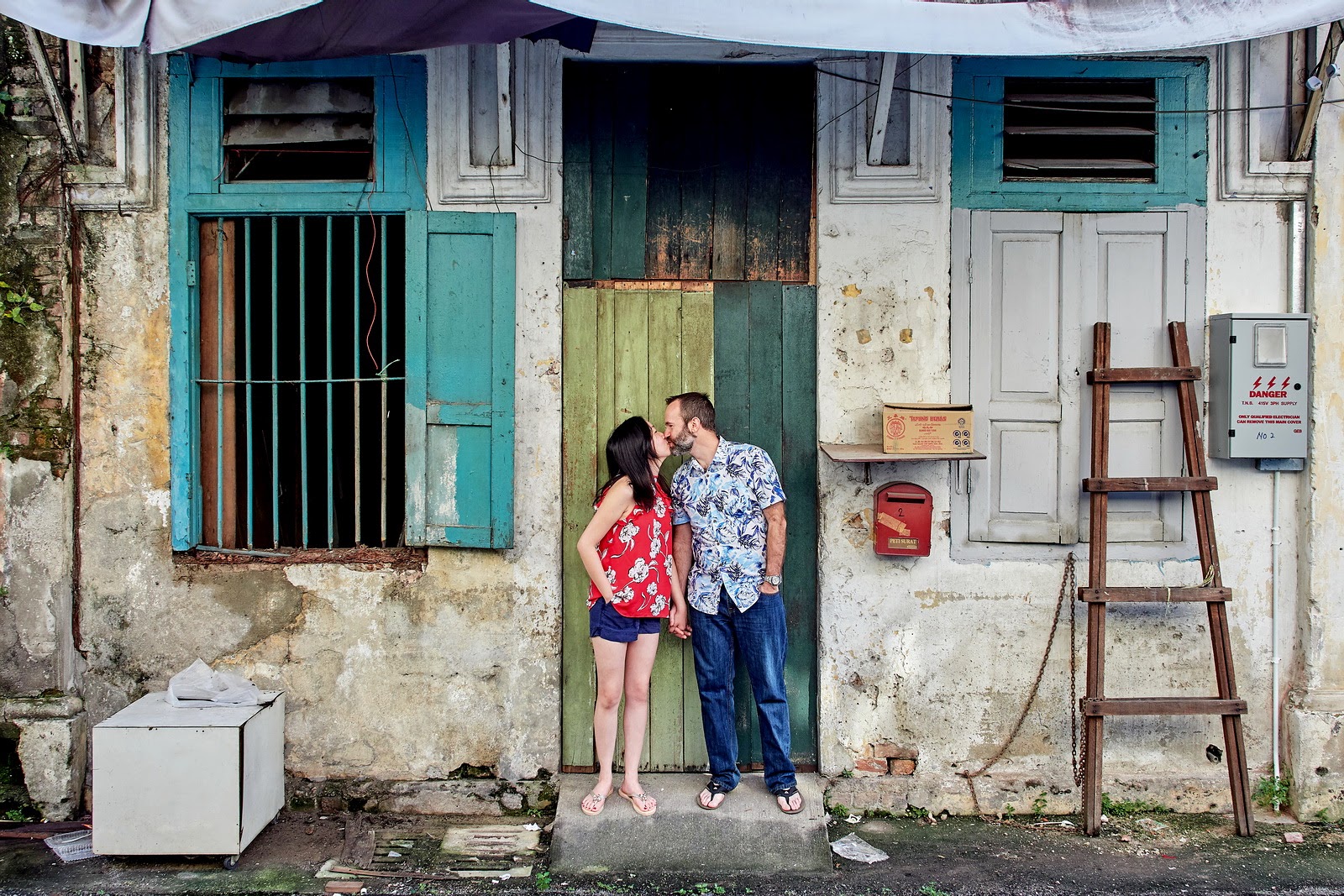
When Sarah, an old friend, shared news of her engagement and related visit to Kuala Lumpur, I could not help but ask if she was interested in a pre-wedding shoot here. I told her this would not be a typical engagement shoot at the park or by the beach. I wanted to do something unusual and different for Sarah by bringing her and Gregor, her fiancé, to my usual street shooting grounds and do their portraits there. Outdoor street-style pre-wedding is not new to me, I have done a few rounds with other clients but this was the first one I did around the Petaling Street area.
Robin’s fisheye adventures
Firstly – a happy Lunar New Year to all our readers!
Fisheye lenses fall in the love-it-or-hate-it category – there is no middle ground. The excessive distortion is not widely accepted and frankly does not work for many scenarios. I was curious about how I would approach street shooting with such a lens as it would, no doubt, change my execution in street shooting by forcing me to look for different subjects and compose my scenes differently. I found that I needed to be more careful in my framing as the lens can fit in more than intended. Also, to find subjects and scenes that work well with fisheye is a huge challenge in itself. I used the Olympus M.Zuiko 8mm F1.8 Fisheye PRO lens for all images in this article.
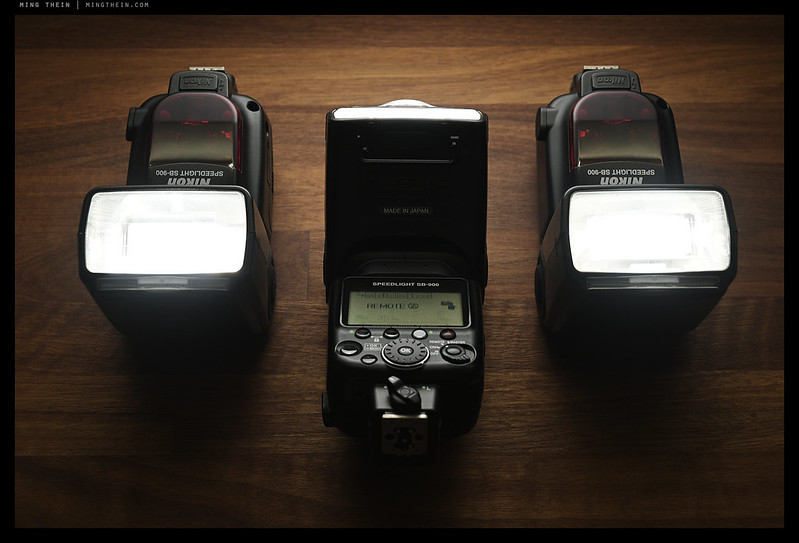
Off-camera lighting 101: the ‘five things’

I frequently get asked about lighting: specifically, how does one best approach the daunting challenge of knowing where to put what lights, how to set them up, use modifiers etc. I’ve written about some of this in the past but realise that I never tackled conceptually where to start. Fear not: in true Ming style, it’s now a list of Five Things đ Though the whole process of conceptualisation and setup becomes increasingly intuitive over time and practice, I still find that this list helps quite a lot when you’re either a) working with very complex setups where multiple lights can start creating interference with each other, or b) trying to simplify. Remember, a shadow does several things: it provides spatial context for three dimensional placement of subjects in a two dimensional presentation; it creates texture; and it provides separation and definition from the background. The more complex the lighting setup, the less well defined the shadows are going to be. Ultimately, the purpose of any controlled lighting setup is to place the shadows where you want them to go, and control the relative brightness of the subject elements, allowing you to precisely manipulate the structure of your image so that it is ‘read’ by your audience in a certain way.
Robin in Bangkok, part II
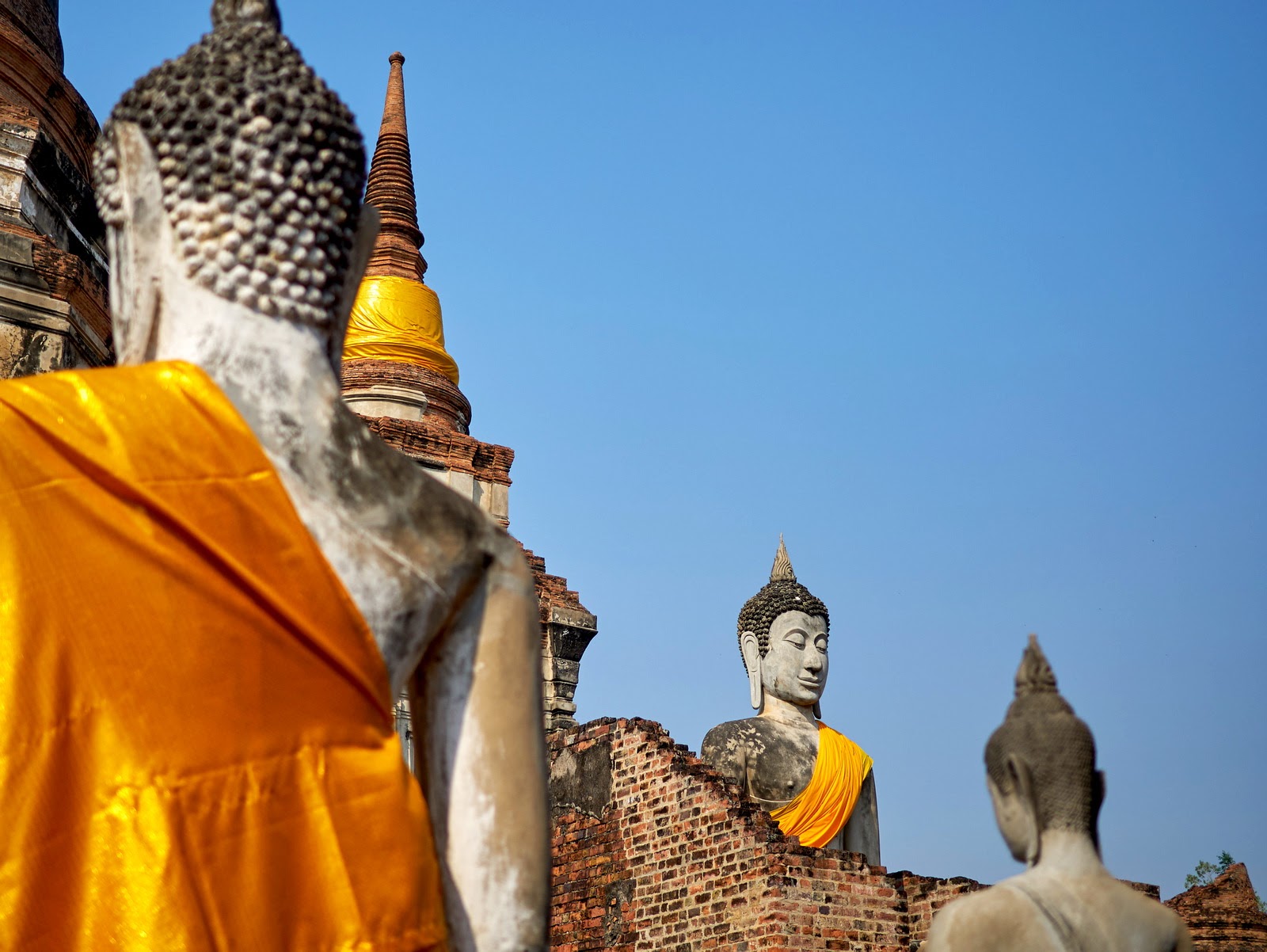
Since it was my first time in Bangkok, I decided to spend a full day at the Ayutthaya historical park, which is a UNESCO World Heritage site. I knew that the temples and general landscape have been photographed countless times before, so I challenged myself to shoot these tourist attractions in my own style and avoid making a a clone of the many images already out there.
Robin in Bangkok, part I
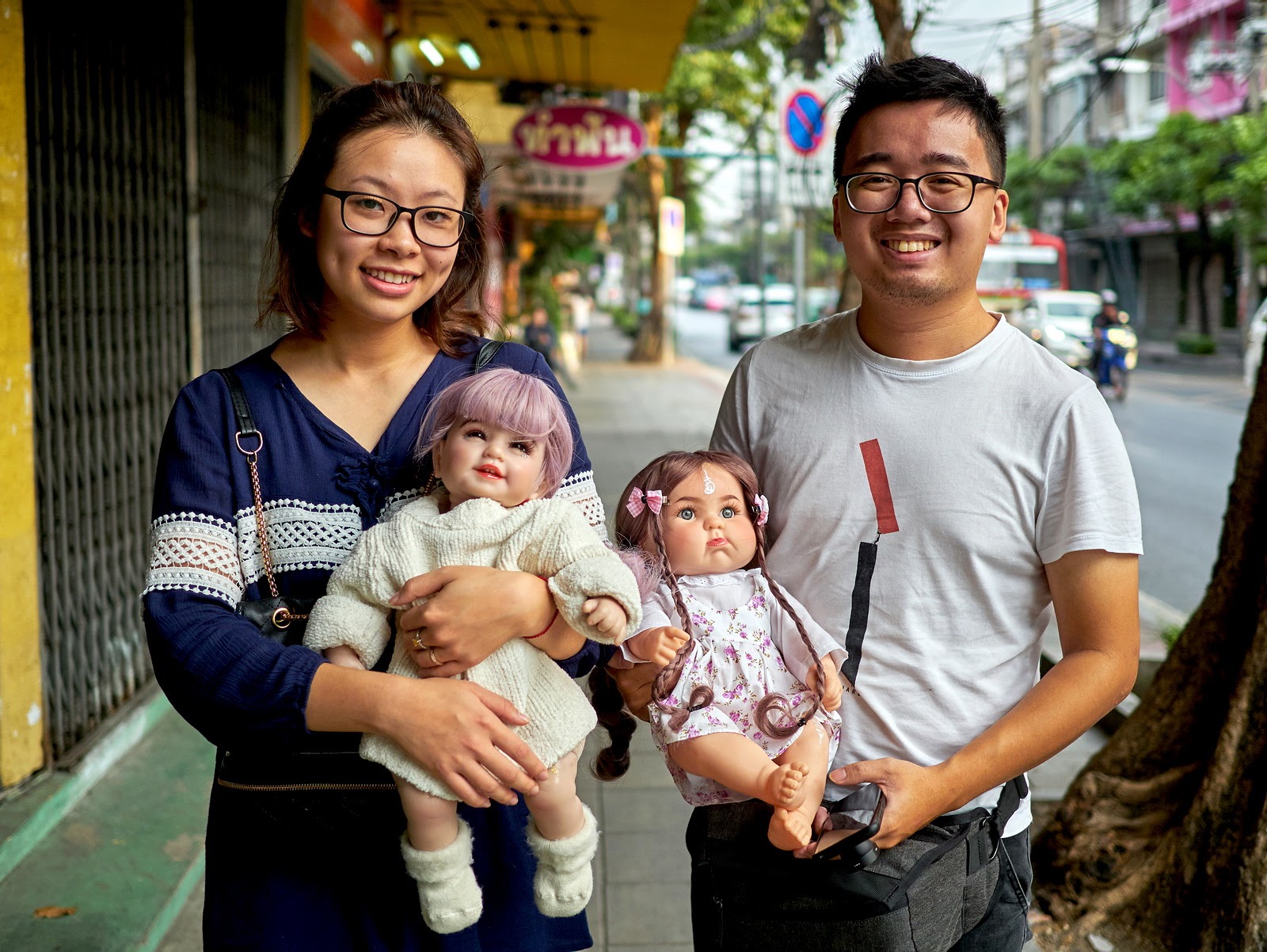
I planned on visiting Bangkok some time at the end of last year, but with the South Africa trip in December, I decided to make Bangkok item #1 on my agenda for 2019. This was my first ever visit to Bangkok and was fully intended to be a personal holiday, but somehow turned into partial work when Olympus Thailand invited me to conduct a street photography talk. With half a day blocked for the talk and me visiting the usual tourist traps and temples of Bangkok, I was left with little time for street photography. I did manage two full morning sessions of shutter therapy around the Bangkok Hua Lamphong Railway station and surrounding areas leading to Chinatown, and I shall be sharing my images here.
On-assignment photoessay: Preparations
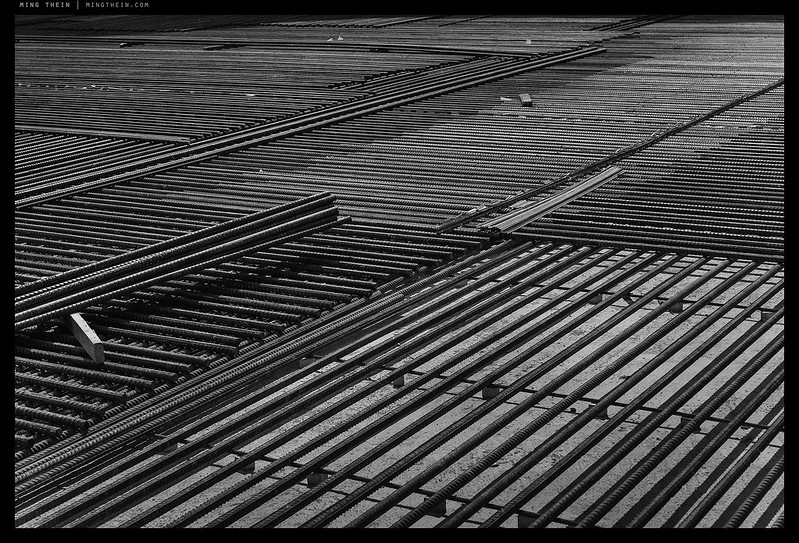
When on assignment, there are images you shoot to the brief, and the bonus ones you shoot for yourself: sometimes they aren’t really corporate safe or commercial-clean, but they have a something – texture, light, grit – that appeals to something personal. I always try to respond to these scenes in an instinctive way: just shoot, sort them out later, and package separately for your client in the hopes they might use them, or at least see and appreciate even if they don’t (because they don’t fit the look and palette you’ve already established). Still – I think all photographers need to feel moved in this kind of way; if you don’t, then the desire to experiment and create might not be as strong as it should be… MT
Images shot with a Nikon Z7/24-70 and D850/70-200/4, and post processed with The Monochrome Masterclass workflow.
Mountains and clouds
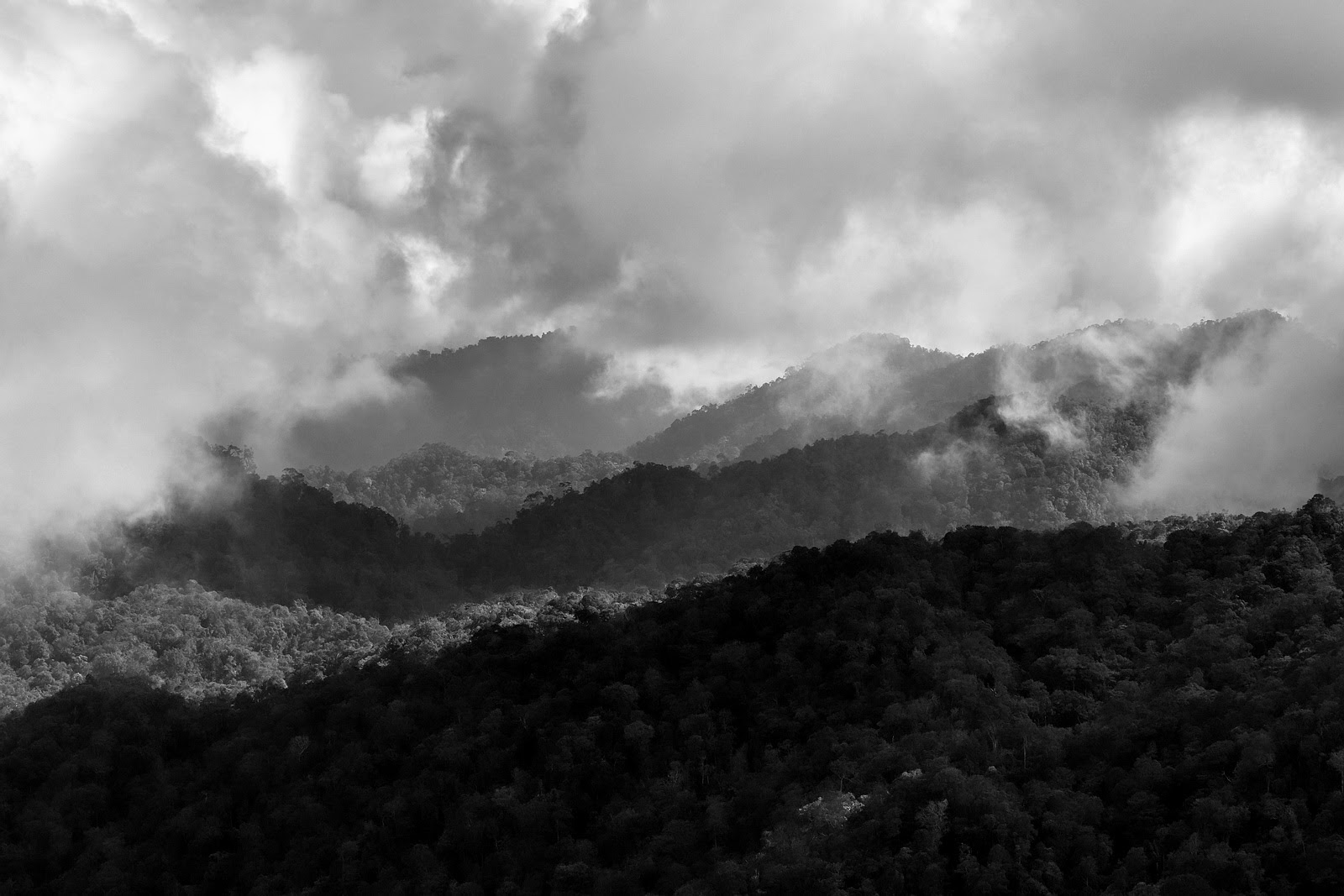
Recently I had a job that took me all the way up to Genting Highlands, which sit about 6000 feet above sea level. I was there over the weekend and most of my time was spent shooting for the job, leaving me no opportunity to roam around. Luckily, my hotel room overlooked the surrounding mountains. It was quite an experience staying in a place so high up that and close to the cloud cover. My view was constantly covered by thick mist but when there was a brief clearing, I quickly shot some images. Due to the mist and other atmospherics, I found that the colours were flat and dull resulting in me converting my images to monochrome and ensuring a more dramatic output.
Photoessay: nocturnal impressions of Hong Kong
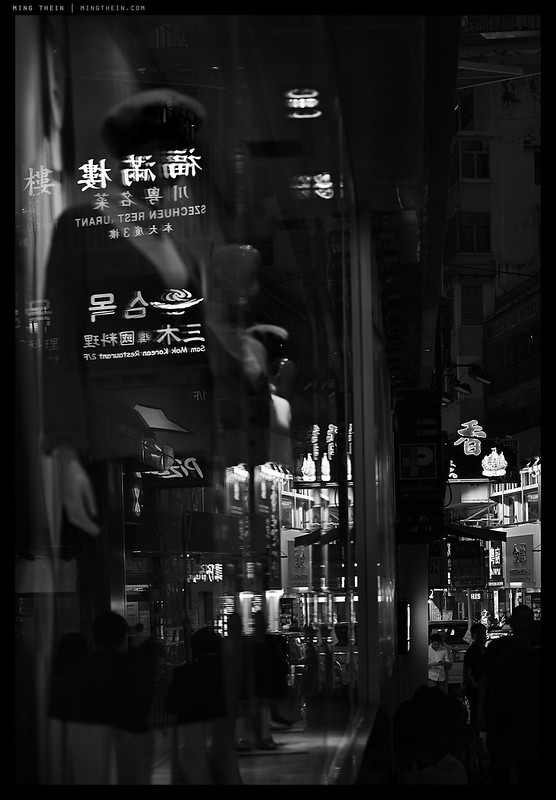
You know a place has something on you if you want to go out and shoot to relax after spending the whole day…shooting on assignment. In this case a very different sort of work, and the kind of thing one can shoot in flow/ stream of consciousness; you react instinctively and don’t think too much about the scene. I look at the structure and the main highlights – note, not subjects, since the image is more of a vignette of a feeling than a specific description of a subject – balance the composition, and then shoot accordingly. There’s one kicker: I shot everything at ISO 64, handheld, relying on the stabiliser of the Z7 and the large amount of ambient light. I must have been inspired by Robin’s experiment some time back, but in this case I was deliberately seeking out motion, layers and wimmelbild to convey the impression of busyness and activity, but with the sort of surreal detachment that a monochrome presentation suggests. The emotional impact of color is not present, and one feels a bit colder and more objective or separated from the scene; an observer rather than a participant – which matches my feelings in places like this. I shot something like 500 frames that evening. This is my selection. MT
Images shot with a Nikon Z7 and 24-70, and post processed with The Monochrome Masterclass workflow. There are also one or two camera JPEGs in there, and I now have a very similar SOOC picture control pack available here.
By popular demand: Nikon Z7 and D850 JPEG picture controls and ACR presets – 29/12/2021 UPDATE: Z7 PROFILES ALSO COMPATIBLE WITH Z9
I’m giving in to the large number of people asking me for Z7 and D850 Adobe Camera Raw presets/profiles that are compatible with Workflow III. Now available is a supplementary pack that includes these presets, as well as a bonus: what are arguably the best SOOC JPEG profiles available at the moment for the Z7 and D850. I’ve been looking at ways to make my own workflow more efficient for the majority of cases where I don’t need perfect files, so I can spend more time shooting (or doing other things) rather than being stuck behind a computer. Inspired by the results from the PEN F, I spent some time using Nikon’s byzantine picture control management software to make a set of curves that plays nice under the majority of situations. The monochrome picture controls were calibrated specifically for velvety rich shadows and smooth highlight rolloff; I think of it as ‘Acros Plus’ with a light orange filter; for some odd reason getting monochrome right was much more difficult than color – I put it down to the sensitivity of Nikon’s curve implementation.
Important update, 29 Dec 2021: the Z7 profiles are also compatible with the new Z9.
Included in this pack are:
- Nikon Z7 ACR flat color preset, for use with Workflow III and PS
- Nikon Z7 ACR flat monochrome preset, for use with Workflow III and PS
- Nikon D850 ACR flat color preset, for use with Workflow III and PS
- Nikon Z7 monochrome picture control (SOOC JPEG)
- Nikon Z7 high contrast color picture control (SOOC JPEG)
- Nikon Z7 low contrast color picture control (SOOC JPEG)
- Nikon D850 monochrome picture control (SOOC JPEG)
- Nikon D850 high contrast color picture control (SOOC JPEG)
- Nikon D850 low contrast color picture control (SOOC JPEG)
The preset/picture control pack is available to purchase here for $50.
All sample images in this post were shot with the Z7 and one of the three picture controls; PS was only used for batch resizing. More samples and notes after the jump. Expect an email from me after purchasing, within half a day at worst in case I’m not at the computer.
Long term thoughts on the Nikon Z7 and system
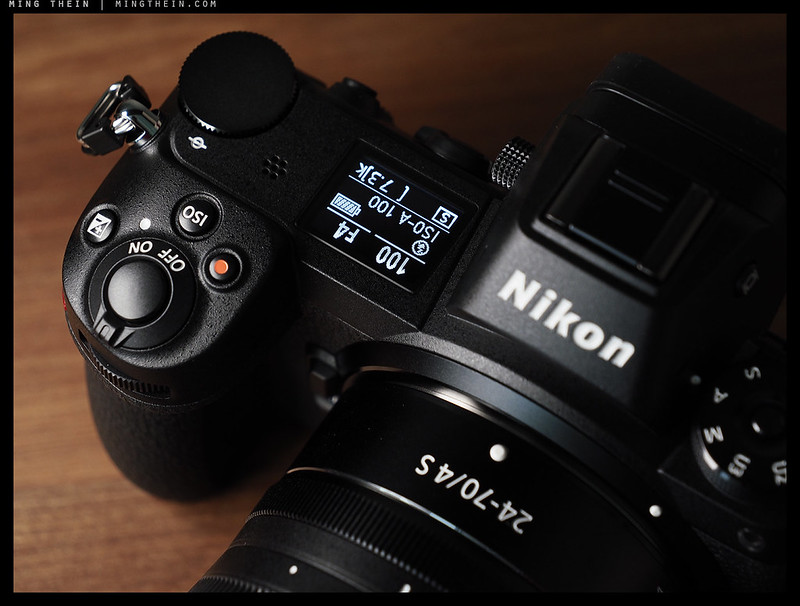
I’ve now had a few months, a few assignments and what I’d consider a decent amount of time with the Z7: long enough to be familiar with its various peccadilloes and figure out exactly where it fits in my arsenal. Think of it as an extended field test, and perhaps more important than the initial review that people seem to expect me to produce within hours of a camera’s announcement. Truth is, you don’t really know a camera until you’ve had a chance to use it as you normally would, for the kinds of subjects you normally shoot, for an extended period of time – it’s just not physically possible to cover that many scenarios in a short test. Trouble is, not many of us have the time to do that (and especially not sites that have dozens of cameras to cover every month). It also requires consistency in the way one works to provide a baseline of expectations. As usual, I preface my thoughts with the caveat that not everything will apply to everybody, and validity of course increases the more similar your photographic style is to mine. I may not cover some things that matter to you, and I may obsess over other things that are trivial. With that, and assuming we have a mature audience, let’s move on.